


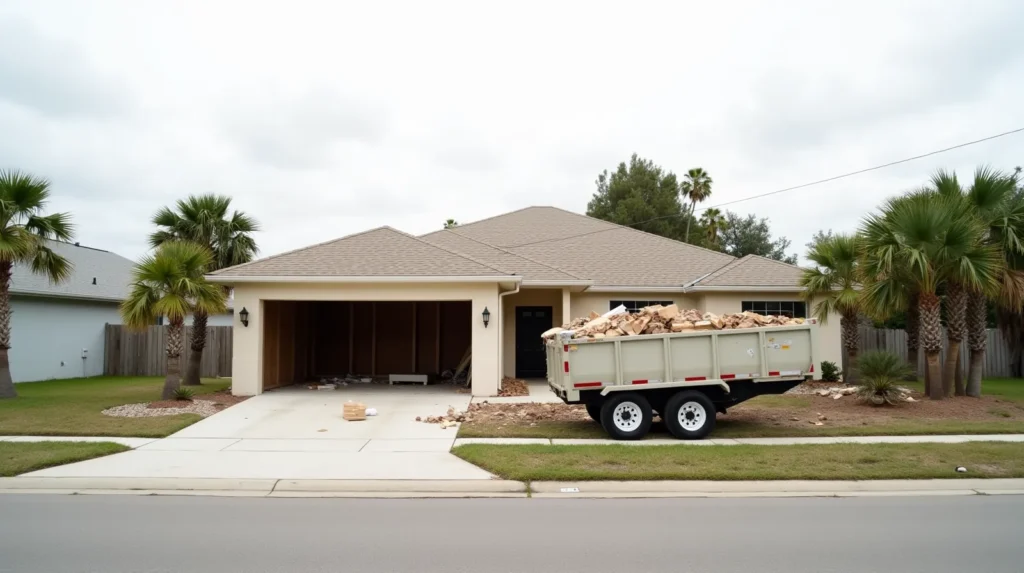
The inspector flagged Chinese drywall. Your buyer’s lender came back with a repair condition that amounts to gutting the house. Most conventional buyers are now gone.
You can sell. Here is what actually happens next.
Short version: Chinese drywall makes conventional financing impossible until the house is fully remediated per the HUD 2010 protocol — full drywall removal, all metal components replaced, blower door test. That costs $100,000 to $150,000 for a typical Florida home and takes 3 to 6 months. Cash buyers skip the appraisal and lender conditions entirely. They buy as-is, factor the remediation cost into the offer, and close in 7 to 14 days. If you have the time and the capital for full remediation, listing with an agent will net you more. If you don’t, a cash sale is the practical exit.
Why Chinese drywall locks out every financed buyer
The drywall was manufactured in China and imported primarily between 2004 and 2007, concentrated in Florida, Louisiana, Mississippi, and Virginia after the post-Katrina rebuilding boom. In Florida’s heat and humidity it releases hydrogen sulfide and carbonyl sulfide — sulfur compounds that corrode copper, silver, and other metals throughout the house. The signs are specific: a persistent rotten-egg smell even in a vacant house, blackened AC coil fins, and dark film on electrical outlets and copper plumbing.
The financing problem comes from HUD’s 2010 Chinese Drywall Remediation Protocol. FHA, VA, and most conventional lenders adopted it. Under that protocol, a property with confirmed Chinese drywall must have all of the following completed before any lender will fund:
- Every panel of affected drywall removed to the studs
- All electrical wiring, outlets, and panels replaced
- All copper plumbing replaced
- HVAC system replaced or confirmed unaffected
- Blower door testing verifying no remaining contamination
Until the full protocol is complete and documented, no FHA or VA appraiser will clear the property, and conventional lenders follow the same standard. No binder, no mortgage — which means no financed buyer, full stop.
The CPSC received more than 3,800 reports of Chinese drywall damage between 2009 and 2011. The affected manufacturers included Knauf Plasterboard Tianjin, BNBM, and Taihe. A 2013 class action settlement with Knauf produced a $1.1 billion fund covering remediation costs for qualifying properties. Most of the US claims were in Florida.
Insurance creates a second barrier
Even after remediation, Florida carriers often require documentation of the full HUD protocol before they’ll write a new policy. Citizens Insurance — the insurer of last resort for much of coastal Florida — added a specific Chinese drywall disclosure line to its four-point inspection form. A D or F grade on the drywall inspection blocks a new policy, and without a binder the mortgage can’t close regardless of remediation status.
Sellers who completed remediation years ago sometimes discover this problem fresh when the new buyer’s insurer pulls the CLUE report and finds a prior insurance claim related to the drywall. That can trigger a re-inspection requirement even on a fully remediated and documented property. The disclosure obligation under FL § 689.261 means you must disclose Chinese drywall if you know it exists — a buyer who closes and later discovers an undisclosed material defect can pursue post-closing claims.
What a cash offer actually looks like
We’ve bought more than 100 houses in as-is condition. We don’t need a lender’s approval. No appraisal, no minimum property standard, no repair condition to clear before funding.
Here is what happens after you give us the address: we’ll have a cash offer within 24 hours. We look at the house as-is, estimate what the remediation will cost us, and tell you what we can pay. You’ll know the number that day — not after 45 days of back-and-forth with a buyer whose lender issues a repair condition and then stalls until you’ve paid a contractor to at least begin the work.
If you decide to move forward: 7 to 14 days to closing. You pick the date. No repairs, no cleaning, no contractors before you leave. We buy houses as-is and we handle the remediation after the sale.
The three realistic paths
| Path | Timeline | What works for it | What works against it |
|---|---|---|---|
| Remediate per HUD protocol, then list with an agent | 3–6 months of work, then 30–45 day close | Best net proceeds; opens the full buyer pool | $100k–$150k upfront; post-remediation stigma sometimes discounts the sale; some carriers still flag the CLUE history |
| List as-is with full disclosure, find a cash buyer through an agent | 90–180 days typical | Agent handles the search | Agent commission still applies; buyer pool is thin; most agents won’t take it |
| Direct cash buyer | 7–14 days | Fastest close; no lender conditions; no repairs required | Offer reflects remediation cost and risk — lowest net of the three paths |
The remediation path nets the most, but only if you have the capital upfront, enough lead time, and no deadline forcing your hand. Carrying costs on a vacant Florida property — taxes, insurance, HOA, utilities — run $1,500 to $3,000 a month. Six months of carrying cost while waiting on contractors and a financed buyer erodes the gap between paths faster than most sellers expect.
Florida specifics
Florida accounts for the majority of confirmed US Chinese drywall cases. The state’s rapid rebuilding after the 2004 and 2005 hurricane seasons — Frances, Charley, Ivan, Wilma — pulled in large volumes of imported building materials at a time when domestic supply couldn’t keep pace. Lee County (Cape Coral, Fort Myers, Bonita Springs), Collier County (Naples, Marco Island), and Charlotte County (Port Charlotte, Punta Gorda) saw the highest concentrations. St. Lucie County (Port St. Lucie, Fort Pierce), Manatee County, and parts of Hillsborough and Pinellas were also heavily affected. If the house was built between 2004 and 2007 in any of these markets, a drywall inspection is warranted before listing — every cash buyer will require one, and surprises in due diligence kill deals.
For Florida sellers, the disclosure obligation is clear: FL § 689.261 requires disclosure of any known condition that materially affects the value of the property. Chinese drywall qualifies. A buyer who closes without disclosure and later discovers the condition has grounds for post-closing claims.
The water damage connection matters here too. Some water-damaged homes in post-hurricane FL also received Chinese drywall in emergency repairs — two separate disclosure obligations, both required.
Tennessee and Texas
Chinese drywall reached Tennessee through national supply chains, concentrated in areas with heavy homebuilding in 2005–2007. The financing barrier is identical: HUD 4000.1’s “safe and sanitary” standard makes appraisal clearance impossible without the full remediation protocol. Tennessee requires disclosure of known material defects under TCA § 66-5-202. TN’s non-judicial foreclosure process moves in 20 to 30 days once the trustee’s notice is posted — if a stalled Chinese drywall sale is creating a missed-payment situation, that deadline compresses the timeline sharply.
In Texas, TREC Form OP-H Section 5 covers environmental hazards including toxic building materials. TX Property Code § 5.008 requires written disclosure. If foreclosure is approaching, the 21-day trustee-sale notice in Texas means the practical window for any sale — cash or otherwise — closes quickly once the process starts.
When you should not sell to us
If the remediation is already complete, you followed the HUD protocol, and you have the paperwork — contractor certification, permit closeout, blower door test results — you are in a materially different position. A buyer’s lender will accept that documentation. An insurer will write a policy. That house can sell on the open market and it will net you more than a cash as-is offer.
If you have 3 to 6 months, access to the capital for remediation, and no deadline forcing the sale, spend that time completing the protocol and list with an agent. The net proceeds are higher when the buyer pool is open.
We are the right answer when the remediation cost is out of reach, when the timeline won’t support it, or when a deadline — foreclosure, estate settlement, job relocation, divorce — has already made the decision.
Straight answers
Can I sell a house with Chinese drywall without fixing it first?
Yes. No law requires remediation before selling. You must disclose the known defect under your state’s disclosure statute. A cash buyer will buy as-is; a conventional buyer’s lender won’t fund until the HUD protocol is complete.
How do I know if my house has Chinese drywall?
The most common signs are a persistent sulfur or rotten-egg smell, visibly blackened AC coil fins, and dark tarnishing on electrical outlets and copper fixtures. A drywall inspection ($150–$400) pulls samples and checks for manufacturer markings — Knauf Tianjin, BNBM, Taihe, and Dragon Brand are the most common ones identified by the CPSC.
Does Chinese drywall affect the whole house?
Usually, yes. Sulfur gases migrate through the HVAC system and aren’t contained to one zone. The HUD protocol requires whole-house remediation, not room-by-room replacement, because partial work doesn’t satisfy lender or insurer requirements.
What if the house was only partially remediated?
Partial remediation doesn’t satisfy the HUD protocol and won’t satisfy a lender. You’re in the same position as an unremediated house: cash buyers only, until the full protocol is documented and complete.
Will the cash offer reflect the remediation cost?
Yes, directly. We estimate what the full remediation will cost and factor that into what we offer. We’re transparent about this — the offer will tell you what we think the remediation will run.
Give us the address. We’ll have a number for you within 24 hours — no obligation, no pressure to decide. Call (615) 780-7349 or use the form below.
Keep reading
- Selling an Inherited House: What Most Heirs Don’t Know
- Sell My House Fast in Waukesha, WI — Cash Offer in 24 Hours
- Sell My House Fast Yakima WA — Cash Offer in 24 Hours
- Sell My House Fast Broken Arrow OK
- Selling a House in a Trust: A Trustee’s Guide
- Selling a House With a Reverse Mortgage
Ready for a number? Get your cash offer or call (615) 780-7349.