


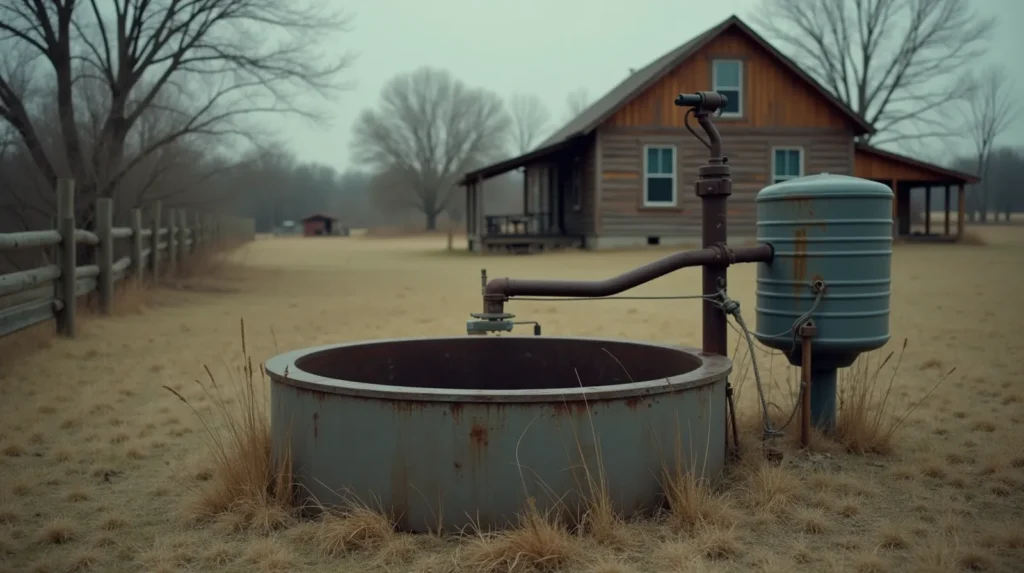
The buyer is using FHA financing. The lender ordered a water quality test on your private well. The results came back with coliform bacteria, and the loan is now on hold until you remediate and retest.
That process takes two to eight weeks. If the contamination does not clear with shock chlorination — or if the well casing itself is the problem — you are looking at a longer delay and a larger bill.
FHA and VA financing requirements are the main reason private wells create sale problems. Cash buyers have none of those requirements. No water test. No appraiser condition. No waiting on retest results.
The short version: A failed private well water test stops FHA and VA financing. Cash buyers do not require a test — no test, no hold, no remediation before closing. Submit the address and you will have a cash offer within 24 hours.
What FHA and VA actually require when a home has a well
Under HUD 4000.1 — the FHA’s single-family lending policy handbook — an appraiser inspecting a home with a private well must flag any visible contamination, inadequate water pressure, or structural problems. The lender then issues a repair condition. Nothing moves until that condition is resolved, retested, and cleared by the underwriter.
VA loans follow the same standard under VA Pamphlet 26-7, Chapter 12.
Depending on the county and lender, required tests include:
- Coliform bacteria — the most common failure, especially in wells that have not been tested recently or were near flooding
- Nitrates and nitrites — elevated in agricultural areas near fertilized fields or livestock operations
- Lead — a risk in older wells with deteriorating casing or galvanized supply lines
- Arsenic — present in certain geological formations, including parts of Tennessee’s eastern limestone counties and the Texas Hill Country limestone aquifer
There is also a distance requirement. FHA and most VA lenders require at least 50 feet of separation between a well and the nearest septic component. Florida increases that to 75 feet under FDOH permitting rules. If the well and septic system are closer than the required distance, the appraiser flags it — and no amount of water treatment resolves a distance problem short of physically relocating one of the systems.
What fails most often — and what it costs to fix
Coliform contamination is the most common failure. The standard first response is shock chlorination: flush the well with chlorinated water, let it sit 8 to 24 hours, flush it clear, and retest. Cost is typically $200 to $500. Most lenders require two consecutive clean results before clearing the condition. The EPA sampling standard requires at least 48 hours between treatment and the confirmation test.
If shock chlorination does not hold — which happens when the casing is cracked or the contamination source is ongoing — the options narrow:
- Water treatment system (iron, bacteria, or arsenic filter) — $1,500 to $3,000 installed; some lenders will not accept an ongoing treatment system as a substitute for clean source-water results
- Well pump replacement — $1,500 to $6,000, depending on depth and pump type
- New well drilling — $15,000 to $30,000, with significant variation based on depth, geology, and county permit requirements
Add in the lender’s retest wait and the appraisal reinspection, and a well problem that surfaces in week two of a 45-day close can push the sale out by 60 days — or end it entirely if the buyer’s rate lock expires.
| Situation | Financed buyer (FHA/VA) | Cash buyer |
|---|---|---|
| Water test fails (bacteria or nitrates) | Loan on hold; shock chlorination + 2–4 week retest required before lender funds | No test required; no hold |
| Well within 50 ft of septic (75 ft in FL) | Hard appraiser stop; no fix without physical relocation of well or septic | No distance requirement |
| Missing well permit or no records | Lender may require new inspection; county re-permitting can take several weeks | No permit review; accepted as-is |
| Low yield (under 3 gallons per minute) | FHA condition requiring pump work before close | No yield requirement |
| Old well, structural concerns | Appraiser must flag; repair condition before funding | Cost factored into offer; no condition |
Tennessee: disclosure requirements and the agricultural county risk
Tennessee’s private water supply requirements fall under TCA § 68-221-701 et seq., administered by the Department of Environment and Conservation’s Division of Water Resources. County permits establish the approved location and required setbacks for private wells.
Rural properties in Robertson, Cheatham, and Wilson counties — and much of Sumner County east of Gallatin — commonly rely on private wells. Robertson County’s agricultural concentration, including poultry operations and row crops, elevates nitrate risk in shallow wells near farm drainage. A property in that area that has never had a certified water quality test is an unknown going into any FHA or VA transaction.
On disclosure: TCA § 66-5-202 requires sellers to identify any material defect that affects the property’s use or value. A known failed water test result is a material defect. Selling to a financed buyer without disclosing a prior failed test exposes you to post-closing liability. The Tennessee residential disclosure form asks specifically about the water source and any known problems with supply quality or flow.
Texas: TCEQ requirements and arsenic in the Hill Country
In Texas, well permits are issued by the Texas Commission on Environmental Quality (TCEQ). The seller’s disclosure obligation falls under Texas Property Code § 5.008 and TREC Form OP-H, Section 5 (Environmental Hazards), which asks sellers to identify the water source and any known defects.
Arsenic contamination is geographically concentrated in the Hill Country limestone aquifer: Bexar County’s unincorporated northwest (Helotes, Hill Country Village, Grey Forest), Kendall County, and Comal County. Parker, Kaufman, and Johnson counties — common areas for unincorporated residential lots on private wells — carry higher bacterial and nitrate risk near agricultural operations.
Texas drought cycles also affect well yield. FHA and TCEQ guidance both reference a minimum of roughly 3 gallons per minute for a single-family home. A well that passed that standard in a wetter period may test below it after drought years, triggering a lender condition even when water quality is otherwise fine.
Florida: the 75-foot rule and post-storm contamination
Florida’s private well requirements fall under Florida Statute § 381.0065, administered by the Florida Department of Health at the county level. The 75-foot minimum separation between a well and any septic component applies statewide — 25 feet stricter than the FHA national standard. A property that would clear FHA in Tennessee may not clear it in Florida purely on distance.
Rural properties in Marion County (Ocala area) and Highlands County have high concentrations of older private-well homes, many with infrastructure dating to the 1970s. In Lee County, Hurricane Ian’s 2022 storm surge contaminated some older wells in low-lying areas near drainage canals. A well that tested clean in 2021 may not test clean today, and a buyer’s lender will require a current test. For Florida sellers in affected areas with older wells, that uncertainty is a real reason to consider a cash offer.
FL § 689.261 requires disclosure of material defects at the time of sale, including known water quality problems.
When you should not sell to us
If your well test came back clean, the system is properly permitted, and you have 60 days or more before you need to close — list with a real estate agent. A clean test removes the financing barrier. Some buyers actively prefer private wells: no monthly water bill, no municipal rate increases, no connection fees. A certified clean result is a selling point.
A cash offer is the more practical path when the test failed, the well is old and its condition is uncertain, permit records are missing, the well sits within the restricted distance from the septic system, or the well is one of several issues stacking up against a conventional as-is sale. In those cases, the remediation timeline — two to eight weeks for a straightforward fix, three to six months for a new well — makes a direct sale the cleaner option.
What the offer looks like when the well is a known issue
We have bought more than 100 houses. Properties with private well problems appear regularly. When a well is on the issue list, we factor the likely remediation cost range into the offer — from shock chlorination at the low end to a new well at the high end. You do not fix the well first. We price it in.
Seven to 14 days to close, and you pick the date. No agent commission — that is 5 to 6 percent you keep. No closing costs, no inspection contingencies, no repair demands before closing.
If a foreclosure deadline is part of the picture, the well timeline matters even more. A trustee’s sale date does not pause for a failed water test reinspection. A cash close can happen on a specific date, regardless of what the water test shows.
Straight answers
Do I need a water test to sell my house?
Not for a cash sale. For an FHA or VA financed sale, the lender requires one. Many conventional lenders also require a test if the appraiser raises any concern about the well. If you are selling to a cash buyer, there is no test requirement.
What if the well is too close to the septic system?
If the separation is under 50 feet nationally — or under 75 feet in Florida — FHA and VA appraisers must flag it as a deficiency. There is no practical fix short of physically relocating the well or the septic system, which costs more than the problem is worth. Cash buyers do not have a distance requirement.
Can I sell a house when there are no well permit records?
To a cash buyer, yes. For a financed sale, a missing permit may trigger a lender condition requiring a new inspection or county re-permitting. Depending on the county, that process can take several weeks. Cash buyers accept the property as-is, without a permit review.
Does selling as-is mean I do not have to disclose the well problem?
No. In Tennessee (TCA § 66-5-202), Texas (Property Code § 5.008), and Florida (§ 689.261), sellers must disclose known material defects regardless of how the sale is structured. “As-is” means you are not agreeing to make repairs — it does not override the disclosure obligation. If you know the well has problems, disclose them.
If the well is on the issue list, tell us when you submit the address. We will have a cash offer within 24 hours, and the number we give you at the start is the number at closing — there is no renegotiation at the last minute on a known issue we already priced in.
Keep reading
- We Buy Houses Indiana — Cash Offer in 24 Hours
- Sell My House Fast Indianapolis IN — Cash Offer in 24 Hours
- Can You Sell a House with Title Issues?
- Can I Sell My House During a Divorce?
- Sell My House Fast Kansas City MO
- We Buy Houses in Minnesota
Ready for a number? Get your cash offer or call (615) 780-7349.