


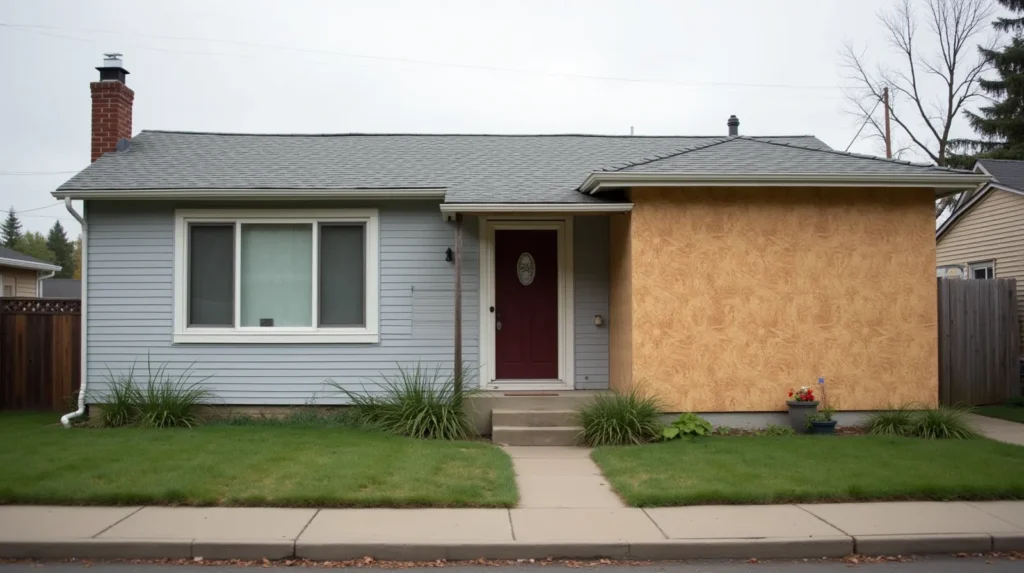
The bathroom your previous owner added in the basement has no permit on record. The garage-to-bedroom conversion shows up on no inspection reports before yours. The deck your contractor built in 2018 — nobody pulled a permit for that either.
Now you need to sell, and you are wondering what happens when a buyer’s inspector finds it.
Short answer: You can sell. You are required to disclose the unpermitted work. Cash buyers accept it with no appraisal and no lender conditions. Buyers using FHA, VA, or USDA loans face a harder road — the appraiser flags the work, the lender conditions the loan on resolution, and many deals die there. If your timeline is short or the retroactive permit process is complicated, a cash offer is usually the cleaner path.
Can you legally sell a house with unpermitted work?
Yes. There is no law that makes a house with unpermitted work unsellable. What the law requires is that you disclose it.
In Tennessee, TCA § 66-5-202 mandates disclosure of material defects known to the seller. Unpermitted work that affects livable square footage, structural integrity, or safety qualifies as material. You note it on the Tennessee Residential Property Condition Disclosure form — and the buyer decides whether to proceed, renegotiate, or walk away.
Texas sellers use the TREC Seller’s Disclosure Notice (Form OP-H), Section 4, which asks directly about structural alterations and repairs made without required permits. Florida’s seller disclosure statute (§ 689.261) carries the same obligation.
The risk of non-disclosure is larger than the risk of disclosure. A buyer who discovers unpermitted work after closing in Tennessee has three years from the date of discovery to file a lawsuit under the statute of repose. That window has produced real claims — sellers who said nothing and paid for it later.
Why unpermitted work kills financed deals
Do FHA and VA appraisers look for unpermitted work?
Yes, and they are required to flag it.
FHA appraisers follow HUD 4000.1, which instructs them to identify non-permitted additions and conversions and exclude that square footage from the marketable value calculation. If a seller priced the home using total square footage that includes an unpermitted addition, the appraisal comes in below the purchase price. The deal falls apart or gets renegotiated.
VA appraisers follow VA Pamphlet 26-7 and carry the same requirement. Beyond square footage, they will flag safety problems created by the unpermitted work: a converted garage without proper egress, a basement bathroom without ventilation, structural modifications without visible permit history.
Once the appraiser flags it, the lender typically conditions the loan on one of two outcomes: a retroactive permit issued before closing, or the unpermitted space formally excluded from the living area calculation. Both options take time most transactions do not have.
What about conventional financing?
Conventional loans (Fannie Mae and Freddie Mac guidelines) are less prescriptive than government-backed programs, but a lender can still condition on permit resolution if the appraiser raises a significant concern. A major unpermitted addition is fair game for that condition.
Why cash buyers handle it differently
A cash buyer brings no appraiser, no underwriter, and no lender conditions. The buyer evaluates the property as-is and prices the unpermitted work into the offer. The mechanism that stops financed buyers — the appraisal flag — does not exist in a cash transaction.
This is the practical reason sellers with unpermitted work often find cash offers faster and more reliable than open-market listings. You can list on the MLS and wait for a cash buyer to find you. Or you can skip that step.
What retroactive permits actually involve
Retroactive permits — sometimes called after-the-fact permits — are available in most jurisdictions. The process is not as simple as paying a fee and getting a stamp.
Nashville’s Metro Codes department (which covers Davidson County) requires inspections at each phase of the work to verify it meets current code. That typically means opening walls to show framing, insulation, and rough-in wiring or plumbing. If the work was done correctly by a licensed contractor and documented, you may get through the inspection without major corrections. If the work was done by a previous owner on a weekend with no documentation, you are starting from scratch.
Costs vary significantly:
- A simple deck retroactive permit — 00 to ,000 in fees and minor corrections
- A garage-to-bedroom conversion with HVAC, egress, insulation, and electrical issues — ,000 to 5,000 or more
- Timeline in most markets: 4 to 12 weeks from application to issued permit
That timeline matters when you have a buyer waiting. Most residential purchase agreements carry inspection contingency windows of 10 to 15 days. A retroactive permit application started at closing negotiations is not going to finish in time.
What happens if you sell a house with unpermitted work and do not disclose it?
The buyer can rescind the sale or sue for damages. In Tennessee, fraud on a real estate transaction can void the entire sale. In Florida and Texas, sellers face similar exposure under their respective disclosure statutes. Most real estate attorneys advise full disclosure in every case — the legal risk of concealment exceeds the negotiating cost of disclosure.
When to sell with an agent instead
If the unpermitted work is small, the retroactive permit process in your county is straightforward, and you have 60 days or more before you need to close — pursuing the permit and then listing with an agent may put more money in your pocket.
A deck needing only a structural inspection, in a county with a simple retroactive permit process, might cost 00 to bring into compliance. If that permit restores appraised square footage worth ,000 to ,000 in value, the math favors spending the weeks.
We would say that plainly even though it means you do not sell to us. The goal is that you make the right call for your situation, not ours.
State specifics: Tennessee, Texas, and Florida
Tennessee: Nashville’s Metro Codes department and the county building departments in Williamson, Rutherford, and Sumner County have increased permit enforcement in recent years, tracking the construction boom. Permit records are searchable online through each county’s building portal. Buyers’ agents in these markets routinely pull permit history on anything that looks like an addition, conversion, or structural alteration. Retroactive permits for HVAC and electrical work require a licensed contractor to sign off — self-certification is not accepted.
An example of how this plays out: a seller in East Nashville with a basement bathroom added by a prior owner in 2008, no permit on record. Chasing a retroactive permit means bringing in a licensed plumber and electrician to document the work, an inspector to walk the space, and potentially opening a ceiling to verify drain line slope. That is a ,000 to ,000 exercise taking 6 to 10 weeks, with no guarantee the permit issues if the original work does not meet current code. The seller accepted a cash offer instead and closed in 11 days.
Texas: Many unincorporated rural counties — Kaufman, Parker, Johnson, and others — operated under minimal residential permitting requirements for years. If the addition was built before your county adopted a building code, or in an area that had no permit requirement at the time, there may be nothing to retroactively address. Your TREC OP-H disclosure should note what you know about the work and its timeline. The issue becomes active the moment an FHA or VA buyer tries to finance the property, because the appraiser’s instructions do not vary by county.
Florida: Florida’s Department of Business and Professional Regulation (DBPR) and county building departments are strict on post-construction compliance. Broward and Miami-Dade County building departments increased scrutiny on unpermitted structural modifications following the Surfside condominium collapse in 2021. Cash buyers are common in Florida’s coastal markets and routinely absorb properties with disclosed unpermitted work — the as-is offer process is well established there. See our Florida buyer overview for how the market works.
Three steps, and you can stop at any one
- Pull your permit history from the county records office — most counties have searchable online permit portals. Know what is documented before the buyer’s inspector finds it first.
- Request a cash offer, no obligation. That number shows you what the market will pay for the house as-is with the unpermitted work disclosed. Use it to decide whether a retroactive permit is worth the time and cost.
- If the as-is number works for you, close in 7 to 14 days — no permit process, no re-listing, no appraisal contingency to manage.
We buy houses as-is, and we have bought more than 100 of them. Unpermitted work comes up regularly. It does not stop a cash deal — it shapes how the offer is priced.
If the code-violations side of this matters to you — a stop-work order, a municipal citation — read about selling a house with code violations for how those intersect with permit issues. And if the unpermitted work has triggered a lien on the property, that is a separate issue covered in our piece on selling a house with a lien.
Put the address in below. You will have a cash offer within 24 hours. Or call (615) 780-7349.
Keep reading
- Sell My House Fast Lee’s Summit MO
- Sell My House Fast in Atlanta, GA — Cash Offer in 24 Hours
- Selling a House in Probate: What an Executor Needs to Know
- We Buy Houses in Georgia — Cash Offers Statewide
- Sell My House Fast Owasso OK
- Can You Sell a House If You Owe Back Taxes?
Ready for a number? Get your cash offer or call (615) 780-7349.