


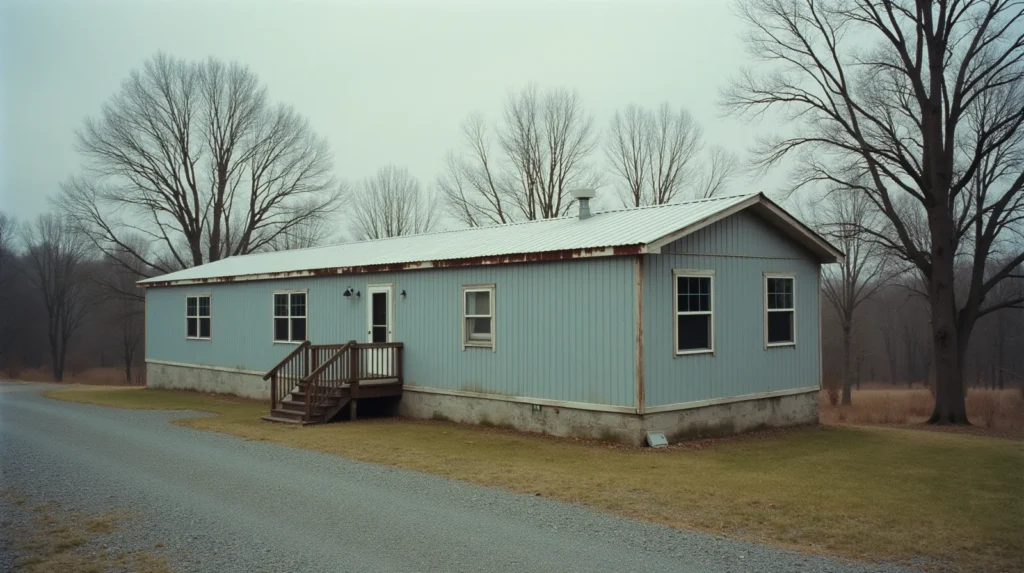
The title is the whole ballgame
You can sell a mobile home fast. Whether you can sell it that fast depends on one thing: whether your home is titled as personal property (chattel) or as real property.
Get that answer before you do anything else. It changes the financing your buyer can use, the closing timeline, and who is even in your buyer pool.
TL;DR
Most manufactured homes sell faster with a cash buyer than through a listing because manufactured home financing is harder to get and slower to close than a regular mortgage. We can make you a cash offer within 24 hours. The honest catch: if your home is on your own land, titled as real property, post-1976, and in solid condition, an agent who works manufactured homes may get you a higher number — just not as fast.
Real property vs. personal property — what it means for your sale
If you own the land your home sits on and the title has been retired, the home is real property. It transfers by deed, just like a stick-built house. A buyer can use a conventional mortgage or FHA Title II loan under the right conditions. A cash buyer can close in 7 to 14 days.
If the home is still separately titled — like a vehicle — it is personal property, also called chattel. The buyer’s financing options narrow to chattel loans (shorter terms, higher rates, lower maximum loan amounts) or cash. FHA Title II is off the table until the title has been retired and the home is on a permanent foundation you own.
This distinction drives everything else in the transaction.
How do I find out which category my mobile home is in?
Pull your original title documents. In Tennessee, manufactured homes are registered with the Department of Revenue under T.C.A. § 55-3-138. If the title has been retired — meaning the home has been affixed to land you own and converted to real property — the county register of deeds will show a deed, not a title certificate. If you’re still holding a blue vehicle-style title, it’s chattel.
In Florida, F.S. § 319.261 governs the same process. A home with a recorded declaration of affixture and a retired title is real property; everything else remains titled as a motor vehicle through the Department of Highway Safety and Motor Vehicles.
If you’re not sure, call your county register of deeds. They can tell you in two minutes which records they hold for your address.
The park situation changes the calculation
If your home is in a mobile home park, you don’t own the land. You pay lot rent. That single fact reshapes the sale in several ways.
Most parks require approval of any new buyer. Some hold a right of first refusal — the park operator can buy your home at the same price before your buyer can close. Others require background checks and credit reviews that add weeks to any timeline.
Those requirements eliminate most financed buyers from the start. Chattel lenders need the park’s long-term lot lease to underwrite the loan, and many parks won’t commit to the terms lenders need. Cash buyers move faster because there’s no lender in the chain — only the park’s approval process, which typically takes 7 to 30 days depending on how quickly the management office responds.
One more park-specific reality: if the park is being sold or redeveloped, residents sometimes receive notice that the home must be relocated. Moving a single-wide runs $3,000 to $10,000 or more. Many older homes — built before 1976 — aren’t safely moveable at all. If you’re facing a relocation notice, a cash buyer who can close before the deadline is often the only realistic path. The same urgency applies if you’re behind on payments: the clock works the same way as on any other property — see our pre-foreclosure timeline page for how that window closes.
What the 1976 HUD code cutoff means for your sale
Homes built before June 15, 1976 are not HUD-code homes. No FHA or VA loan is available for them — not after repairs, not after improvements, regardless of title status. They may also fail current state standards for permanent installation. If your home predates 1976, the realistic buyer pool is cash buyers and chattel lenders only.
Homes built on or after June 15, 1976 carry a red HUD data plate and a certification label. They were constructed to 24 CFR Part 3280, the federal Manufactured Home Construction and Safety Standards. FHA Title II loans are available for HUD-code homes on permanent foundations with retired titles — though the appraisal process is more involved than a standard home appraisal (appraisers use Fannie Mae Form 1004C and comparable sales from manufactured home databases, not the local MLS).
In practice, far fewer lenders offer manufactured home financing than conventional home financing. Many buyers don’t want the added complexity, and lenders in some markets won’t touch it at all. That’s why manufactured homes in any condition tend to sell faster to cash buyers — even when the financing technically exists.
What happens after you call us
You give us the address. We look at the title status, the land situation, the year built, the condition, and the local market. Within 24 hours you have a number.
We buy manufactured homes directly in many situations — particularly homes on owned land, titled as real property, in Tennessee, Florida, and Texas. For homes in parks, pre-1976 units, or properties where we’re not the right fit, we have a network of cash buyers who specialize in those transactions. We buy houses directly, and where we’re not the right buyer we’ll bring you one who is.
No repairs. No agent commission — that’s 5 to 6% you keep. No closing costs charged to the seller. You pick the closing date — typically 7 to 14 days for a clean title situation, longer where park approval is required.
When you should not sell to us
Some manufactured home sellers will net more through other channels:
- Your home is a newer double-wide (2000 or later), on your own land, titled as real property, in solid condition — you have a real buyer pool that includes conventionally-financed buyers, and an agent who works manufactured homes can get you a higher number
- The title situation is disputed — missing heirs, an unsettled estate, or a title that’s never been transferred after the original owner died — get the title clear first, then sell; this overlap with inheritance situations is the same problem as any inherited property with unresolved ownership
- The park has a right of first refusal and is actively buying homes at fair prices — ask the park office before committing to any outside buyer
- You have 60 or more days and the home is in a market where manufactured homes trade frequently — take those days to get at least two offers before accepting any
If none of those apply — the home is old, the title is complicated, the park is difficult, or you need to close fast — a cash offer is the fastest clean exit.
Tennessee sellers: what the process looks like here
Tennessee has a large manufactured housing stock concentrated in rural Middle Tennessee: Rutherford, Wilson, Smith, Maury, Lawrence, and Bedford counties. Many of these homes sit on family land, have been there for 20 or 30 years, and the title has never formally been retired.
If that’s your situation, the sale will require a title-retirement process through the Tennessee Department of Revenue under T.C.A. § 55-3-138 before a deed can be recorded. That process isn’t complicated, but it takes time — typically 2 to 4 weeks for the paperwork to clear. A cash buyer who knows this won’t panic when it comes up; a financed buyer often will, and that deal falls apart.
If the home is in a park in Middle Tennessee and you’re behind on lot rent, act early. Lot-rent arrears can support a lien on the home under T.C.A. § 66-28-512, which affects your ability to transfer title cleanly. The mechanics work the same way as on a stick-built home — see our lien page for how payoff at closing works and what liens can be handled in the transaction.
For inherited manufactured homes — common when a parent dies and leaves a home on rural acreage in Wilson or Smith County — the process overlaps with estate administration. The home’s title needs to pass through the estate before you can sell it. Our pages on selling in probate and selling inherited property cover how that process works and why a cash sale often closes before probate fully concludes.
Florida sellers: the 55+ community situation
Florida has one of the largest concentrations of manufactured and mobile homes in the country. Pinellas, Lee, Charlotte, Sarasota, and Polk counties hold large land-lease communities where homes change hands regularly — many of them age-restricted 55+ communities.
Under F.S. § 760.29, qualifying 55+ communities are exempt from the Fair Housing Act’s age restrictions. That exemption means the community can require that any buyer qualify under those age rules, which cuts off a large portion of the open-market buyer pool. Cash buyers who understand the park approval process are usually the cleanest path because they’re not dependent on outside financing and can move through the park’s timeline without a lender adding its own conditions.
Florida’s title retirement process follows F.S. § 319.261. Homes on leased land cannot retire the title to real property — since you don’t own the ground, the home remains personal property permanently, regardless of how long it has been there or what improvements have been made.
If you’re in a Pinellas, Sarasota, or Lee County community and have received notice of a lot rent increase or a park acquisition, getting a cash offer quickly preserves your options before the situation changes further. Many sellers in this position have the same concerns as those facing any as-is sale — an older home that needs work and a limited buyer pool.
What is the difference between a mobile home and a manufactured home?
Legally, homes built before June 15, 1976 are “mobile homes.” Homes built after that date to HUD code standards are “manufactured homes.” The terms are often used interchangeably in everyday conversation, but the distinction matters for financing — no FHA or VA loan is available on pre-1976 units under any circumstances.
Can you sell a mobile home if you still owe money on it?
Yes. The payoff balance comes out of the sale proceeds at closing, the same way a mortgage does on a stick-built house. The buyer gets a clear title, the lender gets the payoff, and you get what’s left. If the payoff exceeds the home’s value, you’d need to bring the difference to close or negotiate a short payoff with the lender — a different situation that’s worth talking through before you sign anything.
How long does it take to sell a mobile home for cash?
On owned land with a clean title: 7 to 14 days from offer to close. In a park where buyer approval is required: add 7 to 30 days for the park’s process, depending on how quickly their management office moves. Pre-1976 chattel-titled homes typically close in 2 to 3 weeks once a cash buyer is confirmed.
Does the mobile home have to be in good condition?
No. Cash buyers buy as-is. The condition affects the number we can offer — an older home with deferred maintenance will come in lower than a newer unit in good shape — but it doesn’t prevent the sale. See our general as-is selling page for how cash buyers price condition-affected properties.
Start here
Find your title documents — either a vehicle-style certificate of title or a deed from the register of deeds. Find out if the home is on owned land or a park lot lease. Then give us the address at (615) 780-7349 and we’ll have a number for you within 24 hours.
If the title situation is unclear, a title company or estate attorney familiar with manufactured housing can sort it out before we close. We’ve seen both types of title and know what closing looks like for each.
Keep reading
- Sell My House Fast Spokane WA
- Sell My House Fast Kansas City MO
- Sell My House Fast in Atlanta, GA — Cash Offer in 24 Hours
- Sell My House Fast in Conroe, TX
- Selling a House in Probate: What an Executor Needs to Know
- Sell My House Fast Lee’s Summit MO
Ready for a number? Get your cash offer or call (615) 780-7349.