


You can sell a house with mold. Here is what it costs you.
Mold is not a legal barrier to selling. It is a material defect — one you are required to disclose, and one that will affect your price, your buyer pool, and your timeline. How much it affects each depends on where the mold is, how far it has spread, and how much runway you have before you need to close.
TL;DR
You can sell as-is to a cash buyer without remediating first. Tennessee law requires you to disclose known mold under TCA § 66-5-202. Surface mold under 10 square feet may be worth remediating to keep financed buyers in play — remediation runs $500–$1,500 for a contained area. Crawl space, wall cavity, or HVAC mold typically costs $5,000–$30,000 to fix and often makes a cash sale the faster, cleaner path. Call us at (615) 780-7349 and we’ll have a number for you within 24 hours.
What Tennessee law actually requires you to disclose
The Tennessee Residential Property Disclosure Act (TCA § 66-5-202) requires sellers to disclose known material defects, including moisture and mold conditions. “Known” is what matters. If you discovered mold when you cleaned out the crawl space, you know. If a contractor flagged it three years ago and you never acted on it, you know. The law does not require you to hire an inspector to go looking for problems — but it does require you to disclose what you already know.
You are not legally required to remediate before selling. You are required to tell the buyer what you know.
What about mold that was already remediated?
You still must disclose it. TCA § 66-5-202 covers past known conditions, not only current ones. A properly documented remediation — with the contractor’s report and a clearance certificate — is actually the strongest position a seller can be in. It shows the problem existed and was resolved, and gives the buyer something concrete to evaluate. A gap in the paperwork — mold found but no documentation of what happened next — looks worse than the mold itself.
Can you be sued after the sale?
Yes, if you knew and did not disclose. Tennessee courts have held sellers liable for post-sale mold claims when evidence showed the seller was aware of the condition before closing. The statute of limitations varies by claim type. “I didn’t think it was serious” is not a defense once you had actual knowledge. Disclose what you know, in writing, and keep a copy.
Why mold removes entire categories of buyer
This is the part most articles skip. Mold does not just affect price — it eliminates specific buyer types entirely.
FHA and VA loans both require mold-free appraisals. Under HUD Handbook 4000.1, an FHA appraiser who observes visible mold must flag it as an Adverse Condition. The loan will not close until a licensed contractor remediates the mold and a subsequent appraisal confirms clearance. That process takes two to four weeks and costs money — and if the underlying moisture source is not fixed, the follow-up appraisal can still fail.
In Nashville and most Middle Tennessee markets, FHA loans account for 15–25% of purchase transactions depending on price range. Near Fort Campbell and other installations, VA buyers add another significant share. Visible mold takes both pools off the table.
USDA Rural Development loans carry similar requirements. If your property sits in a rural Tennessee county — Decatur, Perry, Sequatchie, Van Buren — and mold is present, USDA buyers are out too.
What remains: conventional buyers with 20% or more down, investors, and cash buyers. That compression changes what you can realistically ask and how long it takes to close. If your house also has plumbing issues that contributed to the moisture, the buyer pool narrows further — and that combination is common in older Tennessee homes with sweating pipes or failed crawl space vapor barriers.
How much mold actually lowers the price
Honest range: 10–25%, depending on severity, location in the house, and how much remediation would cost. That range reflects both the remediation cost itself and the additional discount buyers take for perceived ongoing risk.
| Mold situation | Typical remediation cost | Effect on list price |
|---|---|---|
| Surface mold (bathroom, small isolated area < 10 sq ft) | $500–$1,500 | 3–8% discount if left as-is |
| Contained wall cavity or single room | $3,000–$6,000 | 10–15% discount |
| Crawl space mold (common in TN, vented crawl + clay soil) | $5,000–$15,000+ | 15–25% discount; fewer willing buyers |
| HVAC system mold or structural members | $10,000–$30,000+ | 20–35% discount; financed sale often not viable |
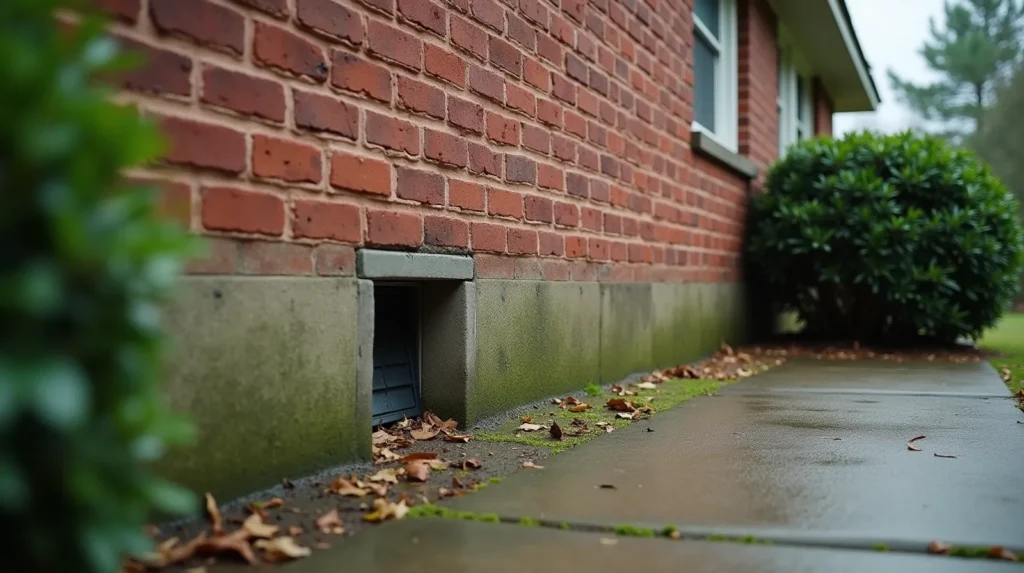
Crawl space mold is the most common type we see in Middle Tennessee. Nashville sits on limestone karst over clay soils, and crawl spaces under homes built before 1990 collect moisture from both the ground below and Tennessee’s humidity above — average relative humidity in Nashville runs above 70% from May through September. A vented crawl space without encapsulation is a standing invitation for mold on the underside of the floor joists. If you have not been under your house recently, it is worth a look before listing.
For a frame of reference, foundation problems carry a similar buyer-pool effect — structural issues eliminate FHA/VA buyers for the same financing reasons, and sellers in that situation face the same choice between remediating or going cash.
Three paths from here
Remediate, document, and list at full market value
If the mold is surface-level — a bathroom ceiling patch, attic sheathing with no structural damage, a small corner of a basement wall — remediation is often worth it. Hire a licensed Tennessee mold remediation contractor. Get a written estimate and a clearance certificate after the work is done. That certificate is what the FHA or VA appraiser needs to confirm the issue is resolved and the loan can proceed.
Expect the process to take two to four weeks total, plus another week or two for the clearance inspection.
This path makes sense when: the mold is contained, the remediation estimate is under $5,000, your market is active, and you have 60 or more days before you need to close.
Disclose, price to reflect the condition, and target investors
Some buyers — flippers, small landlords, developers — will take a mold house as-is if the price accounts for the remediation cost. The mechanics are similar to any as-is sale: price it transparently, note the condition clearly in the listing, and filter out buyers who cannot handle a project property. You will receive lower offers and the negotiation will be harder — mold gives buyers leverage at inspection even when it was already disclosed.
This path takes longer and the outcome is less certain than the other two.
Get a cash offer and close without remediating
We buy houses with mold. The offer accounts for the remediation cost and the carrying cost of managing it ourselves after closing. You walk away without doing the work first.
For crawl space mold, HVAC mold, or any situation where remediation is likely to exceed $10,000 — this path frequently nets more in total than remediating and listing, once you subtract the remediation cost, holding costs during the process, and the agent commission (5–6% you would otherwise keep).
Here is what happens after you give us the address: a cash offer arrives within 24 hours. We have bought houses with extensive mold conditions before. We will tell you what the offer is and the reasoning behind it. No obligation to accept. If you do accept, you pick the closing date — 7 to 14 days if you want out quickly, longer if you need time to move. No agent commission, no closing costs on your side, no repairs before closing.
We buy directly and, where we are not the right buyer, we bring one from our network. Either way, the process and the terms are the same.
When you should not sell to a cash buyer
If the mold is surface-level, remediation is cheap, and your market has active buyers — list it after remediation. A $1,200 bathroom treatment that keeps FHA buyers in play can be the difference between one offer below ask and three offers competing above it.
If you have 60 or more days, money for the remediation upfront, and the mold is contained — listing after remediation will almost certainly net you more than a cash offer. That is the honest trade-off, and it is worth knowing before you decide.
A cash offer makes sense when: you do not have time for a multi-week remediation process, when the mold is in the crawl space or HVAC and the remediation cost is significant, when you inherited the house and do not want to manage a contractor project, or when you simply need to close on a specific date and a traditional sale cannot guarantee that. Those are all legitimate reasons. They are your call to make, not ours.
If you want more context on what situations where cash buyers genuinely make sense, the fire-damaged house page covers the same underlying logic — conditions that eliminate financed buyers and where the math on remediation often does not add up.
Questions we hear often
Does black mold stop a sale completely?
No. Stachybotrys chartarum — what most people call black mold — is a specific type that requires professional remediation, but it does not make a property legally unsellable. It makes financed sales significantly harder: FHA and VA will not close with visible black mold present. And it tends to alarm buyers who do not understand that mold remediation is a well-established, documentable process. Cash buyers who work with mold houses regularly are not surprised by it.
What if I did not know about the mold until the buyer’s inspection?
If you genuinely did not know, you had nothing to disclose before that point. Now that the inspection has surfaced it, you do. Update your disclosure before proceeding further. The buyer’s inspector has the same information you now have — your disclosure aligns you with what they already know, which is the right position legally and practically.
Do I have to disclose mold I remediated five years ago?
Under TCA § 66-5-202, yes — you must disclose known past conditions. If you had mold remediated and have documentation showing it was addressed, include that documentation with your disclosure. A remediated and documented condition is far less damaging to a sale than an undisclosed one discovered post-closing.
How long does mold remediation actually take?
For a contained surface problem: one to two days of work, plus three to five days of drying and clearance testing. For crawl space or structural remediation: two to four weeks from initial assessment through clearance, longer if encapsulation, HVAC cleaning, or moisture-source repairs are involved. Add another week for the re-inspection before the lender will proceed.
Can I do mold remediation myself?
The EPA recommends professional remediation for any mold covering more than 10 square feet. For smaller areas — a bathroom ceiling patch, a small corner of a basement wall — surface treatment with an EPA-registered biocide is within the reach of a capable seller. But if you intend to provide a clearance document that satisfies a lender or future buyer, that clearance needs to come from a licensed inspector, not a self-certification. DIY remediation without third-party documentation does not satisfy an FHA appraiser.
One action from here
Give us the address. We will come back within 24 hours with a cash offer on the house as-is, mold and all. No obligation to accept it. If you decide to remediate and list instead, you have lost nothing — you have a data point.
Call (615) 780-7349 or fill in the address below.
Keep reading
- We Buy Houses Oklahoma
- We Buy Houses in Florida
- How to Sell a Hoarder House (Without Cleaning It Out First)
- Sell My House Fast Lakeland FL — Cash Offer in 24 Hours
- Selling a House with Sewer Line Problems
- Can You Sell a House With No Utilities?
Ready for a number? Get your cash offer or call (615) 780-7349.