


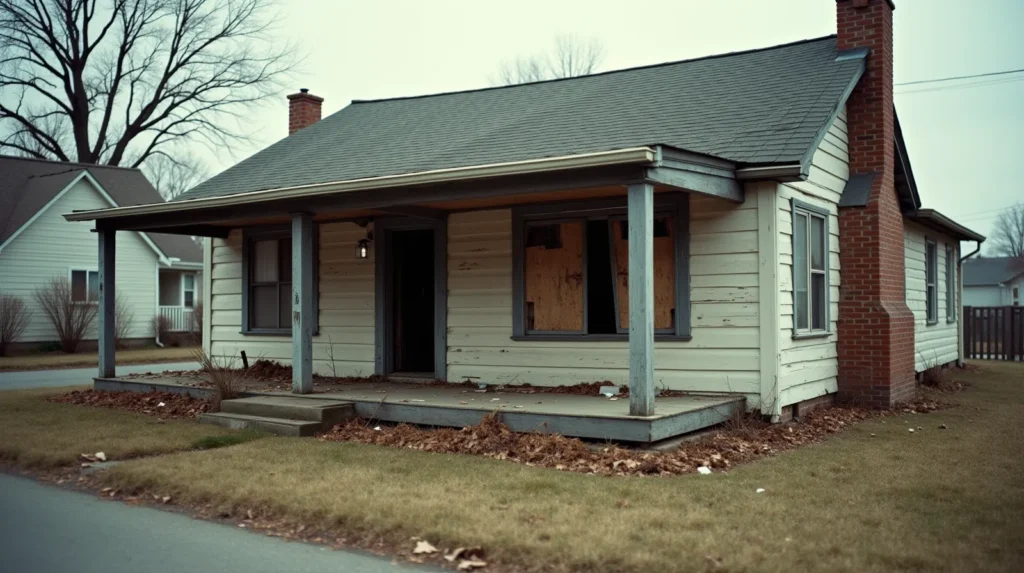
Yes. A condemnation order does not take the property from you. It declares the structure legally uninhabitable — that is a statement about the house, not about your right to transfer it. You can still sell. What you cannot do is sell to a buyer who needs financing, because no mortgage lender will close on a condemned property. Your buyers are cash buyers only, and the price reflects the property’s actual current condition.
TL;DR: A condemned house can be sold to a cash buyer as-is. City fines and code enforcement liens settle at closing from the proceeds. Your mortgage gets paid off the same way it would in any sale. We’ve bought more than 100 houses and work through condemned properties regularly — call (615) 780-7349 or submit the address for an offer within 24 hours.
What condemnation actually does to your title
A local building authority — Nashville’s Metro Codes Compliance, Memphis’s Shelby County Housing Code Enforcement, a Florida building department, or a Texas city’s Unsafe Structures Board — issues the order after an inspection finds the structure unsafe or unfit for habitation. That order gets recorded with the county. From that point it shows in every title search.
Here is what attaches to the title:
Code enforcement liens. Every fine accumulated for the underlying violations can be recorded as a lien. In Tennessee these run under TCA § 13-21-116, which gives metropolitan code enforcement authorities lien rights for fines and any remediation work the city performs. In Florida, liens attach under Florida Statute § 162.09. In Texas, municipalities proceed under Texas Property Code §§ 214.001–214.007. These liens stay with the property regardless of who owns it. The buyer does not inherit them unpaid — the title company settles them from the proceeds at closing.
The condemnation order itself. Filed with the county recorder in most jurisdictions. Any buyer’s title search will find it.
Demolition orders. If the city has moved from condemnation to an active demolition order with a scheduled date, the timeline for selling tightens considerably. A cash buyer can close in 7 days; a city crew can demolish in less. Know the specific status — call the code enforcement department and ask for the order status in writing.
If you are also carrying unpaid property taxes, those are senior to everything else on the title. They get paid before the mortgage at closing. More on navigating a sale with back taxes.
What happens to your mortgage if the house is condemned
Your mortgage does not disappear. The condemnation order is a municipal action, not a lender action. You still owe the balance. When you sell, the loan is paid off from the proceeds at closing — the same mechanics as any other sale.
The complication is the gap. If the sale price, after liens and closing costs, is less than the mortgage balance, you have a short sale. A cash buyer can still close short sales, but the lender has to approve the deficiency. That approval typically takes 30 to 90 days after a buyer is under contract — longer than a straightforward cash close but usually faster than a conventional listing cycle.
Demolition vs. selling as-is: the buyer decides
You can sell the property in its condemned state and let the buyer determine what to do with the structure. Most cash buyers purchasing condemned properties are either renovating if the foundation and framing are sound, or clearing the lot for new construction.
If the city has an active demolition order with a hard date, the buyer needs to know that timeline before making an offer. Do not obscure it. A buyer who closes ten days before a scheduled demolition absorbs a different risk than one closing with six months of runway.
Demolition cost context: clearing a single-family structure in Tennessee typically runs $8,000–$18,000, depending on size, debris volume, and whether asbestos abatement is required — pre-1980 homes frequently need it. See selling a house with asbestos for what that involves. In Florida near the coast, debris and permitting run higher. Buyers account for this in the offer. It is not a surprise deduction; it is built into the calculation from the start.
Tennessee: how condemnation proceeds here
Nashville (Davidson County) condemns properties through Metro Codes Compliance. An unsafe structure complaint triggers an inspection; if the inspector cites the structure as dangerous, the owner receives a notice with a remediation period. If neither an appeal nor repairs follow, the case moves to Davidson County General Sessions Environmental Court, where a judge can order repair, demolition, or both.
The city’s fines and any remediation costs it incurs become a lien under TCA § 13-21-116. These survive a sale.
Memphis (Shelby County) runs through the Memphis Division of Housing and Community Development and Shelby County Housing Code Enforcement. The administrative structure differs from Davidson County, and Shelby County has historically moved faster on scheduling demolition of derelict structures than Nashville has.
In smaller Tennessee counties — Rutherford, Sumner, Williamson — code enforcement operates with fewer resources. A property can carry violations for years before the county acts. But the seller’s disclosure obligation under TCA § 66-5-202 applies regardless of county and regardless of whether the buyer is financing or paying cash. A condemnation order is a known defect. Failing to disclose it in writing does not protect you — it creates liability after the fact.
Properties that accumulated code violations before a condemnation order are a related situation. If that describes your property, selling a house with code violations covers the specific mechanics.
Florida: building departments, not courts
Florida condemns residential property through local building departments operating under Florida Statute § 553.79, not through a court process. A city or county building official can declare a structure unsafe, post it, and move to demolition without any judicial proceeding. That administrative speed can create real pressure for a seller.
Florida’s judicial foreclosure process is slow — six months to two years or more. A municipal unsafe structures order operates on a completely separate timeline. If the house is condemned and you are also behind on mortgage payments, the city may act before the foreclosure auction resolves.
In coastal counties — Pinellas, Hillsborough, Broward, Miami-Dade — FEMA’s Substantial Damage determination adds another layer. When a home’s damage exceeds 50% of its pre-damage market value, local ordinance typically requires bringing it to current flood code before it can be legally reoccupied. That standard frequently triggers condemnation after significant hurricane or storm surge damage.
Citizens Insurance, Florida’s insurer of last resort, will not write a policy on a condemned structure. No coverage means no mortgage. That is not an obstacle for a cash sale — it confirms that financing is off the table before anyone wastes time applying for it.
Texas: city limits vs. unincorporated county
Texas municipalities proceed under Texas Property Code Chapter 214 (Substandard Buildings). Inside city limits, the city’s building official or a designated board can order repair or demolition. Houston has its own Minimum Standards of Habitability ordinance; Dallas, San Antonio, and Austin have equivalent codes.
Outside city limits, in unincorporated county areas, enforcement is thinner. Texas counties generally lack the code enforcement authority that municipalities hold. A structure in unincorporated Parker County may sit with condemned-level conditions for years without formal municipal action. That does not translate to a higher sale price — it means the formal order may not exist yet, but the condition driving that order still determines what the property is worth.
Texas has no statutory right of redemption for ordinary mortgage foreclosures. The first-Tuesday auction is final. If a condemned property is also heading toward foreclosure, the window to sell and exit with any proceeds is shorter here than in most states.
TREC Form OP-H (Seller’s Disclosure Notice) requires disclosure of known government orders affecting the property. A condemnation order is explicitly within that scope under Texas Property Code § 5.008. Cash sales do not exempt the seller from completing it.
What the sale actually looks like
Here is the sequence after you submit the address:
- Describe the situation — the condemnation order, any known liens, the city’s current timeline if a demolition date exists.
- We pull the title and review the code enforcement records.
- You have a cash offer within 24 hours. The offer reflects the property’s current condition, the liens, and what the buyer needs to absorb.
- You pick the closing date — 7 to 14 days is typical, but if you need more time to arrange logistics, that date is yours to set.
- At closing, the title company pays the liens first, then the mortgage balance. Whatever remains goes to you.
The offer will be below what the house would sell for repaired and listed. That gap is the cost of repairs, the buyer’s carrying costs through renovation, and the risk the buyer absorbs. An offer that does not account for those things will fall apart at closing or get adjusted when contractor estimates come back.
Cash sale vs. repair and relist
| Cash sale as condemned | Repair to relist | |
|---|---|---|
| Timeline | 7–14 days | 6–18 months |
| Sale price | Below market | Near market (if repairs hold) |
| Out-of-pocket repairs | None | $40,000–$200,000+ |
| City demolition risk | Buyer absorbs | Your problem through renovation |
| Carrying costs | End at closing | Continue through renovation |
| Financing required | None | Construction loan or reserves |
An as-is cash sale eliminates the repair decision entirely. The right choice depends on what you have in equity, what the property would be worth repaired, and how much time you actually have.
When you should not sell to us
If the condemnation was triggered by something reversible — a failed permit, a minor citation the building department will lift after one reinspection — and you have the money and the time to address it, doing so and selling on the open market will net you more. A cleared condemnation restores the property to habitability and reopens the conventional financing pool. A larger buyer pool means a higher price.
A real estate attorney familiar with your county’s condemnation process can often tell you in one conversation what clearing the order requires. In Nashville, a Davidson County Environmental Court attorney can review the open orders and give you a realistic repair-or-clear timeline. In Florida, a local attorney familiar with the building department’s reinspection process can advise on the path. That $300–$500 conversation is worth having before you commit to a direction.
A cash sale is the right call when:
- the structure is too far gone to repair at a cost that makes financial sense
- the city has a demolition date approaching and there is no time for renovation
- liens are accumulating and you need them resolved
- the property is vacant and carrying costs are adding up with no clear exit
If you are in one of those situations, get more than one cash offer. One from us, one from another local buyer. The offer that holds through closing is the right one, not the highest number quoted before anyone has seen the title.
Straight answers
Can a condemned house be sold without first clearing the liens?
Yes. The title company handles lien payoff at closing from the proceeds. The liens do not transfer to the buyer. If the liens exceed the sale price, the parties negotiate a resolution — that takes additional time but does not make the sale impossible.
Does the city have to approve the sale of a condemned property?
No. A condemnation order does not require the municipality to approve a transfer of ownership. You still hold title and can transfer it. The buyer takes the property subject to the outstanding orders.
Will you buy a condemned house with an active demolition date?
If there is enough time to close before the demolition is executed, yes. A 7-day close is possible. Call (615) 780-7349 directly and give us the specific order date — do not estimate it.
Do I need an attorney to sell a condemned house?
You are not legally required to have one in most states, but the lien and title complexity makes the cost worth it. In Tennessee, a real estate attorney familiar with Environmental Court can read the open orders and tell you what is on the title before you sign anything.
The house burned and then the city condemned it. What happens now?
Fire damage and condemnation frequently come together. If there is an open insurance claim, that needs to be assigned or resolved before closing. Selling a fire-damaged house covers that process — the steps overlap with a condemned sale but are not identical.
What if there is a lien on the condemned property I was not aware of?
The title search runs before closing and surfaces everything recorded against the property. Unexpected liens slow the process but rarely kill it — they get negotiated out at closing or resolved with the lienholder directly. Selling a house with a lien covers that process in detail.
Keep reading
- Selling a House With Code Violations
- Sell My House Fast Augusta, GA
- Can I Sell My House to Pay Medical Bills?
- We Buy Houses Washington State
- How to Sell a House As-Is: What the Discount Really Is
- Selling a House with a Damaged Roof
Ready for a number? Get your cash offer or call (615) 780-7349.