


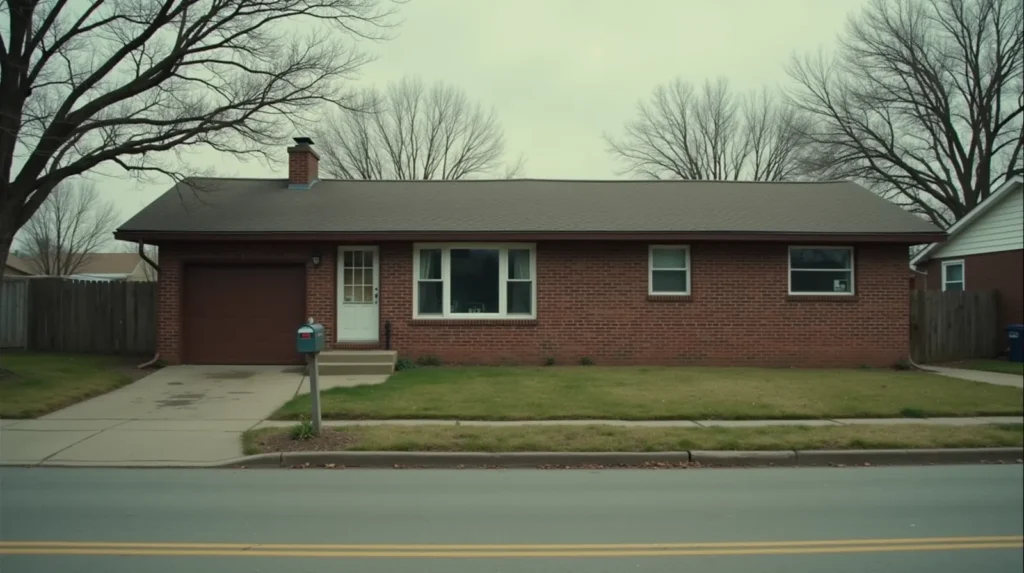
The house sits empty. You’re paying property taxes on it, carrying homeowners insurance that may no longer cover it, and watching the lawn grow. Every month it stays vacant costs money you’re not getting back.
The standard advice — clean it up, price it right, list with an agent — works when the house is in good condition and you have time. It works less well when you’ve already moved, or inherited the house, or you’re carrying it through a divorce settlement. And it can fail completely once the insurance company sends a letter.
The short version: Vacant houses create an insurance gap and eliminate most FHA/VA-financed buyers. A cash buyer closes in 7–14 days and stops the carrying costs immediately. If the house is in good shape and you have 90+ days, listing with an agent probably nets more — and that is covered below.
Why a Vacant House Eliminates Most Financed Buyers
Standard homeowners insurance changes the moment a house becomes unoccupied. Most policies — State Farm, Allstate, and Nationwide among them — treat vacancy as a material change in risk. After 30 to 60 consecutive days vacant, coverage shifts. Some require a vacancy endorsement that costs $3,000 to $8,000 per year more than standard coverage. Some deny claims for damage that occurred while the house was empty. In Florida, Citizens Insurance does not cover vacant homes at all.
This matters for your buyer, not just for you.
FHA and VA loans require that utilities be on and functional at the time of appraisal. That requirement is in HUD Handbook 4000.1, and VA Pamphlet 26-7 carries the same language. An appraiser must run faucets, verify heat, and test electrical. If water or electricity is off, the appraisal cannot be completed — which means no loan and no closing. A vacant house with shutoff utilities eliminates FHA and VA buyers before anyone has seen a room.
A cash buyer does not need an appraisal. They price what is visible and close.
What It Actually Costs to Wait
Every month a vacant house sits, carrying costs continue:
- Property taxes — typically 1.5–2.5% of assessed value per year
- Homeowners insurance, or a vacancy endorsement that costs more than standard coverage
- HOA dues, if applicable
- Utilities held at minimum to meet municipal requirements or prevent pipe damage
- Lawn maintenance and snow removal
- Security monitoring
On a $250,000 house, those costs run $1,500 to $2,500 per month depending on location and condition. Add a 47–94 day listing period plus 30–45 days to close, and you are looking at four to five months of carrying costs before you see money. The gap between a cash offer and an agent listing often looks different once you account for that.
| Factor | Agent listing (vacant home) | Cash buyer |
|---|---|---|
| Insurance during sale | Vacancy endorsement required; coverage gap risk | Ends at closing |
| FHA/VA buyer eligibility | Utilities must be on for appraisal | No appraisal required |
| Time to closing | 77–135 days typical | 7–14 days |
| Carrying costs | Continue throughout | Stop at closing |
| Inspection contingencies | Standard — vacant homes often generate longer lists | None; we buy as-is |
| Agent commission | 5–6% of sale price | No commission, no fees |
Three Steps from Contact to Cash
Here is what happens after you submit the address:
Day 1. You give us the address and a brief description of condition. We research county records, comparable sales, and condition — and call back with a cash offer within 24 hours.
Days 2 to 5. If the offer works, we sign the purchase agreement. No inspection contingency. No repair request. No appraisal. We buy as-is.
Days 7 to 14. You pick the closing date. We close, you get paid, and the carrying costs stop.
We have bought more than 100 houses this way. We buy directly and, where we are not the right buyer, we bring in a cash buyer from our network. No commissions, no fees.
If you are carrying a vacant house through an estate, the page on selling an inherited house covers how that process typically runs alongside a probate proceeding.
When You Should Not Sell to Us
If the house is in good condition, you have 90 days before you need to close, and you are not running into insurance or utility problems — listing with a real estate agent is the right call. You will net more from the open market. The cash buyer discount exists because we accept condition and timeline risk the market will not take on its own. If there is no real pressure, that discount does not serve you.
The situations where a cash sale makes sense:
- Insurance has lapsed or is close to it because the vacancy has gone on too long
- FHA or VA buyers keep falling through because utilities are off or the lender requires repairs first
- The house is vacant because someone died and the estate needs to close it out
- Carrying costs have accumulated and the math on waiting gets worse each month
- You moved for a job and need the house sold without managing it from another city
If you relocated and the house is sitting empty, the page on selling a house for job relocation covers the dual-mortgage risk and vacancy insurance issues specific to that situation.
State-Specific Facts That Change the Calculation
Tennessee
Tennessee has no statewide vacant property registration law, but Nashville’s Metro Codes Department enforces a vacant property ordinance in Davidson County. Properties flagged as vacant trigger inspection cycles. Code violations generate liens under TCA § 13-21-116 — a $200 citation that goes unanswered while the house sits empty can become a $3,000 to $5,000 lien that must clear at closing. Under TCA § 66-5-202, sellers must disclose any known defects, including deterioration that occurred during the vacancy period.
East Tennessee winters add a second exposure. If heating fails in a vacant Knox County or Blount County house during a cold snap, damage from frozen and burst pipes is often excluded under the ISO HO-3 policy’s vacancy provisions — most carriers deny the claim when the property was unoccupied and heat was not maintained.
Long-vacant properties in Tennessee also attract unauthorized occupants. The page on selling a house with an unauthorized occupant in Tennessee covers how occupancy by a squatter changes your legal options and sale timeline.
Minnesota
Minnesota winters make vacant-house liability specific and measurable. The standard ISO HO-3 homeowners policy excludes damage from frozen and burst pipes when the property was unoccupied and heat was not maintained. That exclusion is enforced. A burst pipe in a vacant Minneapolis or St. Paul area house in February — before heat is restored — can produce $20,000 to $60,000 in water damage the insurer will not pay.
Minnesota also has a six-month post-sale foreclosure redemption period. A house going through foreclosure can sit vacant for the entire period after the sheriff’s sale before title formally transfers. During that window, the property accumulates risk from weather damage, vandalism, and code citations. If you are in that window and need to move, the timeline is the whole problem.
We buy houses in the Minneapolis–St. Paul metro. The Minnesota page covers the foreclosure timeline and what sellers in the Twin Cities area typically face.
Florida
Citizens Insurance, Florida’s insurer of last resort, does not extend coverage to vacant homes. Private carriers in Florida are selective about vacancy — and Florida’s heat and humidity mean a vacant house in Pinellas, Hillsborough, or Lee County can develop significant mold within 90 days of going unoccupied without ventilation or dehumidification. Vacant bank-owned properties in humid Florida markets routinely require remediation before any financed buyer can close.
FL § 689.261 requires written disclosure of any known flood or insurance claims history. If the house has been vacant and accumulated moisture damage, that goes in the disclosure. The page on selling a house with mold covers how cash buyers handle remediation cost in the offer.
Texas
Texas Property Code § 5.008 requires sellers to disclose known defects, including deterioration that occurred during a vacancy. Dallas and Houston both run vacant property registration programs; a property flagged in those systems generates code enforcement visits with escalating fines. The TREC Form OP-H Section 4 asks directly about known property defects — vacancy-related damage must be disclosed honestly.
Straight Answers
Does an empty house appraise differently than an occupied one?
Yes. An FHA or VA appraiser must confirm that utilities are on and functional. If water or power is off, the appraisal cannot be completed and the loan fails. Cash buyers skip the appraisal requirement — condition is priced into the offer instead of a lender’s checklist.
How long before my homeowners insurance stops covering a vacant house?
Most standard policies treat vacancy as a material change in risk after 30 to 60 consecutive days unoccupied. After that, specific claims — frozen pipes, vandalism, certain water damage — may be excluded. Citizens Insurance in Florida excludes vacant homes at policy renewal. The exact terms depend on your carrier; check your declarations page.
Can I sell a vacant house with deferred maintenance?
Yes. A cash buyer prices the condition into the offer rather than requiring repairs before closing. You do not repair it first — the offer reflects what it needs.
What if the house is in an estate and probate is not closed yet?
If the estate is open and the personal representative has authority to sell, the transaction can often close before probate concludes — proceeds go into the estate and are distributed under court oversight. We work with sellers in this situation in Tennessee, Florida, and Texas. Call us at (615) 780-7349 to talk through your timeline.
What happens if the vacant house is damaged before closing?
If your standard policy has moved into a vacancy exclusion period, that damage may not be covered — that is the gap that makes vacancy a real financial risk. A cash buyer closes in 7 to 14 days from signed agreement, which limits how long the exposure window stays open.
The address form below is where it starts. You will have a cash offer within 24 hours and a closing date you choose. No commissions, no repairs, no appraisal.
Keep reading
- Sell Your House Before Foreclosure
- Selling a House With Asbestos
- Can I Sell a Condemned House?
- Selling a House in Probate: What an Executor Needs to Know
- Sell a Fire Damaged House Fast for Cash
- How to Sell a Rental Property With Tenants Still in It
Ready for a number? Get your cash offer or call (615) 780-7349.