

How to Sell a Rental Property With Tenants Still in It

Please enter your property address.
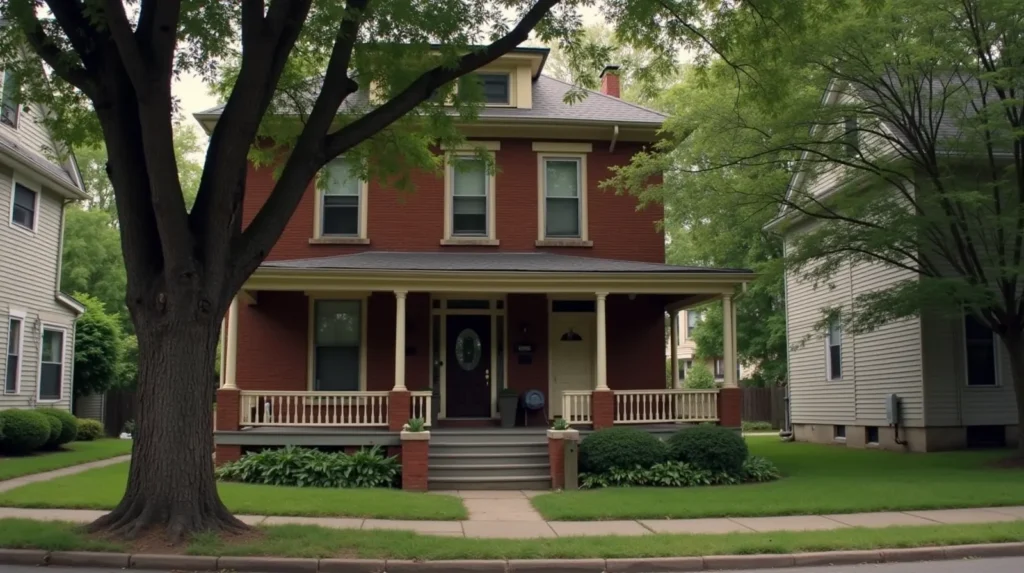
Single-story brick rental house on a quiet suburban street with a moving box on the front porch steps

You own a rental property with tenants in it, and you are trying to figure out how to exit. Maybe the property is too much work to manage from a distance. Maybe the rent no longer covers the mortgage, taxes, and repairs. Maybe you inherited it and never intended to be a landlord. Whatever brought you here, the path out is more complicated when people are living in the property — and what complicates it most is usually one of two things: what kind of lease you have, and what tenant-occupied status does to your pool of buyers.

This page covers both in depth. It also covers the notice requirements that catch landlords off guard, the financing restrictions that shrink your buyer pool, the cash-for-keys option and what it realistically costs, what happens to the lease when you sell, and when a cash buyer is the most direct way through the situation.

The Lease Type Determines Almost Everything

Before thinking about price or buyers or timing, get clear on what you signed with your tenant. This is the decision point that shapes every option downstream.

Fixed-term lease

A fixed-term lease — annual or multi-year — runs until its stated end date. When you sell the property, the new owner inherits that lease. They cannot evict a tenant mid-term simply because they bought the property. The tenant keeps the right to live there under the same terms until the lease expires.

This holds in every state. A lease recorded before a sale survives the sale. The new owner steps into your position as landlord, with the same obligations you had.

In practical terms: if your tenant has eight months left on their lease and you close in 30 days, the buyer takes a house with a tenant they cannot remove for eight months. Owner-occupant buyers will not accept that. Investors and cash buyers will, because they are acquiring an income property — though they will price in the lease terms, the rent relative to current market rates, and any deferred maintenance.

Month-to-month tenancy

Month-to-month gives you more flexibility than a fixed-term lease, but it does not mean you can give a tenant 48 hours to clear out. You have to give written notice before you can require the tenant to leave, and state law specifies how much. The notice requirements for each major market are below.

Even after proper notice is given, the tenant typically has until the end of their rental period to vacate — not just 30 calendar days from the date of your letter. If you give notice on August 15 in Tennessee, the tenant may not be required to leave until September 30. The month they have paid for runs out first.

At-will tenancy with no written agreement

If there is no lease and no consistent monthly payment arrangement, you are in at-will territory. State law still governs notice requirements, and the notice period is usually tied to the rental interval. In Tennessee, a week-to-week tenancy can be terminated with 10 days notice under TCA 66-7-109. A month-to-month arrangement with no written lease still requires 30 days.

The absence of a lease does not mean the absence of tenant rights. Verbal tenancies carry legal protections in most states. Assume you need to follow statutory notice procedures regardless of whether there is a paper lease.

Notice Requirements by State

Most landlord mistakes in this process happen here. The notice period is not the amount of time until you want the tenant to leave — it is the minimum legally required period before you can require them to leave. Miss the statutory requirements and you restart the clock.

Tennessee

Under TCA 66-7-109, a month-to-month tenancy requires 30 days written notice from either party to terminate. The Tennessee Uniform Residential Landlord and Tenant Act (URLTA) applies in counties with populations over 75,000 — Davidson (Nashville), Hamilton (Chattanooga), Knox (Knoxville), Shelby (Memphis), Rutherford, Williamson, Montgomery, Maury, and Madison counties, among others. In counties outside URLTA coverage, common law applies, but the 30-day standard is practiced statewide.

Notice must state the termination date. Oral notice does not count. Send it certified mail and keep the return receipt. Tennessee does not require landlords to give tenants a right of first refusal before listing — you can put the property on the market while the tenant is in it. Entry for showings requires reasonable notice, which Tennessee courts have consistently treated as at least 24 hours advance written notice.

If your tenant situation is also connected to a mortgage you cannot keep up, see our page on selling a house to stop foreclosure — the notice timelines interact when there is both a lease and a lender notice in play.

Florida

Florida Statutes 83.57 governs tenancies without a specific term. A month-to-month tenancy requires 15 days notice before the end of the rental period. The 15 days must come before the final month begins — you cannot give notice on the 20th and expect the tenant out by the 1st. Notice must be served correctly: hand delivery or certified mail to the property.

Florida Statutes 83.53 requires landlords to give at least 12 hours advance notice before entering to show the property. In practice, 24 hours is safer. Florida has no statewide right of first refusal for residential tenants, but check your county — Miami-Dade County has enacted certain tenant protections beyond state minimums. Our Florida buyers page covers the state judicial foreclosure timeline, which matters for landlords who are also behind on a mortgage, since Florida foreclosures move on a different schedule than Tennessee or Texas.

Texas

Texas Property Code 91.001 requires one month written notice to terminate a month-to-month tenancy. Texas is generally landlord-friendly — no statewide right of first refusal, no mandatory right-to-purchase for tenants, and no restrictions on selling a tenant-occupied property outside of some Austin local ordinances.

For showings, Texas Property Code 92.006 requires reasonable notice for non-emergency entry. Twenty-four hours written notice is the standard that holds up in court. If your Texas property is also at risk under the state non-judicial foreclosure timeline — 20-day cure notice, 21-day sale notice, first-Tuesday auction — our Texas page covers how fast that process moves and when selling before the auction is still possible.

Minnesota

Minnesota warrants separate attention because of local regulations that go beyond state law. Minn. Stat. 504B.135 governs periodic tenancies at the state level — for month-to-month arrangements, notice must equal the rental interval, generally one month.

Minneapolis specifically enacted tenant protection ordinances requiring longer notice in some circumstances. The city Just Cause Eviction ordinance limits the grounds on which a landlord can terminate a tenancy. Minneapolis also has a Tenant Opportunity to Purchase Act (TOPA), which requires landlords to give tenants advance notice of intent to sell and a right to match offers in certain circumstances. If your property is in Minneapolis or St. Paul, the state minimum is not the full picture.

The Financing Problem Most Sellers Do Not See Coming

Here is the practical consequence of selling a tenant-occupied property that most landlords do not anticipate: it eliminates a large share of conventional buyers before you ever list.

FHA loans require the buyer to intend to occupy the property as their primary residence within 60 days of closing. A tenant with six months left on a lease makes that impossible. FHA-financed buyers are gone from your pool entirely.

VA loans have the same requirement — the veteran borrower must intend to personally occupy the property. A sitting tenant removes VA buyers too.

USDA loans require owner-occupancy. Same result.

What you are left with: investors, cash buyers, and conventional buyers willing to wait out a lease — which is rare, and those buyers want a discount for the wait. Investors will factor in the current lease terms, the rent relative to market rate, and any deferred maintenance. A property with a below-market lease held by a tenant who will not cooperate with showings will take a significant price hit. Industry data typically shows tenant-occupied homes selling 10 to 25 percent below comparable vacant-property prices, with complex tenancy situations hitting the upper end of that range.

This is the same buyer-pool shrinkage problem that affects selling a house as-is — when the sale is restricted to investors and cash buyers, the price reflects it. Whether that gap is worth absorbing versus waiting for the lease to expire is a calculation specific to your numbers. Carrying costs — mortgage, taxes, insurance, property management fees — erode the advantage of waiting in most cases.

Cash for Keys — What It Is and What It Actually Costs

If your tenant is on a month-to-month lease, or close to the end of a fixed-term lease, and you want to move faster than the standard notice period allows, there is a middle path: offer the tenant cash to vacate early. This is called a cash-for-keys agreement. It is legal in every state, as long as it is voluntary — you cannot coerce a tenant into accepting it, and threatening eviction to pressure them creates legal exposure for you.

What it costs depends on your market and your tenant. In most markets, one to two months rent is enough to motivate a cooperative tenant to leave early. In tighter rental markets, or with long-term tenants who have built lives near the property, the number climbs. Three months is not uncommon. If the tenant has children in school or has lived there for years, the realistic number is higher than for a tenant who moved in six months ago.

The agreement needs to be in writing, signed by the tenant, and must state precisely: the vacate date, the condition the property must be in at hand-off, and that the payment is contingent on those conditions being met. Do not release the payment until the tenant has vacated, you have completed a walkthrough, and they have handed over keys. A signed release of claims is worth the extra two minutes it takes.

What a cash-for-keys agreement buys you: a vacant property that can qualify for any type of financing, listed at closer to market value for a vacant home. In most cases, the buyout cost is less than the discount you would take selling tenant-occupied, and significantly less than carrying the property for additional months while a lease winds down naturally.

What Happens to the Lease When You Sell

Many landlords selling a rental for the first time assume the sale ends the tenancy. It does not. The sale does not terminate the lease. The new owner steps into your position as landlord and inherits the tenant rights and obligations under the existing lease — the rent amount, the lease term, any agreed-upon terms.

This is called lease assignment by operation of law. It happens automatically at closing. The tenant does not need to sign anything. The lease transfers with the deed.

What you do need to do: notify the tenant in writing that the property has been sold and provide the new owner contact information. Transfer the security deposit to the buyer at closing — the most common arrangement — or return it to the tenant if you and the buyer negotiate that approach. Document this in the closing paperwork explicitly. A security deposit that disappears in a sale creates liability for both parties in every state.

If there are verbal side agreements with the tenant that are not in the written lease — an extra parking space, permission for a pet, a verbal rent discount in exchange for lawn maintenance — those agreements may or may not be enforceable by the new owner. Disclose them to the buyer before closing. Undisclosed verbal agreements that the tenant relies on after the sale can become disputes that follow you.

How Showings Work With a Tenant in Place

A tenant has a legal right to quiet enjoyment of the property. That means you cannot force access at inconvenient hours, show up unannounced, or schedule back-to-back visits that make the property unusable. This limits how traditional listed sales work on tenant-occupied property in a practical way.

Required notice before entry is 24 hours in most states — this is the standard in Tennessee, Texas, and the federal baseline courts apply in most jurisdictions. Florida statute requires 12 hours, though 24 is safer practice. The notice must be reasonable in method, timing, and frequency.

If a tenant is uncooperative — responding to every showing request with a refusal or scheduling conflict — your immediate options are limited. Repeated bad-faith refusal can eventually support a lease violation claim, but that is a months-long legal process. An uncooperative tenant is the single most common factor that kills traditional listed sales of tenant-occupied property. Buyers in active negotiations will not wait while a landlord pursues legal action to get access for a second showing.

A cash buyer typically needs one access point: a walkthrough inspection, schedulable with proper advance notice. No open houses, no financed buyers who need to see the property three times before deciding. That single-access requirement is one practical difference between the cash buyer path and a traditional listed sale on a tenant-occupied property.

Selling to a Cash Buyer With Tenants in Place

Here is how the process works when a landlord contacts us about a tenant-occupied property.

We ask for the address, the basic lease situation — fixed-term or month-to-month, remaining term — and the monthly rent. If there are known issues with the property, tell us. We buy as-is. The condition affects the offer number; it does not affect whether we make one.

Within 24 hours of getting the address, you will have a cash offer. That timeline does not change because there is a tenant in place.

We buy directly. Where we are not the right buyer for a specific property or market, we bring in a buyer from our network. Either way, the offer runs through us, and you deal with one point of contact, not a chain of intermediaries. We have bought more than 100 houses. Nashville, TN is home base, and we buy nationwide.

The closing timeline is 7 to 14 days in most cases. For tenant-occupied properties with remaining lease time, we can structure the close differently — the deed transfers while the tenancy continues, the tenant gets written notice of new ownership, and their lease terms do not change. If you need the tenant out before closing, we can build a timeline around the notice period and any cash-for-keys negotiation. The structure depends on your situation.

You pay no agent commission, no closing costs on your side, no fees. The offer is the number you walk away with.

When You Should Not Sell to Us

If your tenant is on a month-to-month lease, the property is in solid condition, and your local rental market is competitive, there is a real case for paying cash for keys and listing vacant. The discount you take selling tenant-occupied versus selling clean and vacant can be meaningful — 10 to 25 percent by most measures — and if the market is strong and you have time, waiting for the lease to end or negotiating a buyout before listing may put more money in your pocket.

If your fixed-term lease has two or more years remaining and the rent is at or above current market rate, a traditional real estate investor may pay you a premium for that cash flow. A reliable long-term tenant paying market rent on a multi-year lease is an asset to certain buyers. In that case, listing with a commercial or investment-focused agent is worth exploring first.

If you have time and no financial pressure forcing the sale, waiting for the lease to expire, returning the deposit, and selling vacant gives you access to the widest buyer pool and the highest likely price. Carrying costs matter, but in a strong market they may not exceed the premium you capture by selling vacant. Do the specific math on your property before committing to any path. Our page on selling without a realtor covers what you give up and what you gain by going either way — relevant if you decide a traditional sale makes more sense.

A cash buyer makes the most sense when speed matters, when the property has deferred maintenance or condition issues, when the tenant is uncooperative with showings, when you are managing from out of state, or when the property cannot qualify for financed buyers regardless of the tenancy. If none of those describe your situation, explore all your options before deciding.

Straight Answers

Can I sell a rental property while a tenant is living there?

Yes. You can list and sell at any point during a tenancy. The sale does not terminate the lease — the new owner inherits it. You need to give the tenant written notice of the change in ownership, but the sale is not contingent on the tenant agreeing to leave.

Can I force the tenant out before selling?

Not during a fixed-term lease, unless the tenant has materially violated the lease terms. For month-to-month tenants, you can issue the legally required notice — 30 days in Tennessee and Texas, 15 days in Florida — and they must vacate by the end of their last paid rental period. You cannot remove them before that date without a court eviction order, which takes additional months in most states.

Does a tenant have the right of first refusal to buy my property?

In most states, no. Tennessee, Florida, and Texas have no statewide right of first refusal for residential tenants. Minneapolis has a Tenant Opportunity to Purchase Act (TOPA) requiring landlords to notify tenants of intent to sell and give them a window to match offers. Check your specific city ordinances before assuming the state minimum is all that applies.

How much notice do I have to give tenants if I want to sell?

Notice to sell is separate from notice to vacate. You can list and sell without giving the tenant any special advance notice of the sale itself — you only need to comply with showing entry requirements, which is 24 hours in most states. If you want the tenant out before or by closing, that is when the statutory notice periods apply: 30 days in Tennessee and Texas, 15 days in Florida for month-to-month tenancies.

Will a tenant-occupied property sell for less?

Usually, yes, on the open market. The buyer pool is limited to investors and cash buyers, and those buyers price in the lease term, the rent relative to current market rate, and the condition of the property. Industry data typically shows 10 to 25 percent below comparable vacant-property sales for tenant-occupied homes. The exception: a below-market lease nearing expiration in a hot rental market may attract a premium from income-focused investors who want occupancy without turnover cost.

What happens to the security deposit when I sell?

You must either transfer it to the buyer at closing — the most common arrangement, handled in the closing documents — or return it to the tenant directly and have the buyer collect a fresh deposit. The buyer becomes responsible for returning it to the tenant at the end of the tenancy. Do not pocket it. Mishandling a security deposit during a sale creates liability in every state.

How quickly can a cash buyer close on a tenant-occupied property?

Typically within 7 to 14 days of accepting the offer, assuming title is clear. The tenant does not need to vacate for the closing to happen. The deed transfers, the tenant receives written notice of new ownership, and their lease continues under the new owner on the same terms.