


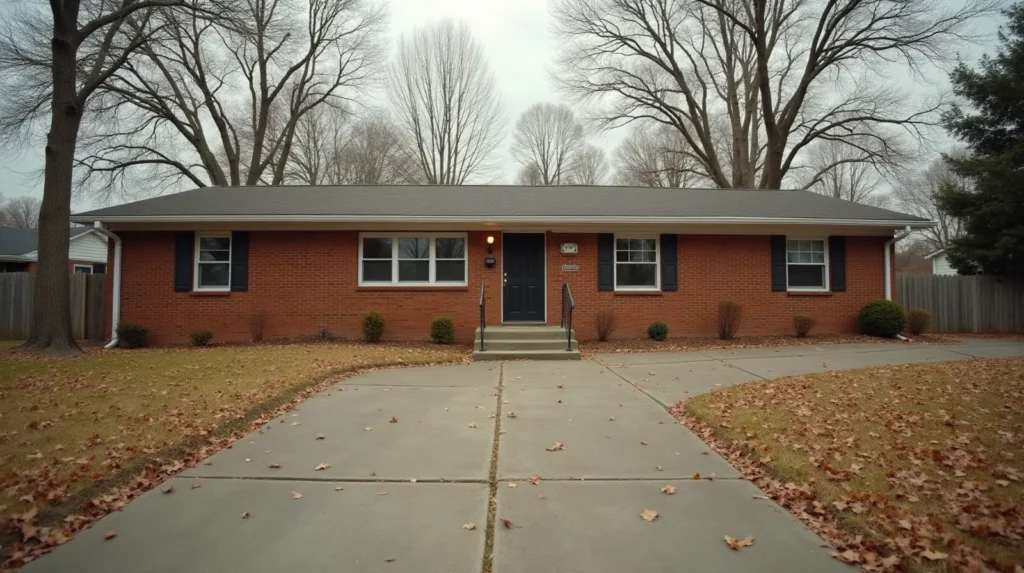
What you’ve actually inherited
When a parent dies without a joint tenancy deed or a trust, the house passes through the estate to whoever the will names — or, absent a will, to whoever state law designates. Usually that’s the children in equal shares.
What you’ve inherited isn’t the house. It’s an undivided fractional interest in the house. Under tenancy in common, each heir owns a percentage, but nobody owns any specific room or square foot of it. Every decision about the property requires agreement. Including the decision to sell.
If three siblings inherit in equal thirds and one wants to keep the house, the other two cannot force a sale through a listing agent. The title company will not close without all co-owners signing. That is the actual problem.
The short version: All tenants in common must agree to sell voluntarily. If they don’t, the choices are: reach a buyout agreement, set a written deadline, or file a partition action and let a court force the sale. A partition action takes 12–24 months and costs $10,000–$30,000 in legal fees before the proceeds are divided. A cash offer gives every heir a concrete number to decide yes or no on — without repairs, without showings, in 7–14 days once everyone signs.
When you can sell without everyone agreeing
There are two narrow situations.
First: joint tenancy with right of survivorship. If the deed says “as joint tenants,” each death automatically transfers that share to the survivors. Tennessee Code Annotated § 66-1-109 governs survivorship rights for TN deeds; FL § 689.115 sets the same framework in Florida — but the survivorship language must be explicit in the Florida deed, and many older deeds lack it. If only one heir remains, they own outright and can sell without anyone’s consent.
Second: an executor with active court authority under a supervised estate. Probate courts can authorize a sale over objections in limited circumstances — but that requires open estate administration, a probate attorney, and a court hearing. See selling a house during probate for how that process works.
Outside those two paths: you need signatures.
The partition action — what it costs and how long it takes
A partition action is a lawsuit you file against your co-owners asking a court to either physically divide the property or force a sale and divide the proceeds. For a house, courts almost always order a sale — you can’t split a three-bedroom ranch without destroying its value.
| State | Court | Typical timeline | Estimated legal fees |
|---|---|---|---|
| Tennessee | Chancery Court (Davidson County: 1 Public Square Nashville; Williamson/Rutherford/Sumner county courts) | 12–18 months | $8,000–$20,000 |
| Texas | District Court | 8–18 months | $10,000–$25,000 |
| Florida | Circuit Court | 12–24 months | $12,000–$30,000 |
Those fees come off the top before the proceeds are divided. On a house that nets $280,000, a $20,000 partition action leaves $260,000 to split three ways — $86,667 each — instead of $93,333 from a voluntary sale. The sibling who filed pays their own legal fees; the sibling who fought it pays theirs. Neither gets them back.
TCA § 29-12-101 governs partition procedure in Tennessee. TX Property Code § 23.001 covers Texas. F.S. § 64.011 governs Florida.
The practical paths when the sale is stuck
Buy out the sibling who won’t sell. If one heir wants to keep the house, the others can agree on a price for their shares. The keeping sibling refinances the existing mortgage into their own name. This requires an agreed-upon appraisal and financing on the keeping sibling’s part.
Set a written deadline. Sometimes heirs agree in principle but nothing moves. A co-ownership agreement — recorded with the county — sets a sale date, splits maintenance costs, and specifies consequences for delay. Davidson County Register of Deeds handles recording for Metro Nashville. Without a deadline in writing, the dispute can run indefinitely.
Accept a cash offer. We’ve bought inherited properties where three heirs in three different states couldn’t agree on repairs, couldn’t agree on a list price, and couldn’t agree on which contractor to use. A cash offer gives every heir a concrete number. No repairs, no showings, no staged walkthroughs. One decision: yes or no. Once every heir signs, we can close in 7–14 days.
File a partition action. The last resort. See the table above.
Carrying costs while the disagreement continues
The house doesn’t stop costing money while the heirs disagree.
A vacant inherited property in Nashville typically runs $1,800–$3,200 per month: mortgage payments (if any), property taxes, insurance, utilities, and basic maintenance. Twelve months waiting on a partition action costs $21,600–$38,400 before legal fees.
In Florida, vacant carrying costs run $2,400–$4,200 per month in Hillsborough, Pinellas, and Broward County markets. Citizens Insurance carries a vacancy surcharge that kicks in at 30 days — an empty inherited house must maintain active coverage or the policy lapses, leaving the property uninsured while the dispute continues.
In Texas, Harris, Dallas, and Bexar counties run $1,500–$2,800 per month on a median-priced house.
When one sibling is living in the house rent-free, the others are funding their occupancy. TCA § 66-9-101 in Tennessee allows any co-owner to petition for partition, and courts can impose fair rental value credits against the occupying heir during the action.
The step-up basis you’re burning through
Under IRS § 1014, all heirs receive a stepped-up basis at the date of death — the cost basis resets to fair market value on the date of death, not the original purchase price.
If your parents paid $85,000 in 1992 and the house is worth $340,000 today, your basis is $340,000. Sell this year: no capital gains tax on the first $340,000 in proceeds.
Wait three years, the house appreciates to $395,000, and there’s $55,000 in gain — taxed at 15–20% long-term capital gains rate, depending on each heir’s bracket. That’s $8,250–$11,000 in added taxes divided among the heirs.
The step-up doesn’t expire. The appreciation does keep accumulating.
State specifics
Tennessee
Tennessee defaults to tenancy in common for inherited property. Joint tenancy requires explicit deed language under TCA § 66-1-109. Intestate succession (no will) distributes to children equally under TCA § 31-2-104. Partition actions go to Chancery Court in the county where the property sits. Davidson County Division I handles Metro Nashville cases; Williamson, Rutherford, and Sumner county chancery courts cover the surrounding suburbs. If a co-heir with mortgage falls behind on payments, TN non-judicial foreclosure under TCA § 35-5-101 moves in 60–90 days — against everyone’s interest in the property simultaneously.
Texas
Independent executors under TX Estates Code § 356.051 can sell inherited property without court approval when the will grants that authority — which most Texas wills do. After the estate closes, heirs hold as tenants in common. Partition is governed by TX Property Code § 23.001; District Court has jurisdiction. Community property complication: if a co-heir’s spouse has community property claims under TX Constitution Art. XVI § 50 — depending on how the asset was titled before death — their signature may be required. Military PCS situations: the Servicemembers Civil Relief Act (50 U.S.C. § 3953) affects mortgage acceleration rights but does not change the signature requirement.
Florida
Formal administration (estate greater than $75,000 or death more than two years ago) under F.S. § 733.613 requires court approval for real property sales. After the estate closes, heirs hold as tenants in common. FL homestead restrictions under FL Constitution Art. X § 4 and F.S. § 732.4015 add complexity when a surviving spouse holds a life estate or undivided half. Partition actions fall under F.S. § 64.011 in Circuit Court; South Florida dockets run 12–24 months. The FL § 689.115 survivorship language trap: many older Florida deeds lack the explicit “with right of survivorship” language required for joint tenancy and default to tenancy in common — even when the original owner intended otherwise.
When you should not sell to us
If all heirs agree, the house is in good condition, the estate is clean, and everyone has 4–6 months to work through a listing — an agent will get more money.
The gap between a cash offer and a full-market listing on a sound house in a stable neighborhood is real: typically $20,000–$45,000 on a $280,000–$340,000 property. Divided among multiple heirs, that gap may be worth protecting.
A cash sale makes the most sense when:
- The disagreement itself is burning $1,500–$4,000 a month in carrying costs
- Heirs are in multiple states and can’t coordinate repairs, showings, or agent negotiations
- The house needs repairs that no heir wants to fund
- One heir is occupying the property and blocking other options
- Partition action timelines would run well past your preferred close date
If none of those conditions apply, talk to a real estate agent first. See selling a house as-is if the condition is the main obstacle.
Straight answers
Can I sell my share without my sibling’s consent?
You can transfer your fractional interest — but most buyers won’t purchase a partial share, because they’d become a co-owner with strangers. As a practical matter: no. The options are voluntary agreement or partition action.
What if my sibling is living in the house and won’t leave?
An occupying heir has the right to use the property as a co-owner. That right doesn’t block a partition action. Courts order the sale of occupied properties under TCA § 29-12-101 (TN), TX Property Code § 23.001 (TX), and F.S. § 64.011 (FL). The occupying heir is entitled to notice and can appear in court; they cannot veto the partition.
Do all heirs need to attend closing?
No. Each co-owner can sign closing documents remotely. Remote notarization is available in Tennessee (TCA § 66-22-101), Texas (TX Government Code § 406.111), and Florida (F.S. § 117.021). We’ve closed inherited properties with heirs in four different states.
What if we can’t agree on how to split the proceeds?
The default is each heir’s ownership percentage. If one heir is owed reimbursement for mortgage payments, taxes, insurance, or repairs paid out of pocket, that’s negotiated before closing and reflected in the settlement statement. An estate attorney can document this in a co-ownership agreement before the closing date.
How long does a partition action take in Tennessee?
Davidson County Chancery Court cases typically run 12–18 months from filing to final order. If the property has a mortgage, additional creditor claims, or complications from the estate, add time. Sumner, Williamson, and Rutherford county cases run similar timelines.
What happens next
Give us the address. You’ll have a cash offer within 24 hours — a real number, not a range. If your co-heirs need time to review it and talk it over, that’s fine. We’ve had offers sit for ten days while siblings in different time zones got on a call.
Once all co-owners sign, closing takes 7–14 days. No agent commission — that’s 5–6% across the whole sale that every heir keeps. No repairs, no cleaning. Each heir picks up their share of the proceeds at closing.
We buy houses directly. Where we’re not the right buyer, we’ll bring one who is. If you’ve inherited a house with other heirs and want to see what an offer looks like, the address is the starting point.