


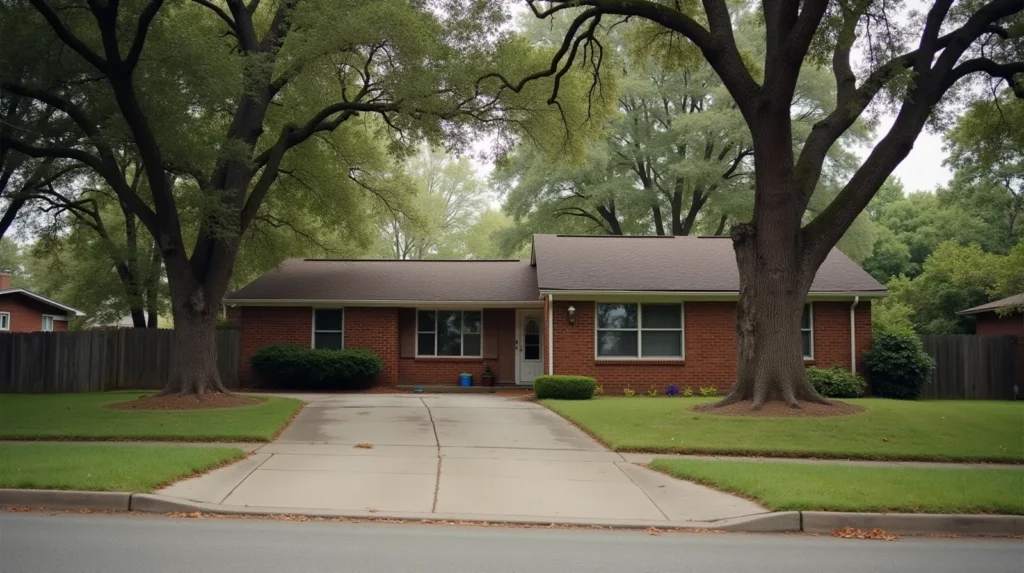
The house is the asset. The clock is already running.
Your parent is in assisted living, or they’re about to be. The house is sitting empty. Monthly care costs — $3,600 to $10,000 depending on the facility and state — are already due or coming soon. The house is what covers them.
Selling it sounds simple. Three things slow families down or cost them money:
- Authority to sell — is your power of attorney actually sufficient?
- Medicaid timing — selling creates a countable asset at the worst possible moment
- The house itself — elderly homeowners’ homes often have deferred maintenance that kills financed deals
Here is how each one works.
Do you have authority to sell?
A durable power of attorney gives you the legal right to sign closing documents on your parent’s behalf. But only if it expressly says so — and only if the document is still legally sufficient.
In Tennessee, the Uniform Power of Attorney Act (TCA §§ 35-6-101 et seq., effective 2019) requires the POA to expressly authorize real estate transactions. “All financial matters” is not enough under TCA § 35-6-201(2). If the document predates 2019, have an attorney review it before a title company sees it.
In Florida, the Power of Attorney Act (FL Stat. §§ 709.2101 et seq.) requires two witnesses and a notary. For any real property transaction, the agent must sign the recorded deed in the presence of two witnesses. A photocopy is not acceptable to record at the county clerk’s office.
In Texas, the Durable Power of Attorney Act (TX Estates Code §§ 751–752) requires specific language for any homestead real estate transaction. Most Texas title companies additionally require a notarized certification that the POA is still in force and the principal is alive — signed within 90 days of closing.
If your parent can no longer sign any document and no POA was ever put in place, the path is guardianship — a court process that takes 90 to 180 days in most counties. A long runway when care costs are running month by month.
A conventional mortgage lender doesn’t catch a defective POA until day 38 of a 45-day close. A cash buyer’s closing attorney reviews it at the start. That’s one concrete difference when the situation is already complicated.
The Medicaid timing problem — before you sign anything
The house is exempt from Medicaid asset counts while your parent is alive and either living there or has documented intent to return. The moment you sell it, the proceeds become countable liquid assets.
Most states set the Medicaid countable asset limit at $2,000 for a single person. TennCare (Tennessee’s Medicaid program) uses that same $2,000 threshold under TCA § 71-5-102. Florida’s Medicaid (MEDS-AD) is the same. Texas Medicaid is the same.
If the house sells for $260,000 and no planning has been done, those proceeds must be spent down to $2,000 before Medicaid will pay for care. That spend-down must go to allowable expenses — not gifts to family. And the window matters: if Medicaid was covering some services, coverage can be suspended the month after the asset limit is exceeded.
A Medicaid planning attorney can sometimes structure an irrevocable trust, a caregiver child exemption, or a spousal asset transfer that preserves more of the proceeds. None of those work after the sale closes. See also selling a house to pay medical bills — the hospital lien and estate recovery rules run parallel to the ALF Medicaid rules here.
TennCare also has estate recovery under TCA § 71-5-116: after a TennCare recipient dies, TennCare can file a claim against the estate for benefits paid after age 55. If the house wasn’t sold during life and wasn’t in a protected trust, that claim follows it through Davidson County or Williamson County probate. A planning attorney can often address this — but only before the closing.
Rule: call a Medicaid planning attorney before signing a listing agreement or a purchase contract. That call takes an hour. Getting the timing wrong costs tens of thousands of dollars.
Why most elderly homes don’t close with financed buyers
Deferred maintenance is common in homes where the owner was 75 to 85 and on a fixed income. It is not neglect — it is income constraints and reduced mobility. The effect on a conventional sale is concrete.
HUD 4000.1 — the FHA underwriting manual — requires appraisers to flag certain conditions as lender repair requirements before a loan can fund:
- Roof with less than two years of remaining service life (§II.A.3.b(iv))
- Non-functional or inadequate heating system (§II.A.3.b(vi)(B))
- Deteriorating paint on any pre-1978 surface (§II.A.3.d — triggers lead paint protocol)
- Active moisture intrusion, galvanized plumbing rust at fixtures, or broken systems
Each of those is a lender hold. The conventional sale does not close until every condition is cleared with a contractor certification. For a seller in assisted living who cannot manage a renovation, that adds eight to twelve weeks and $8,000 to $30,000 before proceeds are in hand.
A cash buyer has no lender and no appraiser. The condition of the house affects the offer price, not whether the sale closes. If you’re dealing with a health situation that limits what the seller can manage, that distinction is often the difference between a deal that completes and one that falls apart on day 40.
What happens to the house while you wait
Every month a house sits vacant while care costs run is a month of carrying costs plus risk to the asset itself.
Most standard homeowners policies change coverage — sometimes to a higher-premium vacancy endorsement, sometimes to limited coverage — after 30 to 60 days of vacancy. Citizens Insurance in Florida cancels outright after 30 days vacant. Tennessee and Texas carriers vary; most ISO HO-3 policies have a 60-day vacancy provision.
In Tennessee, January lows in Nashville, Murfreesboro, and Clarksville regularly drop below 15°F. An unoccupied house with an aging crawl space and a furnace nobody checked in October is a pipe-burst claim — which a lapsed vacancy clause may not cover. For more on the specific risks of leaving a home empty, see selling a vacant house.
In Florida, an empty home in August collects mold in the attic, crawl space, and bathrooms within 90 days. FL § 689.261 requires disclosure of material defects — mold that develops after the house is vacated becomes a new disclosure problem on top of the original sale.
Closing in 7 to 14 days stops that exposure. Waiting three months for a conventional close runs three months of that risk.
How a cash sale works start to finish
Here is what happens when a family calls us:
- Submit the address. You’ll have a cash offer within 24 hours — as-is, no repairs, no cleaning required.
- Review the offer with your Medicaid planning attorney if Medicaid is involved. This is the step families skip. Don’t skip it.
- If the offer works, we open escrow. Close in 7 to 14 days, or on whatever schedule your situation requires. You set the date.
- No agent commission. No closing costs charged to you. No repair requests.
The proceeds go directly to the account you designate at closing — to cover care costs, settle the estate, or fund whatever comes next. We buy directly when the property fits, and where we’re not the right buyer, we’ll bring you a cash offer that is.
The carrying cost math
The gap between a 14-day close and a 90-day close is not abstract.
| State | Median ALF monthly cost | 76-day gap cost (care alone) |
|---|---|---|
| Tennessee | $3,600–$5,200/mo | $9,120–$13,173 in additional care costs |
| Florida | $3,800–$6,500/mo | $9,627–$16,467 in additional care costs |
| Texas | $3,400–$5,800/mo | $8,613–$14,693 in additional care costs |
Add $1,200 to $2,200 per month in property taxes, insurance, and utilities on an empty house. For a house with deferred maintenance where an agent lists at $195,000 and the buyer negotiates down $12,000 after inspection, the net gap between options closes fast.
When you should not sell to us
If the house is in good condition, your parent has private-pay resources for the next four to six months, Medicaid is not a factor, and you have time — list with a real estate agent. A well-priced home in a working-class Tennessee or Florida neighborhood will draw offers, and the premium over a cash offer can be $15,000 to $40,000. When that money extends care, it matters.
If the POA is contested by other family members or is legally deficient, do not sign a purchase contract with anyone until the authority question is resolved. A cash buyer moves fast — a defective POA two days before closing becomes your problem regardless of who the buyer is.
And if a Medicaid planning attorney tells you the spend-down plan requires a specific structure or timing: follow that advice. The Medicaid variable can change the net by tens of thousands of dollars. That conversation must happen before any contract is signed, not after.
Straight answers
Does the house need to be cleaned out before closing?
No. We buy as-is, contents and all. You take what matters to you and leave the rest. Sorting through decades of belongings doesn’t have to happen before closing.
What if other siblings have to agree to the sale?
If the house is titled solely in your parent’s name and you hold a valid POA, you have authority to sign. If multiple heirs already hold title — because of a prior deed transfer or joint tenancy — all title holders must sign. A disagreement between heirs is a separate problem from the financing question, and it does not have a fast answer.
Can we sell while Medicaid is already paying?
Yes — but the sale proceeds will likely trigger a Medicaid eligibility review and could suspend coverage until the proceeds are spent down. That is the Medicaid timing problem described above. A planning attorney can sometimes structure around it. Do not sign anything without that conversation first.
What if the parent passes before the house sells?
The property goes through probate unless it was held in a trust or joint tenancy. In Tennessee, probate in Davidson, Williamson, Rutherford, or Sumner County typically takes four to eight months. We buy houses from estates in probate — the personal representative has authority to sell — but probate adds time. Selling before that point, when that option is open, is the faster path.
One step
Submit the address using the form on this page. You’ll have a cash offer within 24 hours — as-is, no repairs, no obligation. Give us a call at (615) 780-7349 if you’d rather talk through the situation first.
We’ve bought more than 100 houses. The POA questions and Medicaid timing come up on most of these calls. We’ll tell you honestly when a cash offer is the right answer and when a Medicaid planning attorney needs to be in the room first.
Keep reading
- Selling Your House to Pay Off Debt
- Sell My House Fast in Knoxville, TN
- We Buy Houses in Missouri — Cash Offers in Any Condition
- Selling a House With Storm Damage
- Selling a House With a Private Well
- Selling a House in a Trust: A Trustee’s Guide
Ready for a number? Get your cash offer or call (615) 780-7349.