


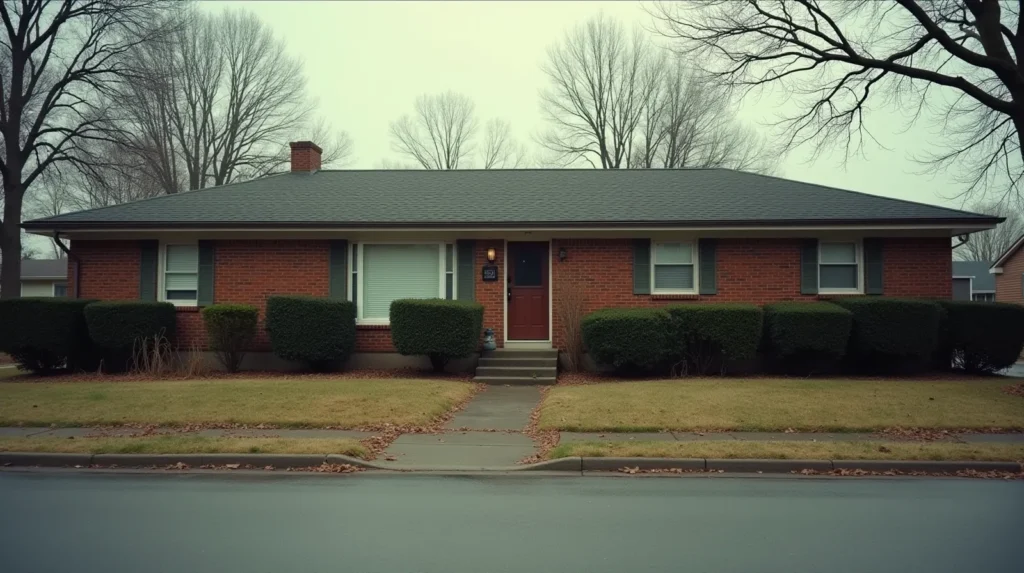
An empty house is not “on pause.” It is costing you every day.
You may have moved out months ago. The mortgage is current, the utilities are on, and you are watching the market. The house is fine. It can wait.
Here is what the waiting actually looks like on paper.
Most homeowner policies include a vacancy clause: coverage is restricted or cancelled entirely once the house is unoccupied for 30 to 60 consecutive days. The exact threshold depends on your insurer and your state. You may not know the policy voided until you file a claim and the adjuster asks when the last person lived there.
Short version: A vacant house typically runs $700–$1,400/month in carry costs beyond the mortgage — insurance, maintenance, utilities, and risk. Your homeowner’s policy may already be void. A cash offer closes in 7–14 days with no repairs and no fees. If the house is in good shape and you have 60+ days, a traditional listing will almost certainly net you more. That math changes once insurance voids or deferred maintenance enters the picture.
What changes at the 30-day mark
The 30-day threshold shows up in nearly every standard HO-3 homeowner’s policy. State Farm, Allstate, and Nationwide each include vacancy provisions. The exact language varies, but the effect is consistent: once the home is unoccupied beyond the clause limit, the policy either voids entirely or excludes the coverage categories that matter most — vandalism, glass breakage, water damage from a burst pipe, and sometimes fire.
This is not theoretical. It is the scenario your listing agent does not bring up because they are focused on the listing, not on whether your insurance survives the holding period intact.
In Florida, most homeowners policies include a vacancy provision — typically at 60 days — that restricts or cancels coverage. This is particularly relevant given the large number of Florida homeowners still with Citizens Insurance after the private-market pullback. A house left vacant during hurricane season with a void policy carries specific exposure. Mold in a Florida home that loses climate control can develop visible growth within 30 to 90 days — in a sealed, unoccupied house in Tampa or Fort Myers in August, that clock runs fast.
In Tennessee, Davidson County Codes Administration maintains a Vacant and Abandoned Properties Registry under TCA § 13-21-116. Property owners must register vacant properties annually; failing to register or remedy code violations results in liens that attach to title and must be cleared before any future closing.
The monthly carry: what an empty house actually costs
Vacant house costs arrive in separate envelopes and are easy to underestimate. Here is what the math looks like on a $280,000 house in a typical market:
| Cost | Monthly estimate |
|---|---|
| Mortgage PITI (~$280k at 7%) | ~$870 |
| Utilities (minimum to prevent damage) | $80–$150 |
| Vacant property insurance (replaces voided standard policy) | $65–$200 |
| Lawn and exterior maintenance (code compliance) | $60–$120 |
| Security / alarm monitoring | $30–$50 |
| HOA fees (if applicable) | $100–$400 |
| Non-mortgage carry | $335–$920/month |
That total does not include vandalism, theft, or weather damage — all of which occur at higher rates in vacant properties than occupied ones. Copper pipe theft in Nashville-area vacant houses has been a documented issue in pre-1970 stock. A single break-in can cost $3,000–$8,000 in damage before you are notified.
Why financed buyers often cannot close on a vacant home
FHA and VA appraisers operate under HUD 4000.1 and VA Pamphlet 26-7, both of which require them to call out visible deferred maintenance, inoperable systems, active pests, and evidence of water intrusion. A house that has sat empty for six months will trigger appraisal findings even if you consider it structurally sound.
Common appraisal repair conditions that vacancy produces:
- HVAC or water heater not operable at inspection date
- Evidence of insect activity, particularly in Tennessee crawl-space homes
- Mold or discoloration in attic, bathroom, or basement
- Broken window seals or gaps at the foundation
- Failed weatherstripping that indicates water entry
Any of these generates an appraiser repair condition. The lender requires proof of completed repair before closing. If you are out of state, managing contractors remotely, or on a deadline, the deal collapses. A cash buyer has no appraiser, no lender overlay, and no repair condition. We price the condition into the offer and close as-is. See how selling as-is to a cash buyer actually works.
What happens after you give us the address
- You give us the address and a few basic details. Takes about two minutes.
- We call within 24 hours — usually the same day — with a cash offer.
- No obligation to accept. No pressure on the call.
- You pick the closing date. We can close in 7 days, 14 days, or wait 60 days if you need the time.
- We buy as-is. No repairs, no cleaning, no staging required.
- No agent commission (typically 5–6% of the sale price), no closing costs on your side, no repair credits negotiated after the fact.
We have bought more than 100 houses — some directly with our own cash, some through a network of buyers and real estate companies. Either way, you get an offer in 24 hours and a close date you choose.
When you should not sell to us
If the house is in good condition, your insurance is current, you have 60 or more days before any kind of deadline, and the market in your area is active — a traditional listing will almost certainly net you more money. An agent will get you closer to full market value. That is the financially correct answer for most sellers who are not under pressure.
A cash offer makes sense when at least one of these is true:
- Insurance has voided or a vacant-property policy is eroding your equity month by month
- The house has deferred maintenance that a financed buyer’s appraiser will flag
- You are out of state and cannot manage contractors or showings
- The house is inherited and has not been maintained
- The timeline is short — a job start date, a divorce settlement, a foreclosure notice
If none of those apply, call an agent. We will say the same thing if you ask us on the phone.
Tennessee, Florida, and Texas: what is different in each state
Tennessee
Tennessee foreclosure is non-judicial under TCA § 35-5-101. A lender can complete the sale in 60 to 90 days from default notice with no court involvement. A vacant house where payments have slipped — common when someone has relocated for work or moved into care — faces a tight clock. Davidson County and Shelby County run active code enforcement on vacant properties; a lien can record before you know about the violation. TCA § 66-5-202 requires disclosure of known material defects regardless of how long the house has been empty. If you need to sell to stop a foreclosure in Tennessee, the non-judicial timeline is shorter than most sellers expect.
Florida
Florida foreclosure is judicial — the lender sues, obtains a final judgment, and schedules a sale through the county clerk. That process typically takes 6 months to 2 years, which gives Florida sellers more options. The vacancy risk in Florida is climate-driven. Mold can establish itself within 30 to 90 days in a vacant Florida home without climate control. After Hurricane Ian, some Lee County homeowners in Cape Coral and Fort Myers Beach received FEMA Substantial Damage determinations — once that designation is on the property, any repair exceeding 50% of pre-storm value triggers full elevation compliance, at a cost of $50,000 to $150,000 or more. A vacant, storm-affected coastal Florida property carries that cost for any financed buyer. Cash buyers absorb the risk in the offer price. FL § 689.261 requires disclosure of known material defects, and a mold or damage problem that develops during vacancy must be disclosed once you become aware of it.
Texas
Texas uses a non-judicial process under Texas Property Code § 51.002: 21-day posted notice, 21-day mailed notice, sale on the first Tuesday of the month. End-to-end from default to auction: approximately 41 days. There is no right of redemption after the trustee’s deed records. A vacant Texas house where payments are slipping faces one of the shortest foreclosure timelines in the country. Texas summer heat creates specific vacancy risks — equipment failure, slab movement in Blackland Prairie and Houston-area clay, and the compounding effects of no climate control in DFW or San Antonio in summer. TREC Form OP-H requires disclosure of these conditions. Cash buyers take the property as-is and factor the condition into the offer. See what happens when a health situation forces a fast sale — a common reason Texas homes end up sitting vacant.
Straight answers about selling an empty house
How long before my homeowner’s insurance voids on a vacant house?
Most standard HO-3 policies include a vacancy provision that restricts or voids coverage at 30 to 60 consecutive days of vacancy. Read your current policy under the vacancy or unoccupancy definitions — the threshold varies by insurer. If coverage has already restricted, a cash sale ends the exposure period immediately.
Can I sell a vacant house as-is without making repairs?
Yes, to a cash buyer. The offer reflects the condition. A financed buyer will face appraiser-required repairs; a cash buyer skips the appraisal entirely and closes on current condition.
What if I inherited the house and it has been empty for months?
Inherited vacant houses are one of the most common situations we see. Title may need to move through probate or a trust before it can convey, but we work with sellers while that process is underway. The 24-hour offer stands regardless of current title status.
What if someone is living in the house without permission?
A vacant house is a squatter risk in most markets. We buy properties with unauthorized occupancy complications. State the situation clearly when you call and we walk through the options together.
Does the vacancy affect the offer price?
Yes. Deferred maintenance, insurance gaps, and code violations all factor into what a buyer can offer — not arbitrarily, but because repair cost, carry cost, and risk are real. We state the number plainly on the call and explain the reasoning.
One step
Give us the address. We call within 24 hours with a number. No obligation to accept. If selling to a cash buyer is not the right call for your situation, we will tell you that on the phone.