


What the WDO inspection result actually means for your sale
A wood-destroying organism (WDO) inspection report comes back with one of three findings: no evidence, evidence of past activity, or evidence of active infestation. The first one closes your sale. The other two can stop it — but only if your buyer is using a loan.
Cash buyers don’t need a WDO clearance. If your buyer is paying cash, termite damage is a negotiation, not a deal-killer. If your buyer has FHA, VA, or USDA financing, the rules are different entirely.
Short version: Yes, you can sell a house with termite damage. FHA and VA financing requires a clear WDO report — active infestation or unrepaired structural damage eliminates those buyers from your pool. A cash sale skips the inspection requirement. You can have an offer within 24 hours, close in 7 to 14 days, and sell as-is with no repairs. If the damage is limited and the house is otherwise in good shape, a traditional listing may net you more — we say so plainly below.
Why FHA and VA loans can’t close on active termite damage
HUD Handbook 4000.1, Section II.A.3.c requires that any FHA-financed property in a state designated as an active termite infestation area have a WDO inspection before loan approval. Tennessee is on that list. So is Florida, Georgia, Texas, and most of the Southeast.
VA is stricter. The VA Lenders Handbook, Chapter 12 states that evidence of active wood-destroying insect infestation — or unrepaired structural damage caused by prior infestation — must be corrected before a VA loan can close. “Unrepaired damage” is the phrase that matters. A house that was treated two years ago but still has compromised floor joists fails the VA appraisal on those joists.
USDA Rural Development loans follow HUD guidelines and hit the same wall.
In Middle Tennessee, where VA loan volume is significant — Fort Campbell is 60 miles north of Nashville; Smyrna draws a mix of active-duty and Guard buyers — this matters more than sellers expect. Lose the VA buyers before your listing goes live and you have already cut a meaningful share of the buyer pool.
What Tennessee law says you must disclose
T.C.A. § 66-5-202, the Tennessee Residential Property Disclosure Act, requires sellers to disclose known material defects. Termite damage is a material defect. The Tennessee Real Estate Commission’s Residential Property Disclosure form asks directly in Item 3 (Wood-Destroying Insects/Organisms): have there been any infestations, any damage from wood-destroying insects, and is there a current termite bond or service contract?
You must answer truthfully if you know. “I didn’t know” is a valid position if you genuinely didn’t — but if a prior inspection report is in your file and you don’t disclose it, that shifts from a disclosure failure to a fraud exposure. Tennessee courts have held that a seller who possessed a documented pest report and chose not to share it faces liability beyond simple contract rescission.
The Tennessee Department of Agriculture licenses pest control inspectors. A licensed inspector’s WDO report on TDA Form 58 is what your buyer’s lender will require before closing.
Two termite species, and why they matter differently in Tennessee
Most Middle Tennessee homeowners are dealing with Reticulitermes flavipes — the eastern subterranean termite. It needs soil contact to survive. Colonies live underground and build mud tubes up foundation walls to reach wood framing. The most common entry points are the rim joist, sill plate, and any wood sitting close to grade. Treatment involves a liquid termiticide perimeter barrier or Sentricon bait stations. A standard treatment for an average Nashville home runs $800 to $1,500.
Memphis is different. Coptotermes formosanus — the Formosan subterranean termite — was introduced to the Gulf Coast through post-WWII shipping from Asia and has established colonies throughout Shelby County and parts of West Tennessee. Formosan termites are more aggressive than eastern subterranean: a mature colony can number in the millions versus several hundred thousand for Reticulitermes. They can build carton nests inside wall cavities without maintaining soil contact, making them harder to locate and harder to eliminate. A Shelby County property with Formosan activity is a different conversation than a Davidson County subterranean finding — treatments are more involved, costs are higher, and re-infestation risk is greater.
The homes flagged most often in Middle Tennessee
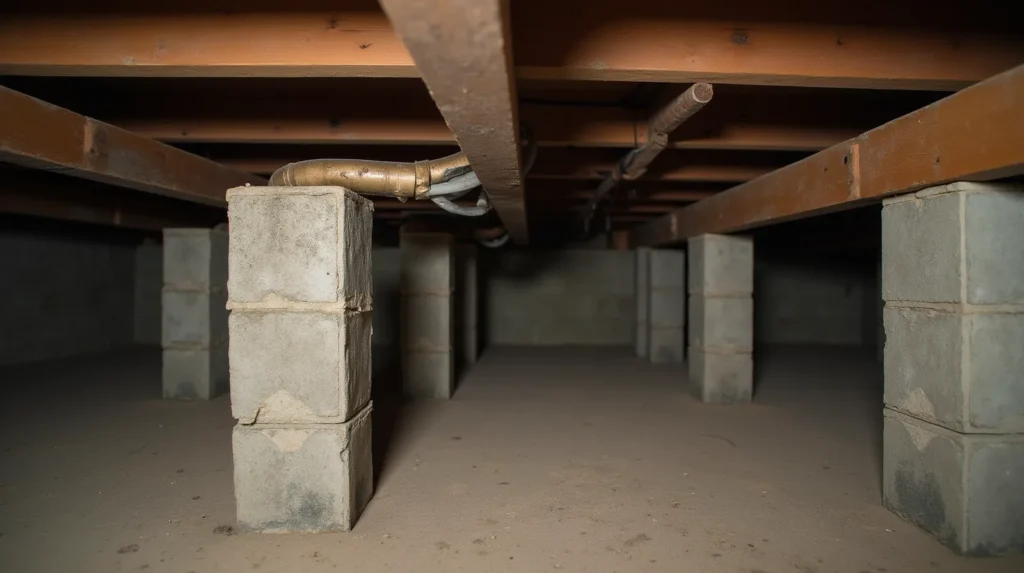
Nashville’s pier-and-beam construction era runs roughly from the 1900s through the 1960s. East Nashville, Germantown, Hillsboro Village, Waverly-Belmont, Lockeland Springs, and 12 South have heavy concentrations of these homes. Pier-and-beam foundations keep the floor framing above grade with a crawl space below — and crawl spaces are exactly how subterranean termites typically reach the structure. The floor joists, sill plates, and subflooring are the first targets.
An East Nashville bungalow with a VA buyer and a WDO report flagging active subterranean activity in the crawl space joist system is a common scenario. That buyer’s lender will require treatment, a re-inspection clearance, and — if there is structural damage — documentation that framing repairs were completed by a licensed contractor. That process takes 30 to 60 days and costs $5,000 to $30,000 or more depending on how far the damage runs. If your closing timeline is fixed — an estate sale, a divorce decree, a job that starts in six weeks — those 30 to 60 days may not be available.
For more on how structural issues affect your options when selling as-is, see our guide to selling a house with foundation problems, which covers the same FHA/VA appraisal condition mechanics.
What happens in Florida: drywood termites and a different inspection form
Florida has two active termite threats uncommon in Tennessee. Drywood termites — primarily Cryptotermes brevis and Incisitermes snyderi — don’t need soil contact. They live entirely inside the wood: attic framing, window headers, wall cavities. The only external sign is frass (small pellets) pushed through kick-out holes. A standard WDO inspection may miss them without careful attic probing.
Formosan subterranean termites are well-established in Broward, Miami-Dade, and Palm Beach counties and continue to spread north through the state.
A Florida WDO inspection uses DACS Form 13645, issued by a Florida-licensed pest control company. An active infestation finding can also trigger a Citizens Insurance issue — the insurer will not bind new coverage on a property with a noted active infestation. For a Tampa or St. Petersburg seller dealing simultaneously with a VA buyer, an active drywood finding, and a Citizens renewal question, all three problems require resolution before a conventional close. A cash sale collapses all three into one.
Repair costs and what they do — and don’t do — for your position
If the termite damage is cosmetic — surface wood, a windowsill, trim — treatment plus repair runs $500 to $3,000. Worth doing before listing if you have time and equity to cover it.
If the damage is structural, the numbers change significantly:
| Repair scope | Typical cost range | What it requires |
|---|---|---|
| Surface wood, trim | $500–$3,000 | Treatment + carpenter |
| Floor joists (partial) | $3,000–$12,000 | Licensed contractor, permit in Davidson County |
| Sill plate + rim joist replacement | $5,000–$20,000 | Structural engineer assessment, permits |
| Extensive structural damage | $20,000–$80,000+ | Engineer, contractor, lender re-inspection |
Before committing to structural repairs, get an independent structural engineer’s assessment — not just the pest control company’s estimate. Pest control companies earn on treatment; a structural engineer has no financial stake in what the repair scope turns out to be. We cover the same contractor-bias problem in detail in our guide to selling a house with mold, where remediation companies face the same incentive structure.
One thing repair does not do: it doesn’t automatically restore market value to pre-damage levels. A house with a documented termite history — even with a clear re-inspection — prompts most conventional buyers to discount and to require the WDO clearance anyway. The history stays in the disclosure regardless of what you fixed.
What a termite bond does and doesn’t cover
A termite bond — formally a wood-destroying organism service agreement — documents ongoing professional treatment and commits the company to re-treat at no cost if new activity appears during the coverage period. Most national company bonds (Arrow, Terminix, Orkin, regional providers) are transferable to a buyer at closing, sometimes with a fee of $100 to $300.
A bond does not repair structural damage that has already occurred. It does not satisfy the VA’s requirement that prior structural damage from infestation be corrected. A bonded house with a compromised floor joist still fails the VA appraisal on that joist.
An active, transferable bond is worth disclosing prominently. It tells buyers the treatment is documented and ongoing. It is not a substitute for structural repair, and it will not clear a WDO report flagging active infestation at the time of inspection.
When you should not sell to us
If the termite damage is limited to surface wood, the infestation has been treated by a licensed company, and you have a clear WDO re-inspection in hand, you are probably better off listing with a real estate agent. Conventional buyers with adequate financing can close on a treated house with a clean report. You will net more than a cash offer, and the repair-and-re-inspect timeline is weeks, not months.
If your house is otherwise in good condition — solid roof, functional systems, nothing beyond the termite history requiring work — a traditional sale at or near market value is the right call. A cash buyer prices in the risk and the repair costs. If you don’t need someone to absorb that risk, you should keep the difference.
The seller who genuinely needs a cash buyer is the one whose financed deal already fell apart at the WDO inspection, whose structural damage scope makes repair-then-list impractical, or whose timeline doesn’t allow 30 to 60 days of remediation and re-inspection. That is who we are built for.
Three steps, and you can stop at any one of them
Here is exactly what happens after you give us the address:
- We review the property — including any termite history you share — and get back with a cash offer within 24 hours
- No WDO inspection required on your end, no repairs before closing
- You pick the closing date — 7 to 14 days is typical, or later if that works better
- No agent commission, no closing costs, no repair credits negotiated at the last minute
We buy directly and, where we’re not the right buyer, we’ll connect you with one who is. We’ve bought more than 100 houses in situations like this — active infestation, structural damage, a VA buyer who walked, a seller who inherited a house they never had inspected. None of that disqualifies you from getting an offer.
For context on the broader as-is sale process, see our guide to selling a house as-is and our post on selling a fire-damaged house, which covers similar as-is mechanics for structural damage situations. If the termite situation is tied to a probate or inherited property, our inherited house guide covers how executor authority interacts with disclosure and sale timelines.
Call us at (615) 780-7349 or put the address in the form above.
Do you have to disclose termite damage when selling a house in Tennessee?
Yes. T.C.A. § 66-5-202 requires sellers to disclose known material defects. Item 3 of the Tennessee Residential Property Disclosure form asks specifically about wood-destroying insect infestations, past damage, and current termite bonds. If you possessed an inspection report documenting the problem and did not disclose it, you face fraud exposure, not just contract rescission.
Do FHA loans require a termite inspection in Tennessee?
Yes. HUD Handbook 4000.1 requires a WDO inspection in active termite infestation states, and Tennessee is designated as one. The inspection must show no active infestation and no unrepaired structural damage from prior infestation before the loan can close.
Can you sell a house with active termites in Tennessee?
You can sell it, but not to a buyer using FHA, VA, or USDA financing without first treating the infestation, clearing the WDO re-inspection, and repairing any structural damage. A cash sale has no lender-ordered WDO requirement — the buyer accepts the property as-is with the condition disclosed and factored into the price.
Is a termite bond transferable to the buyer?
Most bonds from national companies allow transfer at closing, typically for $100 to $300. The buyer inherits the coverage terms. Transfer does not eliminate the disclosure requirement and does not repair existing structural damage — it only continues the treatment warranty.
What is the difference between eastern subterranean and Formosan termites in Tennessee?
Eastern subterranean termites (Reticulitermes flavipes) are the most common species in Middle Tennessee — they require soil contact, build mud tubes, and colonies number in the hundreds of thousands. Formosan subterranean termites (Coptotermes formosanus), established in Shelby County and parts of West Tennessee, can number in the millions, build nests inside wall cavities without soil contact, and are significantly harder to control. Treatment costs and re-infestation risk are both higher for Formosan activity.
What does a WDO inspection cost in Tennessee?
A standard WDO inspection by a licensed Tennessee pest control company typically runs $50 to $150 for a single-family home. The inspector issues TDA Form 58. In a financed transaction, the buyer’s lender usually orders it as part of the loan approval process.
Keep reading
- Sell My House Fast Indianapolis IN — Cash Offer in 24 Hours
- Can You Sell Your House During Bankruptcy?
- Can You Sell a Condemned House?
- Sell My House Fast Madison, AL
- Sell My House Fast Bethel Park PA
- Sell Your House Before Foreclosure
Ready for a number? Get your cash offer or call (615) 780-7349.