


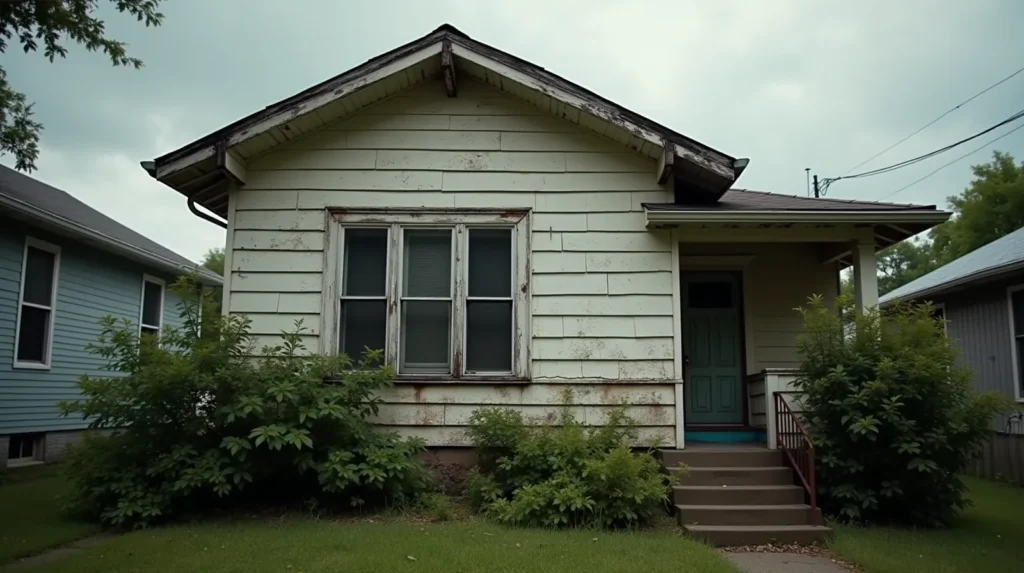
Mold in a house stops most sales before they start. Not because it’s illegal to sell — it isn’t — but because the financing goes away.
Short version: You can sell a mold-affected house. If you remediate first, you keep your full buyer pool. If you don’t, FHA, VA, and most conventional loans won’t close on it — visible mold triggers an automatic appraisal condition that blocks the lender. A cash buyer closes as-is, no remediation required, in 7 to 14 days. We’ll give you an offer within 24 hours of getting your address.
You are not required to remediate before selling
Tennessee law requires you to disclose known material defects — T.C.A. § 66-5-202, the Residential Property Disclosure — and visible mold qualifies. You must tell buyers it exists. You do not have to fix it before listing.
That distinction matters less than most sellers expect. The problem is not legal. The problem is financial.
What mold does to a financed deal
When an FHA, VA, or conventional appraiser walks through and sees visible mold, the appraisal comes back with a required repair condition. The lender will not release funds until the condition is cleared. That means the seller remediates, the buyer pays for it, or the deal dies.
Under HUD Handbook 4000.1, FHA appraisers must flag evidence of moisture and visible mold as health and safety issues. VA loans operate the same way under VA Lender’s Handbook Chapter 12. Even conventional buyers using Fannie Mae financing get stuck when their underwriter sees mold on the inspection report and requires a remediation clearance letter before closing.
The buyers who walk away are not being unreasonable. Their bank will not let them close.
The cost gap that creates the problem
Mold remediation cost depends entirely on what is affected.
| Affected Area | Typical Cost Range |
|---|---|
| Single bathroom (surface mold) | $500–$1,500 |
| Crawl space or attic (contained) | $2,000–$6,000 |
| Wall cavity or framing (structural) | $8,000–$25,000 |
| Extensive or Stachybotrys (black mold) | $15,000–$100,000+ |
In Middle Tennessee, the most common source is attic mold driven by inadequate ridge ventilation. Nashville’s relative humidity runs 70 to 80 percent overnight from May through September. When warm, humid air infiltrates a poorly vented attic and hits cold roof decking, condensation builds and mold follows. Treating the decking, replacing insulation, and correcting the ventilation source typically costs $4,000 to $10,000 in the Nashville metro — and the problem recurs if the ventilation is not fixed alongside the remediation.
Crawl space mold is the second most common situation in older Nashville-area homes. East Nashville bungalows, Germantown shotgun houses, and ranch homes in Donelson and Antioch were commonly built without vapor barriers, or with barriers that rotted out decades ago. When the crawl space is damp and unvented, surface mold on the joists follows. FHA and VA appraisers flag it every time.
If the remediation quote is manageable and you have 60-plus days, fixing it first gives you a clean appraisal and your full buyer pool. That is the right call for some sellers. The section below explains when it isn’t.
When the quote is not manageable
If remediation costs more than the equity you have, or the timeline means a financed sale cannot close before a deadline — a foreclosure auction date, a probate court deadline, a job start — then the math changes.
A cash buyer does not have a lender. There is no appraisal. There are no financing conditions. We make an offer on the house as-is, mold included, and the close is not contingent on anything we find inside.
We’ve bought more than 100 houses. Some had mold in the attic. Some had it in the crawl space. Some had it behind walls we did not find until after closing. The remediation is our problem at that point, not yours — you already know what we paid.
What the process looks like
Here’s what happens after you give us your address:
- We call within 24 hours with a cash offer. No inspection contingency, no appraisal, no repair demands attached to that offer.
- If you accept, you pick the closing date — seven days, 14 days, or the specific date your situation requires.
- You sign, we wire. No agent commission (typically 5 to 6 percent of the sale price you keep). No closing costs charged to you. No remediation on your end.
We buy directly and, where we are not the right buyer ourselves, we bring in a network buyer who operates the same way. Either path means no lender in the chain.
Tennessee’s disclosure requirement in plain terms
T.C.A. § 66-5-202 requires sellers to disclose known material defects before signing a purchase contract. Known mold — whether you’ve seen it yourself, had an inspection, or received a remediation quote — is a material defect. It goes on the TREC Residential Property Disclosure form, under the section covering structural problems and conditions affecting habitability.
Selling to a cash buyer does not eliminate that requirement. You disclose what you know. The difference is that we factor the mold into the offer rather than attaching a remediation condition to the contract. We are buying the problem, not the ideal version of the house.
When you should not sell to us
If the mold is limited to a single surface — one bathroom, a small patch of drywall after a pipe leak — and a remediator can clear it for under $1,500 with a clearance letter, you should get that done. A clean inspection opens your house to financed buyers, which is a larger pool and typically produces a higher sale price.
If you have equity, time, and a house that would otherwise sell well, the remediation cost is likely recoverable in your list price. A local agent can tell you in one walk-through whether the rest of the house supports a post-remediation price that makes the repair worthwhile.
We are the honest answer when:
- remediation costs more than you can cover before closing
- a financed deal just fell apart over a mold contingency and you need to move fast
- there is another deadline — a foreclosure date, a probate close, a relocation — that a 60-day listing cannot meet
- the quote came back structural and the number is not something you can absorb
Related: how to sell a house as-is — what that process actually looks like end-to-end, including what inspectors flag and how buyers respond.
Straight answers
Is it hard to sell a house with mold?
Hard to sell to financed buyers, yes. The appraisal condition stops the lender. Cash buyers do not have that constraint — the difficulty shows up in the offer price, not the transaction mechanics.
Does mold devalue a house?
It reduces what cash buyers will pay, because they are absorbing the remediation cost and the risk. The discount typically exceeds the remediation cost itself, since there is holding time and uncertainty on top of the work. Surface mold in a bathroom is a smaller discount than structural mold in a wall cavity or Stachybotrys in a crawl space.
Do I have to disclose mold in Tennessee?
Yes. T.C.A. § 66-5-202 requires disclosure of known material defects, and mold qualifies. The form is the TREC Residential Property Disclosure. If you have had a mold inspection or a remediation assessment, that report should go to any buyer — cash or financed.
What if a deal already fell through because of mold?
That is one of the most common calls we get. The inspection came back with mold, the buyer’s lender attached a remediation condition, and neither party wanted to wait or pay for it. Call us the day the contract falls through — we move fast in that situation.
Can a cash buyer close on a house with black mold?
Yes. Stachybotrys requires more intensive remediation and the cost is higher, which affects the offer. It does not affect our ability to close. If you have an air quality test or a remediation assessment already, share those numbers when you call — it helps us make a faster and more accurate offer.
Will I net less selling as-is with mold?
Yes. A cash offer on a mold-affected house accounts for remediation cost, holding time, and risk. You walk away with less than a post-remediation agent sale would produce at full market price. Whether the time, out-of-pocket cost, and uncertainty of that path are worth the difference depends on your situation. For some sellers they are. For others, fast and certain is the right trade.
One step, no obligation
Give us the address. We’ll call within 24 hours with a number. You are under no obligation to accept, and there is no fee for asking.
We also work with sellers who already listed and had a deal collapse over mold — that situation is not unusual, and the timeline is not a problem for us.
Related: selling a fire-damaged house and selling a hoarder house — two other conditions where financed buyers typically cannot close as-is.
Call us: (615) 780-7349
Keep reading
- Selling an Inherited House: What Most Heirs Don’t Know
- Selling a House with Termite Damage
- We Buy Houses in Missouri — Cash Offers in Any Condition
- Selling a House with Foundation Problems: Your Real Options
- Selling a House with a Damaged Roof
- Selling a Vacant House: What It Really Costs to Wait
Ready for a number? Get your cash offer or call (615) 780-7349.