


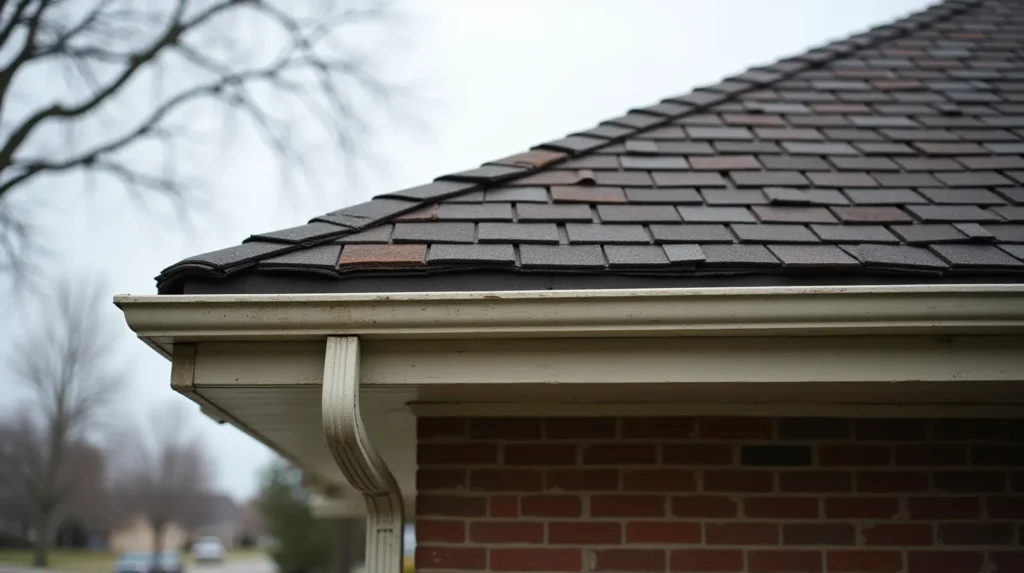
Why a bad roof stops a financed sale
Your appraisal came back flagged. Or your buyer’s lender just told you the roof has less than two years of useful life and the loan is on hold until it’s repaired. Or you know the roof is 25 years old and you don’t have $15,000 sitting around to replace it before listing.
You can still sell. The question is how.
The short version: A damaged or aging roof almost always kills a sale when the buyer is using an FHA, VA, or USDA loan — the appraisal conditions required by those programs are hard stops. A cash buyer skips the appraiser and the lender entirely, so the roof condition goes into the offer price rather than into a repair requirement. You’ll net less than a post-repair listing, but you close without fixing the roof first. If the house is otherwise solid and you have 60+ days, you may be better off getting repair quotes and negotiating a credit with a financed buyer. Read the caveat section before deciding.
A financed buyer’s mortgage lender requires an independent appraisal. That appraisal isn’t just about value — it’s about the property meeting the lender’s minimum property requirements.
For FHA loans, the rule is in HUD 4000.1, Section II.A.3.b(iv): the roof must have a remaining useful life of at least two years. When an appraiser notes that a roof is at or near the end of its life, the lender converts that notation into a loan condition. The sale can’t close until the condition is satisfied — which usually means the seller repairs or replaces the roof and the appraiser re-inspects.
VA loans carry the same standard, spelled out in VA Pamphlet 26-7, Chapter 12. USDA Section 502 guaranteed loans are similar. So if your buyer is using any government-backed financing — which covers the majority of buyers in the $150,000–$400,000 price range — a roof the appraiser flags as end-of-life will stop the deal.
Conventional Fannie Mae/Freddie Mac loans have looser minimum property standards, but most conventional appraisals will still flag a roof condition that’s likely to affect the structure or cause water intrusion. The appraiser is liable for the report. A roof with obvious wear, missing shingles, visible sagging, or water staining on interior ceilings rarely survives even a conventional appraisal without comment.
The insurance problem most sellers don’t see coming
A bad roof can kill a sale even before the appraisal stage, through insurance.
When a buyer is approved for a mortgage, the lender requires proof of homeowners insurance at closing. Many carriers in Tennessee, Texas, and Florida won’t write a new policy on a roof that’s 20–25 or more years old. Some will charge prohibitively high premiums. Others will insure the house but exclude roof-related claims — which makes the policy inadequate for lender requirements.
No insurance policy means no mortgage. The deal falls apart the week before closing, after both parties have spent money on inspections, appraisals, and title work.
In Florida, this intersection is particularly sharp. Citizens Insurance — the insurer of last resort for most of the state after the private market contraction — has a 25-year roof age limit. If the roof is older than that and the buyer is trying to get Citizens coverage, the policy won’t be issued. A house built in 1999 with its original roof is right at the threshold. A house built in 1990 with a 30-year-old roof is out of the Citizens program entirely.
What happens to the offer price when we buy as-is
A cash buyer doesn’t use a lender. No lender means no appraisal condition. The roof goes into the offer as a known cost we’re taking on — not as a reason to stop the deal.
How that math works: a full shingle replacement on an average-sized house in Tennessee runs $10,000–$18,000 depending on pitch, square footage, and the extent of any decking damage underneath. In Texas, where hail damage is common and reroof quotes run high, that range is $12,000–$22,000 for a standard composition shingle job. In Florida, where hurricane-rated systems are now the expectation, a full replacement on an older 2,000 sq ft home runs $15,000–$25,000 or more.
A cash offer on a house with a roof needing replacement will be reduced by roughly that amount — plus a buffer for the buyer’s risk that the decking underneath is more damaged than it looks, which you only know once the old shingles are off.
That’s an honest accounting of why cash offers come in below retail on as-is properties. We’re pricing in the work we’re inheriting. We’ve bought more than 100 houses. In a meaningful number of them, the roof was the primary issue.
Tennessee, Texas, and Florida: what’s different in each market
Tennessee
Tennessee doesn’t sit in the Midwest hail corridor, but it gets its share — particularly Middle Tennessee and the Plateau areas where spring storms come through with quarter-sized hail several times a decade. East Tennessee’s Appalachian terrain means steeper pitches on older homes, which raises replacement costs and can make repairs harder to price without a full inspection.
Tennessee’s disclosure law — TCA § 66-5-202 — requires sellers to disclose known material defects. A roof you know is at the end of its life, or one that’s actively leaking, falls into that category. Selling “as-is” means selling without making repairs, not selling without disclosing. A cash buyer accepts the property with full knowledge of the condition, rather than requiring repairs as a condition of closing.
Texas
The Dallas–Fort Worth area leads the country in hail insurance claims most years. A hail event in April or May can leave a neighborhood with impacted shingles that look fine from the ground but fail at the material level — and fail appraisals a year later when someone goes to sell. If you’re in the DFW, San Antonio, or Hill Country corridors and the house has been through a bad hail season, the roof is worth checking before you list, even if it looks passable.
Texas disclosure requires sellers to complete TREC Form OP-H (Seller’s Disclosure Notice), which covers structural conditions including roof condition and known leaks. A cash buyer will factor the roof into the offer without requiring repairs before closing.
Florida
Florida’s combination of wind exposure, humidity, and a dysfunctional insurance market makes roof condition the most common reason homes fail to reach closing in the state.
If the roof is more than 25 years old and a buyer is trying to insure through Citizens Insurance, the policy won’t be written. New carriers that entered the Florida market since 2024 are selective: newer roofs with clean claims histories only. Post-Hurricane Ian, wind mitigation inspections are now standard, and homes that can’t demonstrate hip-roof construction or secondary water resistance (peel-and-stick underlayment) face higher premiums regardless of age.
FL § 689.261 requires sellers to disclose known defects. For roofs, that includes known leaks, ponding water, or documented prior insurance claims.
What we actually look at when we assess a roof
When we walk a property and the roof is an issue, four things go into our evaluation:
Age and material. A 20-year-old 3-tab shingle roof is likely at or past its warranted life. A 15-year-old architectural shingle roof typically has 10–15 years left if it hasn’t been damaged. Metal roofs and tile roofs have different lifespans and different cost curves.
Active leaks vs. potential leaks. Water staining on ceilings or in the attic tells us there’s been intrusion. That means we also look at the sheathing, the rafters, and the insulation — because if water got in, the question is how far it went. That affects the mold question, which affects the cost.
Hail damage. Granule loss on shingles is visible from the ground if it’s severe. Impact marks on flashing, gutters, and ridge cap material tell the story faster than a roof walk. In Texas especially, we look for the pattern that insurance adjusters leave behind: a soft-strike map of the storm’s path across the field of shingles.
What’s underneath. On older homes, the decking might be 1×6 tongue-and-groove boards rather than OSB. Those can be reused if dry. If they’re rotten, the replacement cost increases.
We bring all of that into the offer. It isn’t a secret deduction — we’ll walk you through what we found and how it affected the number.
When selling to a cash buyer is not the right answer
If the house is in solid condition except for the roof, and you’re not in a hurry, the repair-and-list path can net you more money. Here’s when that’s true:
You have 60+ days. A full reroof takes a week or two to complete, plus contractor scheduling. If you have the time to fix it before listing, you restore access to the full financed-buyer market — the deepest pool of buyers at any price point.
The rest of the house will appraise well. A bad roof on an otherwise updated house in a desirable neighborhood can support a high asking price once the roof is fixed. The repair cost may come back as full value in the final sale price.
You can fund the repair. If you have equity and can pay out of pocket or draw on a HELOC, replacing the roof before listing is often the financially optimal path. The financed-buyer pool is larger and offers tend to be higher.
Insurance already paid for it. If the roof damage was caused by a covered event — hail, wind, a fallen tree — and you filed a claim, the payout may cover most of the replacement. Using those proceeds to fix the roof before selling usually makes sense. Most standard policies have a one-year claims filing window from the date of the event, though that varies by policy and state.
If none of those conditions apply — you’re on a deadline, the rest of the house has deferred maintenance, or you don’t have the funds to carry a repair and a listing process — a cash offer gives you a clear number without conditions. See how we compare to a traditional listing for selling a house as-is before deciding.
Straight answers
Can I sell a house with an active roof leak?
Yes, but not to a financed buyer without fixing it first. An active leak will appear in the inspection and the appraisal, and lenders will condition the mortgage on repair. A cash buyer can close on it as-is. Either way, disclose it — TCA § 66-5-202, TREC Form OP-H, and FL § 689.261 all require you to tell buyers about known leaks.
Will an FHA loan close on a 25-year-old roof?
It depends on the appraiser’s assessment of remaining useful life, not the age alone. A 25-year-old architectural shingle roof that’s been maintained and shows no damage might pass. A 20-year-old 3-tab roof with granule loss and wind-lifted edges will likely be flagged. The two-year remaining life threshold is the standard; the appraiser decides based on visual inspection.
Does a bad roof fail the home inspection or the appraisal?
Both, separately. A home inspector documents condition and gives the buyer information to negotiate. A lender’s appraiser determines whether the property meets minimum property standards for that specific loan type. A buyer can choose to waive the inspection; neither they nor the seller can waive the appraisal condition on a government-backed loan.
How much does a bad roof reduce a sale price?
A cash buyer deducts the cost of full replacement plus a risk buffer for unknown decking damage — typically $2,000–$5,000 more than the lowest repair quote. On a conventional sale where the seller agrees to a buyer credit instead of a repair, expect to give up 100–110% of the lowest repair quote. Buyers don’t accept a straight-cost credit because they’re bearing the execution risk.
Does homeowners insurance cover roof replacement before selling?
Policies cover sudden damage from covered perils — hail, wind, fire, a falling tree. They don’t cover wear from age. If the damage is from age alone, no claim applies. If there was a covered event and you haven’t filed, check with your carrier on the filing window. If the claim proceeds would cover most of the replacement, it’s usually worth filing before making a sale decision.
Can I sell as-is without disclosing the roof condition?
No. Tennessee, Texas, and Florida all require disclosure of known material defects. Selling as-is means no repairs, not no disclosure. A buyer who discovers after closing that you knew about the roof and said nothing has a legal claim. Disclose what you know, let the buyer make an informed decision, and price accordingly.
One step
If the roof is what’s standing between you and a closed sale, give us the address. You’ll have a cash offer within 24 hours. The offer reflects what we found and what it costs — no games, no number that drops at closing.
Call us at (615) 780-7349 or put the address in the form on this page. We buy houses directly, and where we’re not the right buyer, we’ll bring you one who is. No fees, no commission, no obligation to accept.
More on related situations: selling a house with water damage (roof leaks and water damage often connect), selling a house with mold (the downstream consequence of an old roof), and selling a house with foundation problems (another structural issue that stops financed sales).
Keep reading
- Can I Sell a House with Septic Problems?
- Selling a House with Termite Damage
- Sell My House Fast in Pensacola, FL
- Sell My House Fast in Racine, WI — Cash Offer in 24 Hours
- Sell My House Fast in Fishers IN — Cash Offer in 24 Hours
- Can I Sell My House While It’s in Foreclosure?
Ready for a number? Get your cash offer or call (615) 780-7349.