


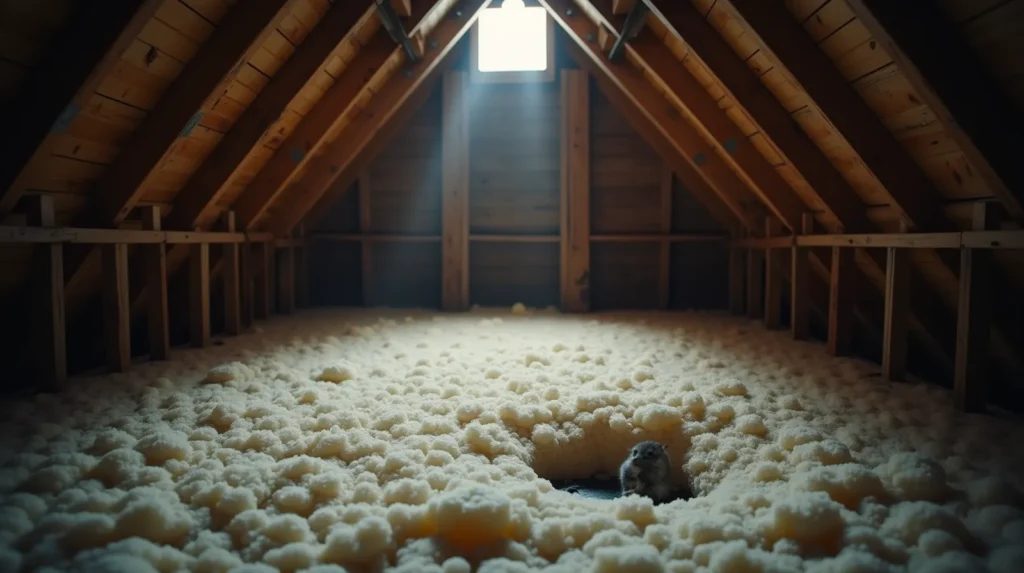
The buyer’s appraiser finds it on day 25. You knew about the mice in the attic, or the cockroaches behind the kitchen cabinets, or both. Now the lender is holding the loan until you provide a pest treatment clearance letter, and the buyer’s agent is asking about a price reduction.
The short answer: You can sell. Disclosure is required and FHA and VA appraisers will flag active infestations as health and safety conditions — which adds a treatment-and-clearance cycle before a financed buyer can close. Cash buyers have no appraiser, no clearance requirement, and no inspection contingency. A minor infestation with documentation clears most conventional lenders. Heavy rodent damage that has spread to electrical wiring and HVAC ductwork is a different situation.
What happens when the appraiser finds an active pest infestation
FHA and VA loans require the appraiser to evaluate the property against minimum property requirements. Under HUD 4000.1 §II.A.3.a, the appraiser must identify conditions that endanger the health and safety of occupants. An active pest infestation — rodent droppings in the attic, evidence of cockroach activity in the kitchen, signs of rodent gnawing on framing or wiring — gets noted in the appraisal report as a required repair condition.
Once noted, the lender will not fund the loan until the condition is cleared. Clearing it requires:
- Professional pest treatment by a licensed company
- A written clearance letter from the pest control company
- In some cases, a second appraiser or inspector visit to confirm the condition is resolved
That process takes two to four weeks minimum. For a buyer already on a 30 to 45 day closing timeline, the slip can push them out of rate lock or past a lease-end date. Some walk. Most renegotiate.
Conventional loans handled by non-FHA, non-VA lenders are more flexible — many do not require an appraiser to check for pest conditions. But most conventional buyers include a home inspection contingency, and a home inspector who finds rodent droppings or cockroach evidence documents it in writing. The buyer then has contractual grounds to request treatment, demand a price reduction, or exit the deal.
When a rodent problem becomes three problems
Mice and rats do not just live in a house — they chew through it. Electrical wire insulation is the primary casualty. Exposed or damaged wiring is a fire hazard and is flagged under HUD 4000.1 §II.A.3.b(v) as a separate appraiser condition. A lender who sees a pest clearance requirement in the appraisal and also sees a note about damaged electrical systems has two separate holds on the file.
Older homes carry more risk. A pre-1960 bungalow in East Nashville, a 1950s ranch in Houston’s Montrose neighborhood, or a 1940s block house in Tampa’s Ybor City typically has HVAC ductwork running through the attic or a crawl space. Rodents nest in insulation and in ducts. An HVAC technician who inspects after a rodent infestation will often find nesting material, droppings, and chewed duct tape — and recommend cleaning or replacement. That is a third condition on top of pest treatment and electrical repair.
A cash buyer has no appraiser, no minimum property requirements, no clearance letter requirement. The damage is priced into the offer instead of turned into a repair condition list. For sellers dealing with wiring damage alongside pest issues, the two-condition problem that stalls a financed deal is the same reason a cash offer gets to closing when others cannot.
What you are required to disclose — and what happens if you don’t
Disclosure is not optional regardless of how you sell.
Tennessee: TCA § 66-5-202 requires sellers to disclose all known material defects. An active pest infestation is a material defect. The statute of limitations for a failure-to-disclose claim runs three years from discovery. “I didn’t know” is a defense; “I knew and didn’t say” is not.
Texas: TREC Form OP-H Section 2 asks specifically: “Are you aware of any previous or current infestations of wood destroying insects, rodents or other pests?” That question covers rodents and cockroaches by name — and it covers past infestations, not just active ones. Answering no when you know the answer is yes exposes you to a Texas DTPA claim, which allows actual damages plus up to three times that amount for knowing misrepresentation. Texas Property Code § 5.008 governs the general disclosure obligation.
Florida: FL § 689.261 requires disclosure of known material defects. Florida courts have generally found that a persistent German cockroach infestation inside the structure — the small brown species that lives in kitchen walls, not the large American cockroach that enters from outside — constitutes a material defect requiring disclosure. The distinction matters: occasional palmetto bugs entering a Florida home from outdoors are near-universal and courts have not generally required disclosure of their presence. A maintained indoor German cockroach infestation is different and must be disclosed.
State-specific conditions worth knowing
Tennessee
Middle Tennessee’s pre-WWII housing stock — the Craftsman bungalows in East Nashville, Germantown, and Sylvan Park — was built before modern sealed foundations became standard. Mice enter through gaps where aging sill plates meet the framing above, around pipe penetrations, and at foundation cracks that have opened over decades. Unfinished crawl spaces in these neighborhoods provide ground-level access that newer construction does not have.
German cockroaches are also common in Nashville’s older residential stock, particularly in kitchens and bathrooms where moisture has accumulated through aging plumbing. A single spray treatment is not the end of the process for German cockroaches — they require professional gel baiting and multiple follow-up visits over four to six weeks to break the reproductive cycle. A seller who treats once and relists has a treated infestation, not a cleared one, and it will recur without the full protocol.
Texas
TREC Form OP-H asks about previous infestations. A rat problem treated two years ago is still a “previous infestation” on that form. If you paid an exterminator, you have awareness. The form asks whether you are “aware” — and you are.
Roof rats are documented in Houston’s mature-tree neighborhoods, including Montrose, The Heights, Midtown, and Garden Oaks. They are distinct from Norway rats: they live in attic spaces and enter through gaps at the roofline, often via overhanging tree branches. A home inspector hired by any conventional buyer will check the attic. In the DFW area, German cockroaches are common in older single-family properties in Oak Cliff, South Dallas, and East Dallas.
Florida
Three pest scenarios carry different disclosure implications under FL § 689.261:
- American cockroaches (“palmetto bugs”) entering from outside: near-universal in Florida, generally not a material defect absent an actual indoor infestation
- German cockroaches living in walls and cabinets: clear material defect requiring treatment and disclosure
- Roof rats in attic spaces: common in older construction in Pinellas, Hillsborough, Alachua, and Miami-Dade counties; disclosure required when known
Florida’s climate creates year-round breeding conditions. A treated rodent problem in a vacant or seasonally occupied home will recur faster here than in a colder climate unless entry points are sealed — a separate step from extermination. Sellers of Florida properties dealing with any condition that limits their buyer pool will find cash buyers a practical path when the treatment-seal-relist cycle runs longer than their timeline allows.
What treatment costs look like
| Problem | Cost range | Timeline |
|---|---|---|
| Cockroach infestation (minor, one area) | $150–$400 | 1–2 visits, 2 weeks |
| Cockroach infestation (whole-house, heavy) | $400–$800 | 4–6 weeks, multiple visits |
| Rodent exclusion and baiting | $500–$1,500 | 2–4 weeks |
| Full rodent remediation + entry-point sealing | $1,000–$2,500 | 3–5 weeks |
| Chewed wiring repair (localized) | $400–$1,200 | 1–2 days |
| HVAC duct cleaning post-rodent | $300–$600 | 1 day |
| HVAC duct replacement (attic) | $1,500–$4,000 | 1–3 days |
A minor cockroach issue at $200 to $400 is worth treating before listing. Document it, get the clearance receipt, and disclose it in past tense on the seller’s form. Most conventional buyers will accept that and move forward.
Heavy rodent damage changes the math. Pest remediation runs $1,000–$2,500. An electrician flags chewed wiring in the attic: another $400–$1,200 for localized repair, more if a full inspection reveals wider damage. HVAC duct cleaning adds $300–$600. You are now past $2,000 in repairs, managing three separate contractors, and the buyer who enters during that process will still inspect and may find additional issues. Each finding is grounds for the buyer to renegotiate further. See also: selling a house in poor condition when pest damage is one of several stacked problems.
When you should not sell to us
Pest infestations do not automatically make a cash sale the right decision.
If the problem is minor — a single room, a small cockroach infestation, a few mice caught in traps — professional treatment will clear the condition for most conventional buyers. Get the clearance documentation, disclose the treatment on the seller’s form, and list. The price you leave on the table with a cash buyer will likely exceed the treatment cost several times over.
If you have 60 or more days, the market in your area is active, and the pest issue is the only problem with the property, the math almost always favors treating and listing over a cash sale.
A cash offer makes more practical sense when:
- Rodent damage has reached the electrical system or HVAC ductwork, creating a repair estimate above $3,000–$5,000
- You are on a hard deadline — a foreclosure date, a probate filing, a job start date — and the treatment-plus-clearance timeline would push past it
- The buyer pool for your price range is predominantly FHA or VA buyers, making the appraisal clearance requirement unavoidable
- The pest problem is one of several issues stacked together — an as-is sale is the honest path when there are multiple conditions a financed buyer cannot work around
How this works
Submit the address on this page. We call or text to confirm access and timeline — typically within a few hours.
We arrange a walkthrough, in person or via video. You can stop the process at any point. We have bought more than 100 houses and have seen conditions far worse than a pest problem. Nothing about this will be a surprise to us.
You have a cash offer within 24 hours of the walkthrough. The offer accounts for the pest situation and any related damage. We buy directly and, where we are not the right buyer for a property, we connect you with someone in our network who is. No commission. No closing costs. You choose the closing date — typically 7 to 14 days.
Straight answers
Does a pest infestation kill a financed sale?
Not automatically, but it complicates one. FHA and VA appraisers are required to flag active infestations under minimum property requirements, and lenders hold funding until treatment clearance is provided. Conventional loans are more flexible, but home inspection contingencies give buyers grounds to act on any evidence of infestation — demanding treatment, a credit, or an exit from the contract.
Do I have to disclose a past infestation?
In Texas, TREC Form OP-H specifically asks about “previous or current” infestations of rodents or pests. In Tennessee and Florida, the general material defect disclosure statutes require disclosure of any known defect. A treated and documented past infestation is disclosed in past tense with documentation — the disclosure obligation does not disappear because the treatment happened.
What is the difference between this and a termite problem?
Termite issues trigger a specific FHA named requirement: a wood-destroying organism (WDO) clearance letter from a licensed inspector must accompany the loan file under HUD 4000.1 §II.A.3.b(iv). Rodent and cockroach infestations fall under the broader health and safety minimum property standards in §II.A.3.a. Both generate lender holds — but the termite situation has a more formalized named clearance requirement. Rodent and cockroach clearance is handled at the lender’s discretion and varies by underwriter.
Can I sell to a cash buyer and still be required to disclose?
Yes. Disclosure requirements apply to all sales including cash transactions. The difference is that a cash buyer does not have a lender imposing clearance conditions, and there is no appraisal inspection generating mandatory lender holds. They buy knowing the condition and price it into the offer.
If you are ready to stop managing the situation and want a number in hand within a day, put the address in the form above. We buy as-is, and a pest infestation has not stopped any of our closings.
Keep reading
- Sell My House Fast in Tampa, FL
- Selling a House With Code Violations
- How to Sell a Rental Property With Tenants Still in It
- Sell My House Fast Broken Arrow OK
- Sell My House Fast in Fort Walton Beach, FL
- Sell My House Fast Kennewick WA — Cash Offer in 24 Hours
Ready for a number? Get your cash offer or call (615) 780-7349.