


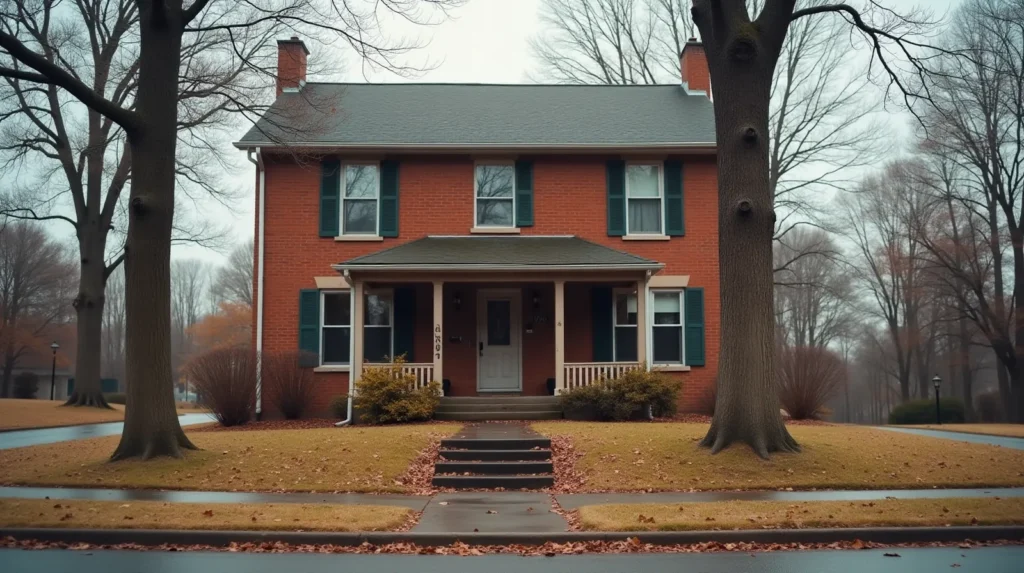
Yes — you can sell a house with a second mortgage on it
Both loans get paid off at the closing table. The title company collects the sale proceeds, wires the first mortgage payoff to that lender, then wires the second mortgage payoff to the second lender. You receive whatever’s left. That’s the normal closing sequence when there’s enough equity to cover both balances.
The complication is when there isn’t enough equity. If your home’s sale price won’t cover both payoffs after closing costs, the second lender has a problem — and they can use that problem to block your sale unless you get their written agreement first.
The problem: Short sales with two lenders take 90 to 180 days when things go smoothly. The second lender knows they’re last in line and often negotiates hard, or simply waits.
Next step: Enter your address below. We’ll make you a cash offer within 24 hours and explain exactly what a payoff to both mortgages would look like in your situation.
How the closing works when equity covers both loans
The sequence is set by lien priority. Your first mortgage was recorded before your second, so it gets paid first. The second mortgage was recorded after, so it gets paid after.
Say your home sells for $310,000. Your first mortgage payoff is $195,000. Your HELOC balance is $42,000. Closing costs (title, transfer taxes, prorated property taxes) run about $3,500. You walk away with roughly $69,500.
The title company handles all of this. You don’t send checks to two different lenders. What you need to confirm before closing:
- HELOCs are lines of credit — the balance can change right up to closing day if you draw from them
- Payoff quotes expire (typically 10–30 days) and accrue daily interest if you close late
- Your second mortgage lender may charge a prepayment penalty or early-termination fee if the account was opened recently
- A HELOC with a $0 balance still requires a formal lien release — the open credit line is a lien until the account is closed
Call both lenders two to three weeks before your target close date. Ask for a written payoff quote with an expiration date. That number, not your current statement balance, is what gets wired.
What your second mortgage actually is — it matters for what comes next
Not all second mortgages work the same way at closing. There are three common types:
| Type | How the balance works | Closing concern |
|---|---|---|
| Closed-end second (lump sum) | Fixed balance, pays down monthly | Straightforward payoff quote; check for prepayment penalty |
| HELOC (home equity line of credit) | Revolving — you can draw up to a limit | Lender may freeze draws when you list; balance changes daily |
| Piggyback loan (80/10/10) | Originated same day as first mortgage | Same as closed-end, but verify whether a prepayment penalty applies |
If you have a HELOC, your lender may freeze available draws when they see the property is listed for sale. That’s legal and common. It doesn’t affect your existing balance — only your ability to draw more. If you planned to use the HELOC for moving costs, that money may not be accessible once you go to market.
When equity doesn’t cover both mortgages
If your home’s sale price won’t cover both payoffs plus closing costs, you have three paths:
- Bring cash to closing — pay the gap out of pocket. No lender approval needed. Clean exit with no credit impact.
- Short sale — sell for less than you owe, with both lenders agreeing in writing to accept reduced payoffs and release their liens.
- Default and foreclosure — stop paying, let the first mortgage foreclose. The second lender gets wiped out and may pursue a deficiency judgment depending on the state.
Short sales with two mortgages are significantly harder than short sales with one. The first lender negotiates the sale price with the buyer’s agent. Then the second lender has to agree to accept whatever is left — which is often nothing, or a small settlement of $3,000 to $5,000 through HUD programs like HAFA.
The second lender has leverage. They can decline the short sale, knowing the first mortgage will eventually foreclose and wipe them out anyway. They can also demand a larger cut than the first lender is willing to allocate from the proceeds. These negotiations add months and sometimes collapse entirely.
This is completely different from an involuntary lien situation — judgment liens, IRS liens, contractor liens — where the lien is paid from proceeds at a fixed statutory amount. With a second mortgage, both lenders are voluntary parties to separate contracts, and both have to renegotiate their terms to allow a short sale through.
Can a cash buyer help when you’re underwater on a second mortgage?
It depends on how far underwater you are.
If you’re $8,000 short — the sale price covers the first mortgage payoff but leaves the second lender with a small shortfall — a cash buyer can often help structure a resolution. We buy as-is, skip the appraisal, and close in 7 to 14 days. That speed reduces carrying costs, and we can negotiate with the second lender in advance without being subject to the mortgage contingency that ties a financed buyer’s hands.
If you’re $80,000 short — both lenders are taking significant losses — that’s a short sale negotiation regardless of who’s buying, and the second lender’s response time is the variable neither buyer type can control.
Either way, the 24-hour offer we provide tells you where you stand against both payoffs. It’s not an obligation. It’s a number. See how our as-is offers work.
Tennessee: second mortgages in a non-judicial foreclosure state
Tennessee foreclosure is non-judicial. Under TCA § 35-5-101, the trustee can conduct a sale without court involvement, and the timeline from default notice to auction is typically 60 to 90 days. There is no redemption period after the gavel falls.
When a Tennessee first mortgage forecloses, the second mortgage lien is extinguished. The second lender loses their collateral entirely. This is why second lenders in no-equity situations often accept a small settlement during a short sale rather than waiting — they know the clock is running and the alternative is nothing.
TCA § 35-5-118 gives lenders a one-year window to file a deficiency judgment after a Tennessee foreclosure sale. A second lender who gets nothing at the trustee sale can still pursue you personally for the remaining balance — unless your short sale agreement includes an explicit deficiency waiver. Get that in writing before you sign anything.
In Nashville’s market — Davidson, Williamson, Rutherford, and Sumner counties — many second mortgages we see are HELOCs opened between 2019 and 2022, when home values were rising quickly. If you bought with a piggyback loan in 2019 and your neighborhood hasn’t kept pace, you may be closer to the break-even line than you expected at current interest rates. If you need to stop a Tennessee foreclosure before the auction date, the second mortgage situation is solvable but the timeline is short.
Texas: deficiency rules for second liens after foreclosure
Texas non-judicial foreclosure moves fast. Under Texas Property Code § 51.002, the trustee sale process takes as little as 41 days from the first notice to the sale date. There is no redemption period.
When a Texas first mortgage forecloses, the second lender’s lien is extinguished. Under § 51.003, any deficiency judgment is capped at the difference between the unpaid balance and fair market value at the time of the trustee sale — not the auction hammer price. If the auction clears at $180,000 on a property worth $300,000, the deficiency calculation uses $300,000.
For a second lender in a no-equity position, the practical result is the same: they get wiped out at foreclosure, with no equity to claim and uncertain deficiency recovery. We’ve seen second lenders in DFW, Houston, San Antonio, and Austin settle for $3,000 to $8,000 when the first mortgage trustee sale was already scheduled — accepting a small guaranteed payment over likely nothing.
Texas homestead protections under Article XVI § 50 of the Texas Constitution are strong, but they don’t protect against voluntary mortgage liens. If you voluntarily took a second mortgage or HELOC on your Texas homestead, both lenders have full lien rights.
Florida: second mortgages in a judicial foreclosure state
Florida’s foreclosure process is judicial — the first mortgage lender must file a complaint in circuit court and obtain a final judgment before the sale. That process takes 12 to 18 months in most Florida counties. The second mortgage holder is typically named as a co-defendant in the same complaint.
Florida Statute § 702.06 permits deficiency judgments. After a first-mortgage foreclosure wipes out the second lender, that lender has five years to pursue a deficiency claim for the unpaid balance. For a $60,000 HELOC balance wiped out at foreclosure, that’s a five-year collection clock.
The practical implication for Hillsborough, Pinellas, Broward, Palm Beach, and Miami-Dade sellers: second lenders are weighing a small settlement now against a 12 to 18-month court process and uncertain deficiency collection later. Many will negotiate during a short sale, particularly when the first lender is also motivated to close the file. Cash buyers in Florida skip the lender’s insurance requirement and the appraisal entirely, which removes two of the common failure points for financed buyers on these properties.
When you should not sell to us
If your home’s sale price clearly covers both mortgage payoffs plus closing costs and a 5–6% agent commission, and you have 60 or more days before any deadline, list it with a real estate agent. You will net more money. That’s true in most markets for sellers with clean equity positions.
The math changes when:
- You’re within 60 to 90 days of the first mortgage’s foreclosure auction date
- Both loans are underwater and you need a quick resolution to stop the carrying cost clock
- Your HELOC lender has frozen draws and the balance situation is complicated by recent activity
- One lender has already formally initiated foreclosure proceedings
- A court order, job relocation, or estate timeline requires a close in a specific window
If none of those apply, call an agent first. If the numbers work after both payoffs, take that path.
Financed solar panels can work like another lien on the house. Many solar lenders record a fixture filing that has to be paid off or transferred before closing, which we cover in how to sell a house with solar panels.
Straight answers
Can I sell my house if I have a HELOC?
Yes. The HELOC balance gets paid off at closing just like the first mortgage. If you’ve drawn from it recently, get an updated payoff quote — the balance on your statement may not match the payoff amount once daily interest is added.
Can my HELOC lender block my sale?
Not directly. But if the sale price won’t cover the HELOC balance, the lender can refuse to release the lien unless they receive a payoff they agree to. Without a lien release, the buyer can’t receive clear title and the sale can’t close. That’s the mechanism — not a legal injunction, but a refusal to sign the release.
Can I sell with two mortgages without paying them both off?
No, not in a standard sale. Both liens must be cleared for the buyer to receive clear title. Subject-to transactions exist, where a buyer takes over the mortgage without a formal payoff, but those are investor-to-investor structures with significant legal complexity.
What if my HELOC balance is $0?
Your lender will still require the account to be closed at closing, since an open line of credit is a lien on the property until it’s formally terminated. This is typically a $0 payoff with a lien release. Some lenders charge a small account closure fee, usually $50 to $500. Request this in your payoff quote.
How long does a two-lender short sale take?
90 to 180 days when both lenders cooperate and the second lender accepts a small settlement quickly. 6 to 18 months when they don’t. If you’re facing a foreclosure deadline, that timeline may not leave enough room — which is when understanding where you are in the foreclosure process becomes the first thing to establish.
Keep reading
- Sell My House Fast Bethel Park PA
- Selling a House in a Trust: A Trustee’s Guide
- Sell My House Fast in St. Louis, MO
- Can I Sell a House with Septic Problems?
- Sell My House Fast Hialeah FL
- Sell a House With an IRS Tax Lien: What You Need to Know
Ready for a number? Get your cash offer or call (615) 780-7349.