


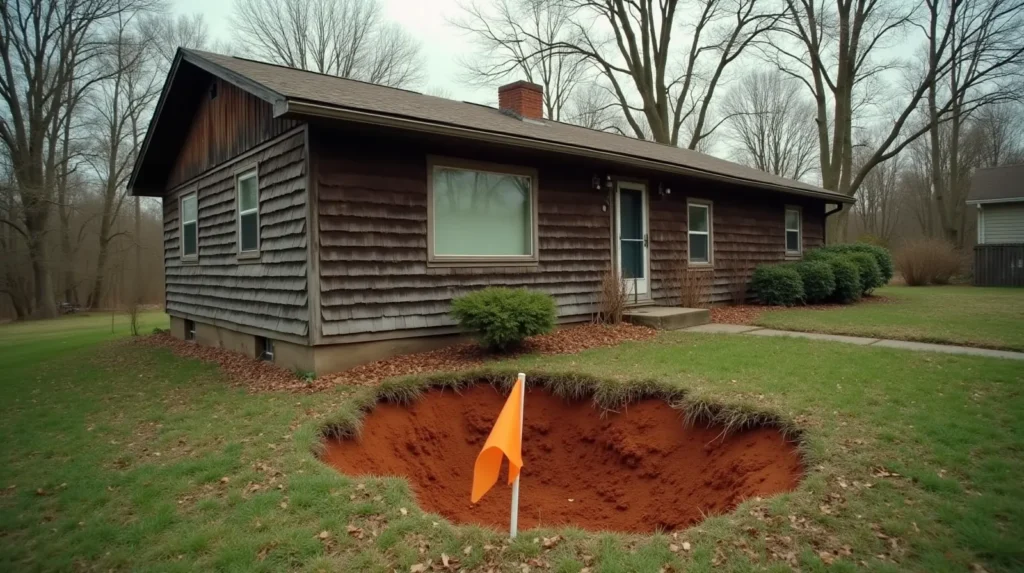
What a failed septic inspection means for your sale
A failed septic inspection knocks out nearly every financed buyer immediately. FHA loans require a functioning sewage disposal system under HUD Minimum Property Standards (HUD 4000.1 §II.A.3.b(viii)) — an appraiser who flags a failed system will call for repair before any loan closes. VA appraisers follow the same standard under VA Pamphlet 26-7, Chapter 12. Conventional Fannie Mae guidelines (B4-1.3-06) require the same. The result: without a working septic system, you’re selling to cash buyers only.
That doesn’t mean you can’t sell. It means the buyer pool just narrowed significantly, and the transaction looks different than a standard listing.
You can sell a house with a failed septic in most states — disclosure is required, repair is not. Cash buyers can close as-is with no appraisal and no repair contingency. If the fix is under about $10,000 and you have 60 days, repairing it and listing traditionally will likely net you more money. If the soil won’t support a replacement system, a cash sale is often the only viable path.
Why cash buyers are the realistic buyer pool
Lenders need written proof that sewage disposal works. A repair estimate in escrow rarely satisfies them — they want an inspected, cleared system before they’ll fund. That eliminates buyers who need FHA, VA, USDA, or conventional financing, which is most buyers in most markets.
A cash buyer has no lender and no appraisal. They evaluate the property against what it costs to fix and what it’s worth after the fix, then price from that number. We’ve bought more than 100 houses, some with failed septic systems. The offer accounts for the repair — there’s no surprise at closing where the number drops because someone discovered the issue late.
If you want to understand the full picture of selling a house as-is, that page covers how as-is offers are structured and what the discount typically reflects.
What actually fails a septic inspection
Different system types fail in different ways, and the repair cost varies widely:
- Conventional gravity system — full or leaking tank, clogged drain field, effluent surfacing above ground. Full drain-field replacement: $12,000–$22,000 in Middle Tennessee; $10,000–$18,000 in rural Texas; $15,000–$30,000 in coastal Florida where soil conditions add complexity
- Mound system (high water table areas) — saturated mound, failed pump, broken distribution pipes. Often more repairable than a failed drain field
- Aerobic Treatment Unit (ATU) — common in rural Texas; fails from motor failure, low chlorine level, or electrical issue. Repair: $800–$2,500. Full replacement: $8,000–$15,000
- Cesspool — in most states, any operating cesspool is considered a failing system because the design is prohibited for new construction; it won’t pass inspection
The difference between “borderline” and “failed” matters for pricing. A pump replacement is an afternoon’s work. A drain-field rebuild on a lot where the soil won’t pass a new percolation test is not a repair — it’s an engineering problem. When the lot can’t support a compliant replacement system at all due to lot size or soil conditions, the financed-buyer path closes entirely.
This comes up frequently alongside other structural issues. If the same property has foundation problems compounding the septic failure — common in clay-heavy Middle Tennessee and Texas Hill Country markets — the repair math stacks quickly.
Can you legally sell without fixing it?
In most states, yes — with full disclosure. Disclosure laws require you to tell a buyer what you know. They do not require you to fix it first. Here’s how the three primary markets we serve handle the question:
Tennessee
TCA § 66-5-202 requires sellers to disclose known material defects. A failed septic system is a material defect. Tennessee does not mandate a septic inspection at the time of transfer for most residential sales — county health departments (Davidson, Williamson, Rutherford, Sumner, Wilson) only get involved if a new permit is pulled for a repair or replacement.
If the system is actively creating a public health hazard — raw sewage surfacing, for example — the county health department can require remediation independent of any sale.
Replacement permits go through TDEC (Tennessee Department of Environment and Conservation) under TCA § 68-221-403. County inspectors determine whether the lot can support a new system before they issue the permit. Middle Tennessee’s dense clay soils — Williamson, Marshall, Lawrence, and Maury counties especially — make drain-field failure common, and replacement is not always possible on smaller lots. If the lot can’t support a new conventional system, an engineered alternative (drip irrigation system, mound) typically runs $20,000–$45,000.
Texas
Texas OSSF (On-Site Sewage Facility) rules fall under TCEQ (Texas Commission on Environmental Quality), 30 TAC §§ 285.001 et seq. Sellers must disclose known defects under TX Property Code § 5.008 and TREC Form OP-H Section 7, which asks directly whether wastewater and sewage systems are in normal working condition. Answering “no” triggers disclosure — it doesn’t require repair before closing.
Some Texas counties have local transfer inspection requirements: Hays, Comal, Gillespie, and Blanco counties all have rules requiring OSSF inspection at the time of property transfer. If you’re in the Hill Country, verify your county’s requirements before listing.
The engineering constraint in much of rural Texas is thin limestone bedrock. Conventional drain fields can’t be installed at all in some areas — ATU systems with drip irrigation are the only compliant option, and they run $18,000–$40,000. For Texas properties where the lot physically cannot support a standard replacement, a cash sale reflecting that reality is often the only honest path.
Florida
Florida regulates OSTDS (Onsite Sewage Treatment and Disposal Systems) through the Florida Department of Health under FL § 381.0065. Sellers disclose under FL § 689.261. Florida does not require a septic inspection statewide at the time of transfer, but several counties do: Alachua, Lake, Marion, and Citrus counties in Central Florida all have local requirements for inspection on sale.
The 2020 Statewide Agricultural and Domestic Wastewater Nutrient Reduction Initiative (SB 712) created state-funded upgrade programs near Florida’s spring systems — Ocklawaha, Silver, Rainbow, and Ichetucknee springs — but it also increased scrutiny of failing systems in those watersheds. If your property is in Alachua, Marion, Levy, or Columbia County near a spring-fed waterway, expect more regulatory attention than a property in coastal Duval or Nassau County would face.
Older Florida properties built in the 1960s through 1980s — particularly in Polk, Highlands, Hardee, and portions of Duval, St. Johns, and Nassau counties — commonly fail because the original systems were undersized and soil absorption capacity has degraded over decades. Florida cash buyers in those markets see this frequently.
Repair-or-sell comparison
| Fix and list traditionally | Sell as-is to cash buyer | |
|---|---|---|
| Repair cost | $5,000–$45,000+ depending on system type and soil | None |
| Agent commission | 5–6% | None |
| Buyer pool | Financed buyers restored after repair | Cash buyers only |
| Timeline to close | 60–120 days after repair completes | 7–14 days |
| Transaction certainty | Inspection contingency risk remains | Firm offer, no financing fall-through |
| If soil can’t support replacement | Path doesn’t exist | Still viable |
The last row is the one that decides it. When the soil or lot size won’t support a replacement system, the fix-and-list option doesn’t exist. A cash buyer who can take the property as-is becomes the only real option.
Houses on septic usually draw their water from a private well too, and lenders often want a water test on the well before closing. Our guide to selling a house with a private well explains what that test looks for.
When you should not call us
If the repair is straightforward and your timeline allows it, fixing the system and listing with an agent will almost certainly get you more money. Be honest with yourself about which situation you’re in:
- Repair estimate is under $10,000 and you have 60+ days — fix it and list
- The failure is a component (pump, float switch, distribution box), not the drain field — repair cost is typically under $3,000; fix it
- You have strong equity, the market is active, and the repair math closes cleanly — an agent sale makes sense
- Your county requires pre-listing inspection but the system is marginal — a maintenance service call sometimes clears it
The situation where a cash offer is genuinely the right answer: the lot can’t support a compliant replacement, the repair estimate exceeds what the equity supports, you’re facing a foreclosure deadline and can’t absorb a 90-day repair-and-listing timeline, or you need to close in under a month for reasons unconnected to the septic issue. A foreclosure deadline that arrives before a repair can be permitted and completed is the clearest case where a cash sale is not just convenient but necessary.
How the process works
After you submit the address or call us at (615) 780-7349:
We ask for the inspection report if you have it, or a description of what the inspector found. Within 24 hours, you have a cash offer. That offer already accounts for the repair — we price from the value-after-repair and work backward. You don’t have to disclose it and then negotiate later.
You pick the closing date. Seven to 14 days is standard. If you need 30 days or more, that’s fine too. No agent fees, no closing costs passed to you, no commission.
One thing worth saying plainly: some cash buyers in this space give you a number, then drop it at closing after they “discover” the septic issue in due diligence — even if you disclosed it upfront. We don’t do that. If something unexpected turns up beyond what was disclosed, we’ll tell you directly rather than surprise you at the closing table. We’ve seen the other version happen to sellers, and it’s worth naming it.
Straight answers
Can I list with a realtor if the septic failed?
You can list, and you must disclose. Most traditional buyers will walk when they see the inspection report. Those who don’t will typically demand a repair credit equal to the contractor estimate plus a contingency buffer. If the repair is large or the soil won’t support a new system, the deal often falls through during the inspection period after everyone has spent time and money on it.
Will buyers using FHA or VA financing be able to close?
No. HUD 4000.1 and VA Pamphlet 26-7 both require a functioning sewage disposal system. The appraiser will call for repair as a condition before closing, and lenders won’t fund until the system is reinspected and cleared.
Does a failed septic affect title?
Not in a standard title search. Septic failures don’t record as liens unless the county health department has issued a formal compliance order and recorded it against the property. What can appear: unpaid county permit fees or recorded health department enforcement orders. These don’t typically block a cash sale but need to be addressed at closing.
What if I didn’t know the system had failed?
Disclosure laws apply to what you knew or reasonably should have known. If the inspection turned up a failure you weren’t aware of, disclosing it honestly is both legally correct and practical. The issue: a buyer’s inspector will find it anyway. Getting ahead of it is better than having it surface during the inspection contingency period and kill the deal. If prior inspection reports show known problems and those weren’t disclosed, speak to a real estate attorney before listing — that situation is different.
What about a house with both plumbing and septic problems?
Combined issues reduce the financed buyer pool further — they’re separate disclosure items and separate repair contingencies. The cumulative repair estimate often exceeds what the seller can absorb. Cash buyers evaluate the total repair picture and price accordingly.