


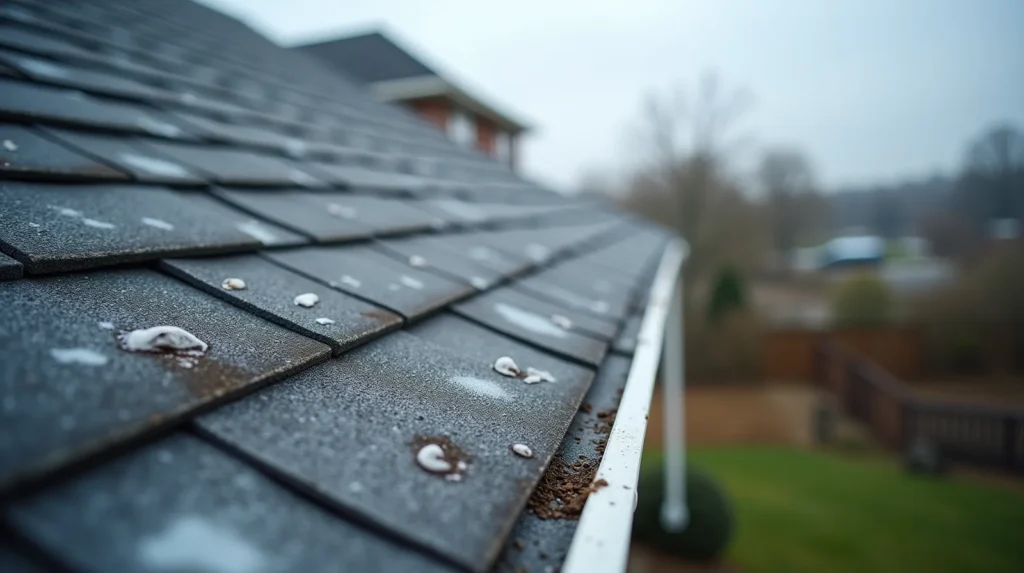
You found out there is hail damage on the roof — maybe the adjuster came out after last spring’s storm, maybe your buyer’s lender just flagged it during the appraisal, maybe you’re seeing granules in the gutters and putting it together. Now the question is whether you have to fix it before you can sell.
You don’t. You can sell as-is. But there’s a real problem that most sites don’t spell out: hail damage knocks out your entire financed-buyer pool until the roof is repaired, and if you have an active insurance claim in play, the money is still yours when you sell. Here’s how it actually works.
The short version: Hail damage doesn’t prevent a sale — it prevents a financed sale. FHA, VA, and most conventional lenders require the damage repaired before they’ll fund the loan. A cash buyer skips the lender, skips the appraiser, and closes on the house as-is. If you’ve already filed an insurance claim, you can sell at the unrepaired price and keep the settlement money. Call (615) 780-7349 and you’ll have an offer within 24 hours.
Can you sell a house with hail damage without repairing it first?
Yes — it’s legal in every state, and disclosure is all that’s required. What changes is who can actually close.
A buyer paying cash has no lender behind them. No appraisal, no inspection contingency unless they choose to add one, no lender-mandated repair conditions. If the offer price accounts for the damage, the transaction closes like any other house.
A buyer using a mortgage runs into federal minimum property standards. Under HUD Handbook 4000.1, FHA appraisers must note roofs with active damage and roofs with less than two years of remaining useful life. When that condition goes into the appraisal report, the lender issues a repair-required finding — the roof has to be fixed before the loan funds. VA appraisers work from the same standard under VA Pamphlet 26-7, Chapter 12. Most conventional lenders follow Fannie Mae and Freddie Mac guidelines that treat active hail damage the same way.
The result: a house with unrepaired hail damage is effectively off the market for financed buyers until someone pays for the repair. That could be you, the buyer, or a repair credit worked into the contract — but the lender won’t close without it. This is the same barrier you’d face with any roof in poor condition; see our guide to selling a house with roof problems for how the financing blockage works in more detail.
What happens to the insurance money when you sell as-is?
This is the question most people don’t know to ask, and it’s the right one.
Your homeowners insurance claim belongs to you. The policy covered your interest in that property at the time of the loss. If you’ve received a settlement check and haven’t done the repairs, you can sell the house at a price that reflects the damage — the buyer knows what they’re buying — and keep the insurance money.
If the claim is still open, coordinate the timeline with your adjuster before closing. The settlement is paid to whoever holds an insurable interest at the time of the loss — typically you, the seller — though if there’s a mortgage on the property, your lender may be named on the check. At closing, the mortgage gets paid off from the sale proceeds. Any insurance funds the lender received will be returned to you once the payoff clears.
The key point: an open or recently-paid hail claim is not a reason to rush into repairs before listing. For more detail on how the insurance mechanics work during a sale, see our guide to selling with an open insurance claim.
Why financed buyers can’t close on hail-damaged roofs
An FHA or VA appraiser flags anything that doesn’t meet minimum property standards. On a hail-damaged roof, that flag is usually “roof requires repair prior to closing.” It becomes a lender condition — a line item the underwriter won’t clear until the borrower submits proof of repair.
The timeline: get a roofing estimate (1–3 days), schedule the repair (7–21 days out, longer in busy markets after a widespread hail event), complete the work, get a contractor certification, submit to the lender, wait for underwriter review. In DFW or Oklahoma City after a major storm, roofers are booked out. A 45-day closing can turn into 60–90 days, and the buyer’s rate lock may expire in the middle of it.
Cash buyers have none of that. No appraiser, no underwriter, no repair condition, no rate lock expiry. That’s the practical value when the timeline matters. If speed is what you need and condition is the issue, selling a house as-is covers the full landscape of how cash buyers price and close without lender requirements.
| Factor | Repair and list with agent | Sell as-is to cash buyer |
|---|---|---|
| Time to close | 60–120+ days (repair + relist + 45-day close) | 7–14 days |
| Repair cost | You pay upfront ($8,000–$20,000+ depending on roof size and damage extent) | None — buyer prices in the cost |
| Buyer pool | Full market after repair is complete | Cash buyers and investors |
| Contractor risk | After a major hail event, roofers are booked out — delays are common | Not your problem |
| Insurance money | Spent on repairs | Kept by you if the claim is already paid |
| CLUE report | Must document repairs for buyer’s insurance application | Cash buyer does not need homeowners insurance to close |
| Agent commission and fees | 5–6% plus closing costs | None |
The CLUE report and your buyer’s insurance
Every insurance claim on a property goes into the Comprehensive Loss Underwriting Exchange — the CLUE report. Hail claims stay on the report for seven years. When your buyer applies for homeowners insurance, their carrier pulls that history on the address.
If the damage was fully repaired and documented, this typically does not prevent a new buyer from getting coverage. If the CLUE report shows a claim where the damage was never repaired, many carriers will decline to insure the property or require proof of repair before binding. No homeowners insurance means no mortgage, which means the deal falls through.
A cash buyer does not need homeowners insurance to close. A financed buyer does. This is why a house with a filed-but-unrepaired hail claim is harder to sell to financed buyers even months after the storm — the CLUE report follows the address, not the owner.
State disclosure requirements
Texas. The TREC Seller’s Disclosure Notice (Form OP-H), required under Texas Property Code § 5.008, has a specific question in Section 4 asking whether the property has been damaged by hail or wind. Answer yes and attach the adjuster’s report and documentation of any repairs made. Buyers in Tarrant, Collin, Denton, and Dallas counties see this question regularly — the market expects it. Our Texas operations page covers the broader picture of how cash sales work under Texas property law.
Tennessee. TCA § 66-5-202 requires disclosure of all known material defects affecting the value or desirability of the property. Unrepaired hail damage to a roof is a material defect. Document what the adjuster found and the current state of the roof.
Florida. FL § 689.261 covers known conditions affecting value. While hurricane-driven wind is more common in Florida than hail, the disclosure obligation applies the same way. Hail events do occur in Central Florida and the Panhandle.
The DFW and Hail Alley factor
Texas, Oklahoma, Kansas, and eastern Colorado sit in what the National Weather Service designates as “Hail Alley” — where cold, dry air from the Rockies meets warm Gulf moisture and produces large, frequent hail events. The Dallas-Fort Worth metro sits near the southern end of this corridor.
What this means in practice: a house built in the 1980s or 1990s in Mesquite, Garland, Grand Prairie, Arlington, or the mid-cities (Hurst, Euless, Bedford) has likely taken multiple significant hail hits. Buyers, lenders, and insurance carriers in those markets price for it. Cash buyers who work regularly in DFW understand the hail inspection and disclosure process and close without requiring repairs. Financed buyers face the same FHA/VA lender-condition standard regardless of local market familiarity — the underwriting rules are federal.
The Oklahoma City–Tulsa corridor sees the same pattern. If you’re selling in those markets and the roof has hail history, disclosure and the lender condition question are expected parts of every transaction. The variable is whether your buyer needs a lender.
When a cash offer makes sense for hail damage
A cash sale typically makes sense when:
- The repair estimate is large enough that closing and moving on costs you less than managing contractors
- The insurance money is already in your account and you’d rather keep it
- A prior hail claim on the CLUE report is complicating your buyer’s insurance applications
- You’re on a real deadline — a job start date, a foreclosure notice, estate administration — and the repair-and-relist timeline doesn’t fit
- Hail damage is one of several things stacked on the property and every financed buyer is hitting a different wall
Here is what happens: call (615) 780-7349 or submit your address on this page. We look at the property as-is, account for the roof and anything else that needs attention, and give you an offer within 24 hours. We buy directly or bring a qualified buyer from our network. No repairs, no showings, no waiting on an underwriter. You pick the closing date — 7 to 14 days if that works, longer if you need it.
We’ve bought more than 100 houses. We won’t come back at closing with a lower number than the one we agreed on. That’s a practice we see often in this industry — offer-drop-at-closing is real, and you should ask any cash buyer directly whether their offer is final before signing.
When you should not sell to us
If your hail damage is limited to a section of the roof, your homeowners policy covers full replacement without dispute, the insurance process is clean, and you have 60 or more days before you need to close — then repair it. Document the work with a permit and a paid invoice from a licensed contractor, list the house with an agent, and you’ll sell at full market price to a financed buyer with a clean CLUE report.
That’s the right call for most sellers with isolated, fully-covered hail damage and time to work through it. A cash offer makes sense when the repair path creates delays or complications you can’t absorb. If you’re not sure which side of that line you’re on, call us. We’ll tell you honestly what we’d offer — you can decide from there with no obligation.
Straight answers on common questions
Does hail damage affect my home’s appraised value?
FHA and VA appraisers flag active roof damage as a condition, not a value adjustment. The appraisal doesn’t price in the damage — it stops the loan until the damage is repaired. Conventional appraisers handle it the same way: condition noted, repair required, hold until cleared. The practical effect is a deal-stopper for financed buyers, not a formal value reduction.
Can I list the house while my insurance claim is still open?
Yes. You can accept offers while a claim is in progress. Tell your adjuster you’re selling and coordinate on the settlement timing so the proceeds are handled correctly at closing. A cash buyer closes regardless of where the claim stands. A financed buyer’s lender will require proof of completed repair before funding, open claim or not.
What if my buyer’s agent discovers hail damage the day before closing?
This happens often in DFW and the Oklahoma corridor. If the buyer is financed, their lender may pause the closing and require a repair condition. That puts the deal on hold unless someone pays for the repair, the buyer accepts a price adjustment, or the buyer walks. A cash buyer in the same situation has no lender to satisfy — the question is whether the price still works given what the inspection found.
Do I have to disclose a hail claim from six years ago if the roof was fully repaired?
If the repairs were completed and documented, disclose the event and the repair. Most state disclosure laws require you to share what you know about material conditions. Documentation of completed repairs works in your favor — it tells the new buyer’s insurance carrier the CLUE report entry has a resolved outcome. What you cannot do is answer “no damage” when you know a claim was filed, even if the work is done.
How do I know if my hail damage is severe enough to matter to a buyer?
Get an adjuster’s report or a licensed roofing contractor’s assessment before you list so you know what you’re dealing with. If the damage is cosmetic — minor granule loss, small dents on flashings — a financed buyer may close without a lender condition. If the appraiser sees exposed substrate, missing shingles, or structural damage, the condition will appear. Knowing in advance lets you price correctly and pick the right path rather than getting surprised during a buyer’s appraisal.
For a cash offer on a house with hail damage, call (615) 780-7349. You’ll have a number within 24 hours, and you’re never obligated to accept it.
Keep reading
- Can You Sell a House with Title Issues?
- Sell a Fire Damaged House Fast for Cash
- Sell My House Fast in Racine, WI — Cash Offer in 24 Hours
- Selling a House with Termite Damage
- Sell My House Fast McKeesport PA
- Selling a House With Title Problems
Ready for a number? Get your cash offer or call (615) 780-7349.