


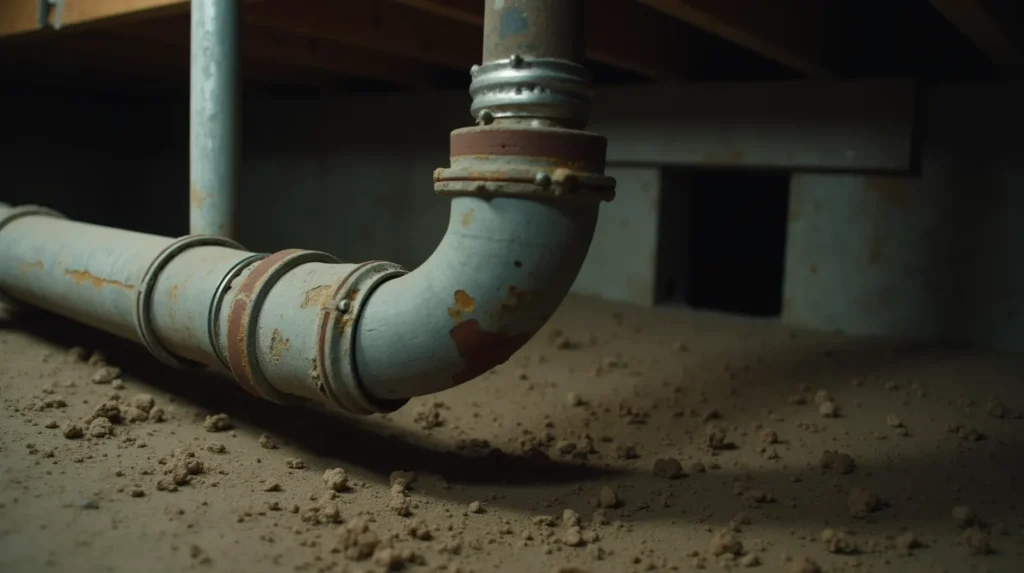
The inspector found galvanized pipes. The buyer’s lender wrote a condition. Now your closing is in limbo and you’re looking at a $10,000 repipe you can’t afford. Or you inherited an older house where the cast iron drain lines are failing, and the first agent you talked to told you to spend $15,000 before listing.
There is another path.
Short answer: Yes. A cash buyer doesn’t use a lender — which means no appraisal condition and no repair deadline. You can sell with galvanized pipes, polybutylene, failed cast iron, or active leaks. You’ll take a discount; that’s the trade for speed and certainty. An offer within 24 hours. Close in 7 to 14 days.
What actually stops a sale — the lender’s condition, not the plumbing
Plumbing problems don’t block a sale on their own. What blocks a sale is a lender’s appraiser writing a condition: “repair required before funding.” Once that condition is in the appraisal, the financed buyer either waits for you to fix it, negotiates a price reduction, or walks.
Per HUD Handbook 4000.1, FHA appraisers flag these as repair requirements:
- Active water leaks — visible at supply lines, under sinks, or at drain connections
- Non-functional plumbing — a fixture that doesn’t drain, a toilet that won’t flush
- Water pressure below functional threshold — low flow can indicate corroded pipe interiors
- Galvanized steel pipe with visible deterioration or significantly reduced flow
- Polybutylene pipe showing deterioration at fittings or joints
- Cross-connections between supply and waste lines
VA appraisers apply equivalent standards under the VA Lenders Handbook Chapter 12. USDA-financed buyers face the same conditions. A conventional buyer at 80% LTV may or may not trigger a condition, depending on the lender and the severity.
A cash buyer has no lender. No appraiser. No condition.
What different plumbing problems actually cost
This is the real decision: compare the repair cost against the discount a cash buyer applies. These are 2026 numbers from licensed plumbers in Nashville, Memphis, Tampa, and Houston.
| Problem | Typical repair cost | What triggers it |
|---|---|---|
| Galvanized steel repipe (partial) | $3,000–$8,000 per bathroom | Low pressure, rust-colored water, pre-1960 home |
| Whole-house repipe to copper or PEX | $8,000–$15,000 | Full replacement; walls often need to open |
| Polybutylene (PB pipe) replacement | $5,000–$15,000+ | Gray flexible pipe in homes built 1978–1995 |
| Cast iron drain liner (trenchless) | $2,000–$6,000 per section | Root intrusion, cracking, pre-1970 homes |
| Cast iron full replacement | $10,000–$25,000+ | Severe collapse; major excavation required |
| Active leak repair | $300–$2,500 | Pinhole, joint failure, supply line burst |
| Water heater replacement | $1,200–$3,500 | Non-functional unit; common FHA/VA condition |
Galvanized pipes — the most common flag in Nashville and Memphis
Pre-war Nashville housing — East Nashville, Germantown, 12 South, Berry Hill, Sylvan Park, Lockeland Springs — was plumbed almost entirely with galvanized steel. So was Midtown Memphis, Cooper-Young, and Binghampton. Homes built between 1900 and 1960 used galvanized because it was the standard material.
Galvanized corrodes from the inside out. The pipe wall narrows over decades, dropping pressure and leaving rust deposits in the water. An FHA appraiser who sees rust-colored water from a second-floor fixture or tests pressure and finds it inadequate will write a condition. That condition requires repair before the lender funds.
A whole-house PEX repipe in a 1,400-square-foot Germantown bungalow runs $8,000–$12,000 and takes three to five days, including drywall patching. Some sellers carry that cost. Many don’t — particularly in an estate situation where the house needs to sell to distribute proceeds to heirs who may disagree on how much to spend.
Tennessee’s disclosure law (T.C.A. § 66-5-202) requires sellers to disclose known material defects on the Residential Property Disclosure form. If you know the galvanized pipes are failing — rust in the water, a documented inspection report, prior leaks — that defect must be disclosed. Selling as-is does not waive this requirement under § 66-5-208. Cash buyers buy with the disclosure on the table and without a lender’s condition blocking the closing.
If you are already facing a foreclosure deadline on top of a plumbing repair you can’t fund, see what options exist when foreclosure is already in motion. The Tennessee non-judicial foreclosure process is fast — the auction date on that letter is the only deadline that matters.
Polybutylene — the problem that doesn’t look like a problem until the fitting fails
Between 1978 and 1995, builders across the South used polybutylene pipe (PB pipe) as a cheaper alternative to copper. It looks like gray flexible plastic, usually marked “PB-2110” on the exterior. In Florida, it went into tens of thousands of Pinellas, Hillsborough, Sarasota, Polk, and Broward county homes during the 1980s building boom. In Tennessee, it shows up in Williamson and Rutherford county subdivisions from the same era.
The problem: chloramine in municipal water reacts with polybutylene’s molecular structure over time, causing the pipe walls — and especially the acetal plastic fittings — to become brittle and fail without warning. A class action settlement, Cox vs. Shell Oil (1995), created a $950 million remediation fund. That fund closed in 2009. If your house still has PB pipe, you no longer have a claim.
What you have is a sale problem. VA appraisers can flag polybutylene showing visible fitting deterioration. FHA lenders have discretion — some flag it, some don’t. Buyers who know the failure history negotiate hard or walk. A cash buyer prices the risk in and proceeds without a lender’s approval.
A full polybutylene repipe in a two-bathroom Tampa home runs $7,000–$14,000. Many Florida owners selling houses from the 1980s face exactly this calculation.
Cast iron drain lines — an older problem moving forward in time
Homes built before 1970 in Nashville’s Bordeaux, North Nashville, and Hillsboro Village neighborhoods; in Memphis’s Midtown and Binghampton; in Tampa’s Hyde Park and Seminole Heights; and in Houston’s Montrose and Heights were plumbed with cast iron drain and waste lines. Cast iron has a useful life of 50 to 100 years. After that, it corrodes from hydrogen sulfide, cracks from thermal cycling, or collapses under root intrusion from the mature trees common in these older neighborhoods.
A sewer scope inspection — standard practice in Tennessee, typically $150–$300 — shows the condition. A camera pushed from the clean-out to the street reveals cracks, offset joints, root infiltration, or collapse. A failed scope doesn’t prevent a sale. It prevents a financed sale if the appraiser has noted sewage backup risk. Cash buyers run the scope, price the condition in, and close.
Your three real options
Fix the plumbing, then list
If the repair is limited — a single active leak, a water heater at end of life — fixing it often makes financial sense. The cost is low, the timeline is short, and you keep financed buyers in your pool. A full repipe is a different calculation: spending $10,000–$15,000 and then listing adds weeks and doesn’t guarantee you recover the cost in the sale price. In a flat market or on a tight timeline, you may end up spending the money and still netting less than a clean cash deal.
List as-is with a seller credit
A seller credit at closing gives the buyer funds to repair after they take ownership. This works when the lender doesn’t flag the plumbing as an appraisal condition — minor issues often fall below the FHA/VA threshold if there are no active leaks and fixtures function. It does not work once the lender has written a condition. That condition must be cured before funding, period.
Sell as-is to a cash buyer
No lender. No appraisal condition. No repair deadline. No contractor who reschedules and pushes your closing back two weeks. No buyer whose loan gets killed three days before closing because the underwriter pulled the appraisal again.
You give us the address. We have a cash offer within 24 hours, no obligation to accept. If the number works, you choose the closing date — 7 to 14 days, or longer if you need the time. We buy directly, and where we’re not the right buyer, we’ll bring one who is. No agent commission. No closing costs. No fees on your end.
The price will be below what a fully repaired house would sell for. That is the honest trade — the discount buys you speed, certainty, and the absence of a repair project you may not have the capital or the time to complete.
This is also an option worth considering for inherited houses with plumbing problems, where multiple heirs are involved and nobody wants to front the cost of repairs on a property they don’t live in. Cash can close before an estate becomes more complicated than it needs to be.
When you should not sell to us
If the plumbing problem is a minor fixable issue — one slow drain, a single leaking supply line, a water heater that’s old but functional — and you have 60 or more days before any deadline, fix it and list with an agent. You will net more. The repair is fast, the cost is small, and you keep financed buyers in the market.
If the house is otherwise in good condition, the neighborhood moves quickly, and the only issue is plumbing that a conventional lender won’t flag, a traditional listing will likely produce a better financial result than a cash offer.
Cash offers are discounted offers. That’s not a criticism of the model — it’s an accurate description of the trade. We’re not right for every seller. We’re right for sellers where the repair cost is high, the timeline is short, the house is in an estate, or a financed deal just fell through over an appraisal condition.
For a broader look at the as-is selling process and the math that goes into it, see how selling a house as-is actually works.
Straight answers
Does galvanized plumbing have to be disclosed when selling in Tennessee?
Yes. T.C.A. § 66-5-202 requires disclosure of known material defects on the Residential Property Disclosure form. If you have documentation of galvanized pipe failure — a prior inspection report, a plumber’s assessment, rust visible in water tests — that defect must be disclosed. Selling as-is does not waive this under § 66-5-208. Cash buyers buy with the disclosure in hand and without needing a lender to approve the condition.
Will FHA financing work on a house with galvanized pipes?
It depends on severity. FHA appraisers applying HUD Handbook 4000.1 look for functional plumbing, not a specific pipe material. If pressure is adequate, no active leaks exist, and water quality is acceptable at the tap, galvanized pipes may not draw a condition. If pressure is low, water is rust-colored, or an inspector documents interior corrosion, expect a condition requiring replacement before the lender will fund.
Can you sell a Florida home with polybutylene pipe?
Yes — with disclosure and with an expectation that buyers will negotiate. Florida’s F.S. § 689.261 requires disclosure of known defects. Most financed buyers in Florida are aware of polybutylene’s failure history and will push for a full repipe credit or condition the purchase on replacement. VA and FHA lenders may flag visible fitting deterioration. A cash buyer purchases with the pipe in place after pricing in the replacement cost.
What is the difference between a seller credit and selling as-is to a cash buyer?
A seller credit reduces your net proceeds at closing so the buyer has funds to handle repairs after they take ownership. This works when the buyer’s lender doesn’t write a plumbing condition. Selling as-is to a cash buyer means no lender at all — no condition, no appraisal, no repair requirement. The cash buyer prices the problem into the offer and closes on an agreed date.
How long does a cash sale take on a house with plumbing problems?
Seven to fourteen days from accepted offer to close. You submit the address, we assess the condition and comparable sales, and we issue a cash offer within 24 hours. If you accept, you choose the closing date. In a foreclosure or estate situation with a specific date that matters, we can work to that deadline. See what the pre-foreclosure window actually looks like if a sale date is involved.
Can I sell a house if the sewer scope showed cast iron failure?
Yes. A failed sewer scope is a financing obstacle, not a legal one. FHA and VA lenders may require repair before funding. A cash buyer can close with cast iron failure disclosed. The cost of trenchless lining ($2,000–$6,000 per section) or full replacement ($10,000–$25,000+) will factor into the cash offer, but the sale can proceed without the work being done first.
Give us a call
If you have plumbing problems and you want to know what a cash offer looks like, give us a call at (615) 780-7349 or put the address in the form on this page. We’ll tell you within 24 hours what we can offer. No obligation to accept.
We’ve bought more than 100 houses as-is. Galvanized pipes, polybutylene, cast iron failures — these are not new problems for us. If it makes sense for your situation, we close in 7 to 14 days on a date you choose. If it doesn’t make sense, we’ll tell you that too.
For a connected problem that often accompanies plumbing failures in older homes — water damage that leads to mold — see what selling a house with mold actually involves. And if the plumbing issue is tied to unpermitted work a previous owner did, see how unpermitted work affects a sale.
Keep reading
- Selling a House With a Lien on It
- Sell My House Fast Lakeland FL — Cash Offer in 24 Hours
- Sell My House Fast in Gallatin, TN | Cash Offer in 24 Hours
- Sell My House Fast Spokane Valley WA
- How to Sell a Mobile Home Fast for Cash
- Sell My House Fast in St. Petersburg, FL
Ready for a number? Get your cash offer or call (615) 780-7349.