


The home inspector wrote up the Federal Pacific panel. The buyer’s lender put a condition on the file: replace it before funding. Now you’re looking at a $2,500 bill that appeared four days before closing, or a deal that collapses.
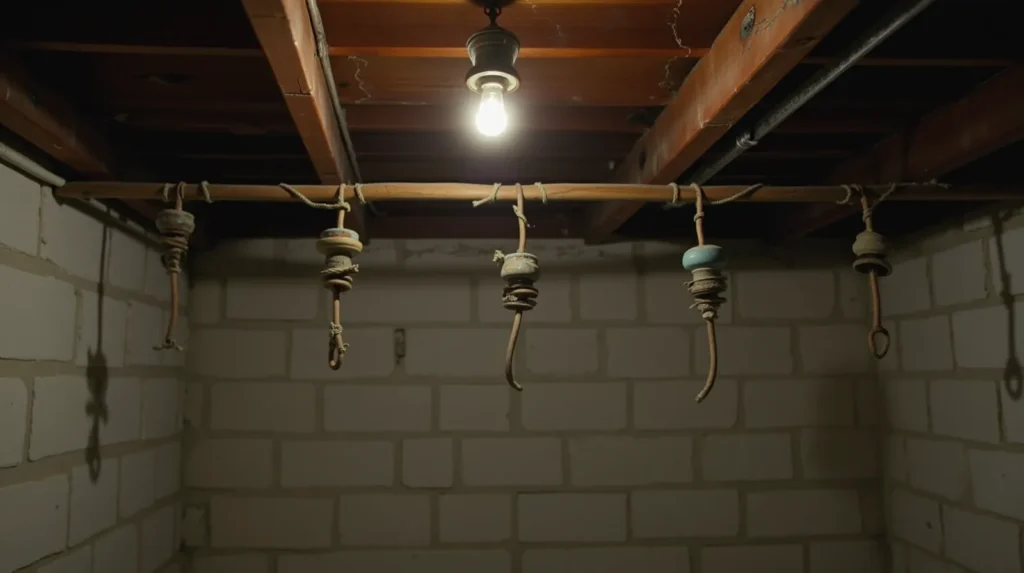
Or the house is older. The wiring is knob-and-tube and the insurance carrier won’t write a policy until it’s remediated. The agent you called said you need to rewire before listing.
There’s another path.
Short answer: You can sell a house with electrical problems. FHA and VA loans require lenders to flag certain conditions — Federal Pacific panels, aluminum wiring, knob-and-tube, exposed wiring. A cash offer has no lender. No lender means no appraisal inspection condition. You get an offer within 24 hours and can close in 7 to 14 days, as-is, without touching a wire.
What the lender actually requires
FHA and VA loans require the home to meet local electrical code as a condition of loan approval. HUD Handbook 4000.1 is direct about this: the appraiser flags any electrical system that poses a safety hazard or doesn’t comply with code. VA Lenders Handbook Chapter 12 applies the same standard.
In practice, an FHA or VA appraiser will flag:
- Federal Pacific Electric (Stab-Lok) or Zinsco panels — both are associated with breakers that fail to trip under overload
- Aluminum branch circuit wiring, common in homes built 1965–1973
- Knob-and-tube wiring in active use in homes built before 1940
- Double-tapped breakers — two circuits sharing one breaker
- Open junction boxes or exposed wiring
- Missing GFCI protection in kitchens, bathrooms, and garages
- Any panel with scorch marks, a burning smell, or breakers that trip frequently
When the appraiser flags one of these, the lender writes it as a repair condition. The buyer cannot waive it. The appraiser must return for a re-inspection after the repair is complete. If the repair costs more than the seller expected, deals fall apart at this point. The financed buyer can’t proceed without the repair, and the seller is left with a property that’s harder to re-list because the condition is now in the inspection record.
This is the same mechanism that applies to structural issues — the lender’s appraiser creates the condition, not the buyer’s agent, and the seller carries the cost.
What disclosure law requires
Tennessee requires sellers to disclose all known material defects. T.C.A. § 66-5-202 covers the duty to disclose; T.C.A. § 66-5-208 clarifies that selling a property as-is does not waive that obligation. Electrical problems that you are aware of — a panel that trips frequently, aluminum wiring a prior inspector flagged, knob-and-tube that an electrician identified — are material defects. Selling without disclosing them creates liability after closing. The buyer’s remedy under Tennessee law is damages, including the cost to repair.
Florida sellers carry the same obligation under F.S. § 689.261: known material defects must be disclosed before closing. An undisclosed Federal Pacific panel or active aluminum wiring problem is a post-closing claim that can reach six figures if the issue causes a fire or an insurance denial.
Disclosure does not mean you must fix anything. It means the buyer knows what they’re accepting. A cash buyer who is purchasing as-is already expects problems — disclosure does not kill the deal. It protects you from what comes after.
This is also distinct from unpermitted work, where the problem is work done without a permit. An electrical problem may exist in fully permitted wiring that has simply aged past the point where lenders will accept it.
Repair costs
| Problem | Common in | Why lenders flag it | Typical repair cost |
|---|---|---|---|
| Federal Pacific Electric (Stab-Lok) panel | 1950s–1980s homes | Breakers confirmed by CPSC to fail to trip; fire risk | $1,500–$4,000 to replace |
| Zinsco panel | 1960s–1970s homes | Same failure pattern as FPE; breakers fuse to bus bar | $1,500–$4,000 to replace |
| Aluminum branch circuit wiring | 1965–1973 construction | Connection points oxidize and arc at outlets and switches | $1,500–$5,000 (pigtailing); $8,000–$20,000 (full rewire) |
| Knob-and-tube wiring (active) | Pre-1940 homes | No ground wire; not insulated for modern loads; most carriers won’t write coverage | $10,000–$30,000 (full remediation) |
| Double-tapped breakers | Any era | Code violation; overload risk | $200–$500 per breaker |
| Missing GFCI in wet areas | Any era | Code requirement since 1971 (kitchens), 1975 (bathrooms) | $50–$100 per outlet |
The full cost of remediating knob-and-tube wiring in a 1,500-square-foot Nashville craftsman runs $15,000 to $25,000. That wipes out most of the equity a seller expected to keep — before agent commissions, closing costs, or staging. The math changes quickly.
Nashville and Middle Tennessee
East Nashville, Germantown, 12 South, Berry Hill, Sylvan Park, and Lockeland Springs are the neighborhoods most likely to have knob-and-tube wiring. The craftsman bungalows and foursquares in those areas were built primarily between 1910 and 1940 — when knob-and-tube was standard construction.
Aluminum branch circuit wiring appears in homes built across Davidson, Rutherford, and Williamson counties between 1965 and 1973. The postwar ranch houses and split-levels from that era often used aluminum because copper prices spiked. Many still have it.
Federal Pacific panels were widely installed in Middle Tennessee from the 1950s through the 1980s. They’re not obvious from the outside — the only way to confirm is opening the panel door. A home inspection that doesn’t specifically check the panel brand can miss it.
Memphis carries the same exposure. Cooper-Young, Midtown, Binghampton, and Central Gardens have older residential stock that dates to the knob-and-tube era. Homes inherited in those neighborhoods — especially ones that haven’t been updated in decades — are exactly the situations where this comes up. If you’re dealing with an inherited property in one of these areas, an electrical inspection before listing is the fastest way to know what you’re actually dealing with.
Old houses also tend to stack problems. A home with knob-and-tube wiring is often the same home with moisture issues in the basement or attic — two conditions that work against a financed sale simultaneously.
Florida: the 1960s and 1970s construction wave
Pinellas, Hillsborough, Sarasota, Polk, and Broward counties saw significant residential construction between 1965 and 1978. That window overlaps almost exactly with the aluminum wiring era. Many Florida homes from that period still have the original aluminum branch circuits.
Tampa’s Hyde Park, Seminole Heights, and Ybor City carry knob-and-tube risk similar to older Tennessee neighborhoods — the bungalows there date to the same pre-1940 window. Florida’s humidity accelerates deterioration in older wiring systems, and the state’s insurance market is particularly sensitive to electrical problems after years of wildfire and hurricane losses.
Who should not sell to us
If the electrical problem is minor — a single double-tapped breaker, a few missing GFCI outlets — a conventional sale is probably the right move. Fix it for a few hundred dollars, list at full market value, and close with a financed buyer. The discount on a cash offer isn’t worth taking for a $300 repair.
If you have strong equity and 60 to 90 days to wait for a conventional sale, and the electrical repair is manageable — panel swap for $2,500, say — you’ll likely net more through a traditional listing. Pull the permit, make the repair, get the lender re-inspection, and sell at retail.
We’re the right fit when the repair bill is large enough that fronting it doesn’t make sense, when the timeline is short, or when the house has stacked problems that would require multiple rounds of repairs before a financed buyer could close. We’re also the right fit when the property is vacant, inherited, or otherwise in a situation where managing a 90-day listing process isn’t realistic. The honest question is whether the speed and certainty of a cash close are worth the as-is discount — and that answer is different for every seller.
How a cash sale works when there are electrical problems
A cash buyer — us, or a buyer in our network — does not use a lender. No lender means no appraisal. No appraisal means no electrical inspection condition. The wiring, the panel, the age of the system — that’s all priced into the offer we give you. You don’t fix anything, pull any permits, or wait for a contractor to finish before we can proceed.
Here’s what happens next. You give us the address. We look at the property — including whatever electrical issues are visible or disclosed. Within 24 hours you have a number. If it works for you, we pick a closing date, usually 7 to 14 days out, based on what fits your schedule. No showings. No staging. No lender conditions that show up after the buyer goes under contract.
The as-is sale process is straightforward — this page walks through it if you want more detail on how it differs from a conventional listing.
Call us at (615) 780-7349 or leave the address on the form above. You’ll have a number within 24 hours.
Keep reading
- We Buy Houses in Missouri — Cash Offers in Any Condition
- Selling a House With Asbestos
- Can You Sell Your House During Bankruptcy?
- Can I Sell My House With a Lien on It?
- How to Sell a Rental Property With Tenants Still in It
- Sell My House Fast McKeesport PA
Ready for a number? Get your cash offer or call (615) 780-7349.