


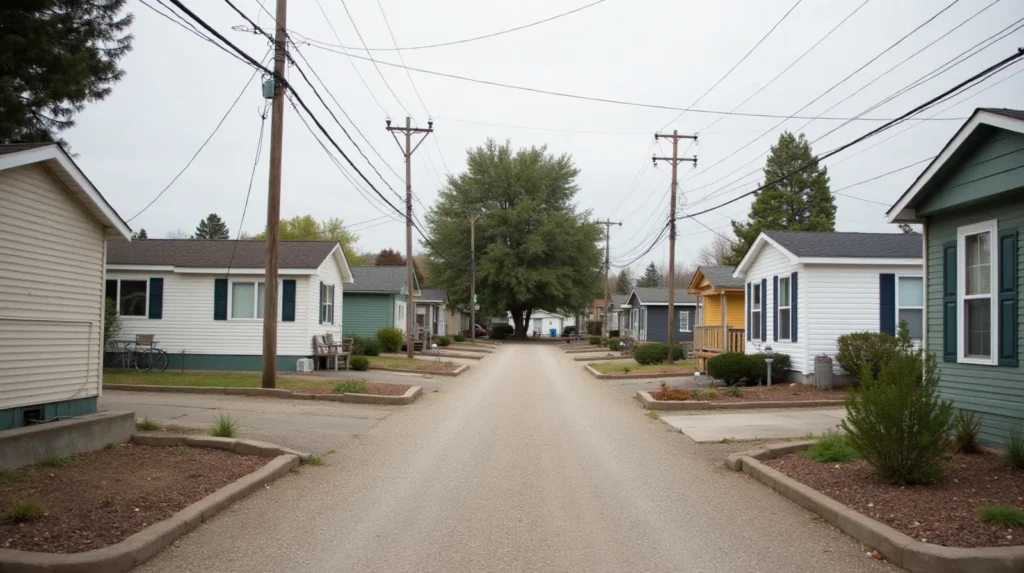
What Changes When You Don’t Own the Ground Under Your Home
You own the manufactured home. You don’t own the land it’s sitting on. That one fact changes almost everything about how the sale works: who can buy, how fast it closes, and what happens to your lot rent in the meantime.
This page covers what most sellers find out the hard way: the park has more control over your sale than you might expect.
If your home is on land you own outright, the process works differently. See our guide to selling a mobile home when you own the lot. This page is specifically for homes inside a park on leased land.
Why Buyers in Parks Have a Hard Time Getting a Loan
Manufactured homes on leased land are almost always titled as personal property, like a vehicle. That means a standard mortgage won’t work. The lender has nothing real to put a lien against because you don’t own the land.
Chattel loans exist for this situation, but they’re harder to qualify for than mortgages. Interest rates run 2 to 4 points higher. Down payments are larger. And the lender will look hard at the park itself: how old is the lease, how well-maintained are the common areas, and what are the rent escalation terms.
Some parks don’t meet lender standards at all. If the park lease has less than 20 years remaining, most lenders won’t touch it. If the park has deferred maintenance or a large vacancy rate, same result.
When a buyer can’t get financing, your sale falls through. You’re back at square one, still paying lot rent.
A cash buyer doesn’t need a lender’s sign-off on the park. They buy the home outright. The park’s lease condition isn’t their problem to finance around.
The Park Approval Step Nobody Mentions Until It’s Too Late
Most parks require management to approve whoever takes over your lot lease. This isn’t optional. It’s in your original lease agreement, and the park can enforce it.
What they’re checking: income (typically 2.5 to 3 times the monthly lot rent), credit score (usually 600 or higher in well-managed parks), background history, and whether the buyer plans to actually live there.
When a local independent investor buys manufactured homes, they typically buy the home as an asset, not to live there permanently. Some parks will work with investors; others won’t. The park’s flexibility on this point varies considerably, and it’s worth asking before you accept any offer.
Either way, once a buyer is lined up, they go through the park’s approval process before the sale closes. If they’re rejected, you start over.
Lot Rent Runs Until the Date on the Settlement Statement
This is the hidden cost sellers underestimate. If you’re paying 50 a month in lot rent and your sale takes four months to close, that’s ,800 out of your proceeds before you see a dime.
A cash buyer can often close in 10 to 21 days. That’s one rent cycle, maybe two. A financed buyer working through chattel loan approval and park approval might take 60 to 90 days.
The math difference is real. On a home selling for 0,000, the gap between a 21-day cash close and a 75-day financed close is roughly 00 in lot rent, before you count the extra months of insurance and utilities you’re carrying.
What the Title Says About Your Home
In most states, manufactured homes on leased land carry a certificate of title issued by the motor vehicle agency, not the county recorder. It works like a car title: you’re the named owner, and the buyer’s name goes on it at closing.
Converting from personal property to real property (which would open up conventional mortgage financing) requires owning the land, filing an affidavit of affixation with the county, and in many states surrendering the certificate of title. On leased land, that conversion is not possible. The title stays personal property until the land situation changes.
At closing, the seller endorses the certificate of title to the buyer, the park updates the lease to the new tenant, and that’s the transaction. No deed, no county recorder, just the title transfer and the lease assignment.
Tennessee: What the Law Says
Tennessee titles manufactured homes through the Department of Safety and Homeland Security under TCA § 55-14-104. The home carries a vehicle-style title, not a deed, unless an Affidavit of Affixation has been filed under TCA § 66-26-115, which requires owning the land.
The Manufactured Home Landlord-Tenant Act (TCA §§ 66-28-702 et seq.) governs the relationship between park owners and residents. If a park closes or is converted, the law requires a 180-day notice to residents. That rule covers park closure, not individual home sales. For individual sales, what matters is your lot lease terms and what the park’s rules say about lease assignments.
Parks near Fort Campbell (Clarksville area), Murfreesboro, and the rural counties between Nashville and Chattanooga have large manufactured housing stocks. Many of these homes are pre-2000, which creates additional complications for buyers seeking chattel financing, since some lenders won’t finance homes older than 20 years.
If the home is in a 100-year FEMA floodplain (common in Sumner, Montgomery, Maury, and Obion counties near river corridors), the buyer will need NFIP flood insurance even if they’re paying cash. That’s a known carrying cost to disclose. See our full guide on selling a house in a flood zone if the home has existing flood history or open claims.
Tennessee sellers can submit their address at our Tennessee cash home-buying page for a no-obligation offer within 24 hours.
Florida: Park Rights and Insurance Barriers
Florida’s Mobile Home Act (Ch. 723, Florida Statutes) is one of the more resident-friendly in the country. When a park owner wants to sell or convert the entire park, F.S. § 723.071 gives residents the right of first refusal. They can organize and match the offer. This protects residents from park closure, but it doesn’t restrict individual home sales within the park.
Florida titles manufactured homes through the DHSMV under F.S. § 319.261. Same personal property title structure as Tennessee unless the home is permanently affixed to land the owner holds under F.S. § 319.261(5), which doesn’t apply in a park setting.
The bigger Florida issue is insurance. Citizens Insurance and most private carriers treat manufactured homes in parks as higher risk. A four-point inspection can fail older manufactured homes on electrical, roofing, plumbing, and HVAC grounds. Without an insurance binder, financed buyers can’t close. Cash buyers bring their own coverage arrangement. They’re not waiting on a lender’s insurance requirement.
Parks in Pasco County, Polk County, and Charlotte County have high concentrations of manufactured homes on leased land. Post-Hurricane Helene and Milton damage in 2024 means some of these homes carry open insurance claims or unrepaired storm damage. That narrows the buyer pool further for anyone who needs financing.
Texas: Title Transfer Through TDHCA
Texas titles manufactured homes through the Texas Department of Housing and Community Affairs (TDHCA) under the Manufactured Housing Act, Tex. Occ. Code Ch. 1201. The TDHCA maintains the state’s title registry, and all transfers go through their process rather than a county recorder.
Converting a manufactured home from personal property to real property in Texas requires owning the land and filing a Form HUD-307 (Statement of Ownership and Location) with TDHCA. On leased land, the home stays in TDHCA’s registry as personal property throughout its life on that lot.
Texas parks in the San Antonio metro area, the Houston suburbs, and the Rio Grande Valley have significant manufactured housing populations. In South Texas, the combination of leased land, aging home stock (many 1990s or earlier), and limited chattel lending options means cash buyers are often the only realistic exit for sellers who need to move quickly.
Texas doesn’t have judicial foreclosure. If a buyer defaults on a chattel loan, the lender can repossess the home through a relatively swift process under the Manufactured Housing Act, faster than house foreclosure. This makes lenders more willing to extend chattel credit in Texas than in judicial states, which is a point in favor of some financed buyers. But park approval and lot lease terms still apply.
When You Probably Don’t Need a Cash Buyer
Honestly, if the following describes your situation, calling a cash buyer is probably not the right first call:
- The park is well-managed and has a track record of approving buyers quickly
- Your home is in good condition: no deferred maintenance, working systems, roof in decent shape
- You have 60 or more days before you need to be out
- You already have a buyer in mind who can qualify for chattel financing or who is paying cash themselves
In that situation, you may net more by working through the park office, posting on Facebook Marketplace (the most active marketplace for manufactured home buyers in many markets), or asking the park manager if they know of interested residents from their waiting list. Parks with long waitlists often have buyers ready to go.
Where we’re the right fit: when the buyer pool is thin, when you need to close before a specific date, when the home has condition issues that would fail a financed buyer’s inspection, or when you’ve already tried to sell and the deal fell apart during park approval.
Straight Answers
Does the park own the right to approve or reject my buyer?
In most parks, yes. The lease assignment requires park management approval. This is a standard clause. It applies to cash buyers too, though a buyer with an established track record of working with parks may move through that process faster than an individual trying to get chattel financing for the first time.
What happens to my lot rent if the deal falls through?
You keep paying it. The lease runs month-to-month or on its original terms regardless of your sale status. That’s why deal certainty matters as much as price when you’re evaluating offers.
Can I sell the home and move it off the land?
Moving a manufactured home off its lot is expensive. Permits, transport, and setup at the new location can run ,000 to 0,000 or more for a double-wide. Most buyers in a park are buying the home to leave it in place. If you’re trying to remove it, that’s a different transaction and usually involves the park’s permission to vacate the lot.
How fast can you close?
Once we have the title information and the park contact, we can typically close in 10 to 21 days. The variable is the park’s own approval timeline, which we start working on the same day we agree on terms.
Do I owe anything at closing?
No commissions, no agent fees. You’ll cover any pro-rated lot rent through the closing date, and any title encumbrances get resolved from your proceeds the way they would in any sale. No surprises.
One Next Step
Give us the address and we can tell you what we’d offer within 24 hours. You’re not committing to anything by asking. If the number doesn’t work, the conversation is over and you owe us nothing. Submit the address in the form above and we’ll follow up by phone.
Keep reading
- Selling a House With Asbestos
- Can I Sell a House With Open Permits?
- Sell My House Fast in St. Petersburg, FL
- Selling a House with Foundation Problems: Your Real Options
- We Buy Houses in Colorado for Cash in Any Condition
- Selling a House With Code Violations
Ready for a number? Get your cash offer or call (615) 780-7349.